
Every tree

is a leaf on a bigger one. It might be a tree with leaves itself, it might be a tree of fruit. There was a lemon tree outside the second hotel room in Crete – I can still remember the smell. I’d never seen lemons growing. There were olive trees in Crete, older than time. Trees are a root. That’s why so many people got so upset over the destruction of that mighty tree in the north. Trees take time. We might inveigh against time but we accept its power in our lives. And, we say, time heals all wounds.
There was an avenue of trees
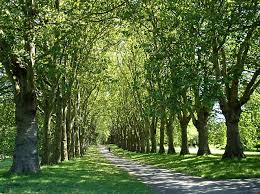
near home. I can remember looking down it, the light breaking through or excluded, the shapes, the shadows. You can hear a tree, the noise it makes in the branches, the soughing, the movement of the leaves. A recurring theme among children’s books is the child’s relationship with or observation of a tree. Trees in storms are pulled out of shape, branches bent, leaves flattened, and watching, you hope the trunk can stand.
The better known of two best selling books about trees in the recent past is wrapped in the depths of translation as well as intellect. I’ve tried to read it twice, I keep it to have another go. I feel I “should” read it. Trees are important. and I don’t know a lot about them. In Henry Marsh’s current book (And Finally) he talks about planting a tree that prefers the ground into a big pot
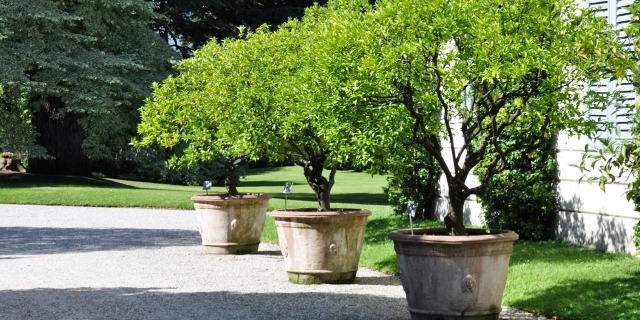
where it seems happy, he writes, like an enormous bonsai.
I can’t get round the cutting to make bonsai. It is a discipline that produces shapes and sometimes loveliness
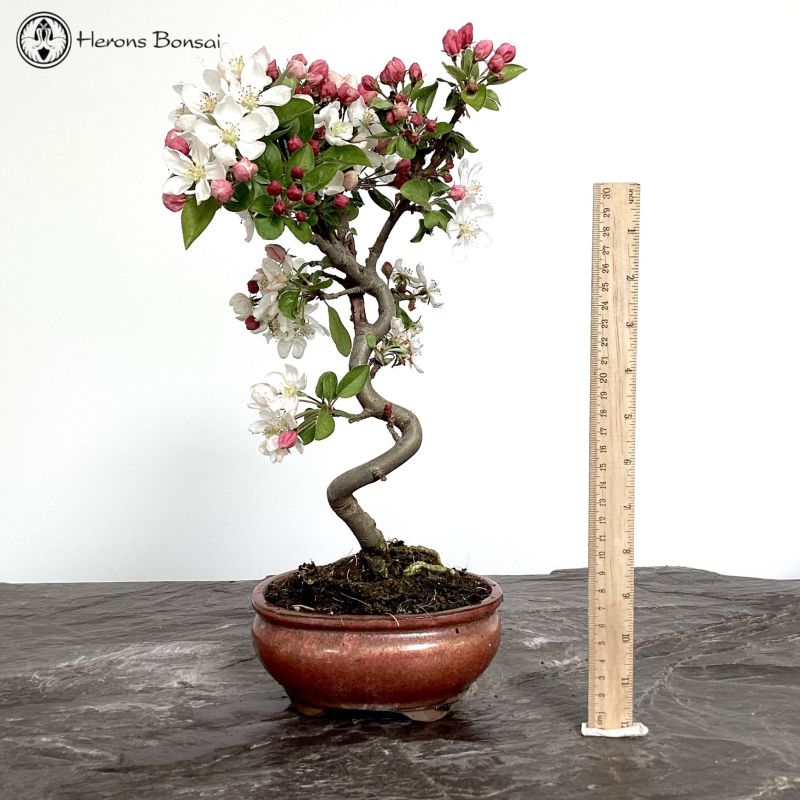
but I am bothered by the cutting. You prune a tree to help it grow, to keep it from overgrowth, to help it flourish. I have always been wary of pruning, I don’t trust myself to do it. Alex from next door has no such fear but then he is young. And I did have a happy afternoon with the cherished winter broom (one of two shrubs I brought from north London south of the river 23 years ago) where I took off every dried dead bit and fed it and crooned (under my breath) so that it settled and grew again. It has yellow flowers on it.
And I don’t know why I should be so mealymouthed about cutting trees. Without cut trees, no fire, no charcoal, no paper
and without paper, no books. You make separations among things what trees are for, as you do among people. “Don’t ask that of her” we say. You accept to say hello and pass on with some but you linger with others. Some become friends and some never will. Some grow into friendship and flourish, some fail and die, some are knocked or cut down. Just like trees.
Back as far as the eye could see in the Transvaal in South Africa, the road ran white, the sky was blue and the red flowers of the flame trees lined the road.
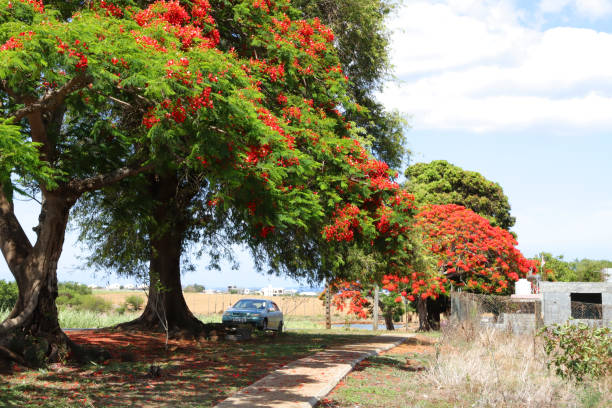
One of those unforgettable lessons in colour. And Prince Albert, Queen Victoria’s husband, was better liked for the popularisation of the fir tree at Christmas than a lot of the other much bigger and better things he did, that same fir tree still central to the visualisation of Christmas though generations have cursed the pine needles, unless they get a particular variant or an artificial tree – which always seemed like a contradiction in terms.

Trees are real.
The week began badly. One magpie perched on the house, one for sorrow. Apposite. But then I saw an old documentary on a man who has devoted his life to black bears, getting past the mythology of tearing claws and fearsome temper to find a huge, remarkably even tempered beast whom he can now feed by hand in the biggest wild and beautiful forest on the eastern seaboard of the US, in Minnesota. And, sitting in the kitchen, reading, I looked up to see a single enormous furry bumble bee, checking everywhere in the garden for late flowers and thus late food. And I thought of the image of the Tree of Life and what that has to teach us.
 Annalog