starting somewhere

Early

last week I had lunch, neither expensive nor vinous, with a woman I haven’t seen for 25 years or more, whom I had met only once. Her husband died sadly young, her life wasn’t easy and I heard of her very occasionally – we move in different circles.   But more recently, she wrote something of wonderous generosity about me which was drawn to my attention so I found a professional address and wrote in appreciation.  After her delay (Covid) and my delay (fall), and an exchange of cards noticeably warm and enthusiastic on both sides, we met.  And talked effortlessly for four hours over lunch, and later pots of tea, sometimes laughing, sometimes deeply serious, offering what the other needed to know to cross the considerable passage of time.  There was real care and real intelligence and real generosity.   “I’m getting this bill” she said firmly, “on the grounds that you do the next one and we don’t wait so long … !”  

In the street outside, she said “That was wonderful, I don’t now how to describe it ..”  “It was” I said “like two weeks in the sun, fresh orange juice and do what you like.”   And we have a date for November. 

When I came home, I sat in the chair and recalled and thought and when I told my mostly phone friend Denning about it, he said “Well, you deserved that.”   I did ?  Yes, he insisted, I did.  “You had the fall and the mess with edf, one thing after another, all to be negotiated and put up with, all energy going one way – out.  This was a real exchange

and it was good for you – I can hear it in your voice !”  “Uplift ?” I suggested and he cackled in agreement.  

That would have been enough, but there’s more.      

A divorce can be a good or a bad thing and is often both simultaneously.   But if you have got to that stage, then you want it to move forward so that you can, pain and all, rather than feeling stuck.

Amy Able upstairs works long hours, having furthered a specialised nursing career – so conversations are catch up and move on.  And when she came back from seeing her family at Christmas, she mentioned that her erstwhile husband wasn’t responding, papers were just sitting there, and she really suspected that her solicitor was more in sympathy  with him than her.  So she found herself different representation, only then to be becalmed by the legal go slow, which however justified, has pushed everything back a few more weeks.

Come Wednesday morning however, she rapped smartly at the door and struck an attitude with a formal document in her hands.   “Look !” she said beaming with relief and I did, hugged her and went off to buy her yellow roses

because as my friend Janet (annalog/Jiz) said, it’s not every day a girl gets her decree.   She has a new job, she’s booked a week away at year’s end because when she goes home, the family brings her its health problems which is great for them, but not a break for her. And she can breathe.

Buns has been trying to settle to buying a house in Ireland for the last several months.  The vendors, their estate agent and their solicitor haven’t done him any favours so he’s done the chasing till this last week when – as you know – the bottom dropped out of the markets and the money went up in smoke.   Which is easier  if you have a lot of it, but few of us do.    And all Buns’ decisions are made in a one off form of cogitation and fret known as Bunstime.  He’ll get there but you have to wait for him.  Nothing to do with Greenwich Mean Time.   So for the first time in our 25 year friendship, he asked for my advice at 1.00 and had acted on it by 5.00. 

And then rang me up again and told me he felt better.

Some count beans, some count blessings and this week, there were four of us with a share of the silver lining. 

disquiet

I slept well for years and mostly still do.  But like eerie soft toys,

I take to bed pictures of the Ukrainian war, some part of the troubled planet, the non-resolution of my edf problem (annalog/ghostbusters), concern about dentistry and eventually, on this occasion, rose at 3.00 or so, to heat milk.  Of course I know people to whom the mention of milk in any form is repellent, hot milk unthinkable and the jolly types who expect you to add spirits.  Hot milk helps me sleep.

Except that this time I managed to spill the milk

into my slipper, down the stove, on the floor – it’s amazing how far a small amount of fluid goes.  And it was so ridiculous, having to clear all that up, that I began to laugh at myself.  And the milk was not my usual, full of preservative and didn’t work.

Since then it’s been the downward road in the peace of mind stakes.  Wal has had a serious operation and the private hospital in which he is currently safe and through the worst thank heaven has wonderful nurses, good food and a switchboard system of glaring inadequacy.

I often read book reviews (they’re cheaper than books) which led me to the first person account of a handsome woman with a difficult childhood who managed to come to awareness of her alcoholism (good) but after having been a pain to all who knew and loved her for years. I have never forgotten the man, now dry, who told me “You drink to kill pain” and a bit like antibiotics, it kills other things too.

Offered pages by a woman who was John le Carre’s lover, I still don’t know why she wrote the book.   Or why anybody is surprised that someone who has been involved in what we used to call Special Services is odd.   Like many great talents, I would imagine le Carre was difficult and functioning unbalanced, causes partly familial, partly professional.   Sex takes your mind off all sorts of other things, leaving you free to go back to writing.  And writing is such a strange business, where you use words alchemically to make pictures and structures that other people can’t imagine.

The endless recital of somebody else’s sexual experience doesn’t do anything for me. 

Porn only works on the innocent or the addicted and I am neither.  I don’t want to see or conjure what you do.    Because the recital doesn’t teach anything except indifference.  

There was a time when I had a Marilyn Monroe library. I admire Monroe. The great director Billy Wilder said (approximately) she could drive you mad but give you something unique.  I am not sure which we have most trouble with in the present world, the idea that somebody is clever or the idea that the clever make mistakes too. 

But do I want to see her acted (Netflix) ?  Do I want to see that acted Monroe used all over again through the recreated savagery of her experience of the movie industry ?   No and no.  The idea that we can only appreciate the journeys women take into creative expression and a measure of success

(there’s a chimera) by talking about rape, beating and every other kind of unkindness is eerily fictive.

It can’t be right – or indeed helpful –  as in morally not right and socially not helpful – to be defined by what goes wrong as in “I know I have a career/ a tv show/ a partner/  my own house that I can afford to heat  – but I have painful periods.”  In years and years of talking to people, I don’t recall anybody who had it all.  We all have our difficulties and we choose, not always wisely, how to deal with them.  Moreover we choose – change our minds – and try another way. This used to be called growing up and for some of us it takes a very long time.  I can be patient with how long it takes, it has for me.  But don’t describe me as a victim because I have my troubles. Everybody does and most of the time, that’s how we learn.   Not by sweetness and light and roses round the door but by thought and disturbance and disquiet, and the balancing act between them.      

the backward glance

Walking up the road this morning for the paper, I saw the window of a house misted with  condensation and remembered ….

I was very young when my mother had one wall of the small bedroom on the front of the semi papered in a soft grey green figured with stylised fawns.

There was a dressing table from whose five sided surface hung a curtain.  Storage.   My books were in the smallest bookcase ever.  There was a lamp.

There was also a window looking out into the street and on this in the winter I woke to ice flowers, frozen patterns on the windows.  Everybody I knew was in the same boat – air con was foreign – and  I truly don’t remember being cold.   I had warm things to sleep in, layers on the bed, a hot water bottle.  And the patterns were beautiful.   I’d show them to one or other of my parents and we’d look for pictures in them.  

There was what then was known as a gas circulator in the kitchen, on low all time, popping up into a minor explosion when you used hot water.   The house wasn’t large, there were three of us in it, with open fires in what was laughingly called the dining room and the sitting room .   That’s where we sat when we weren’t in the kitchen, or in bed. 

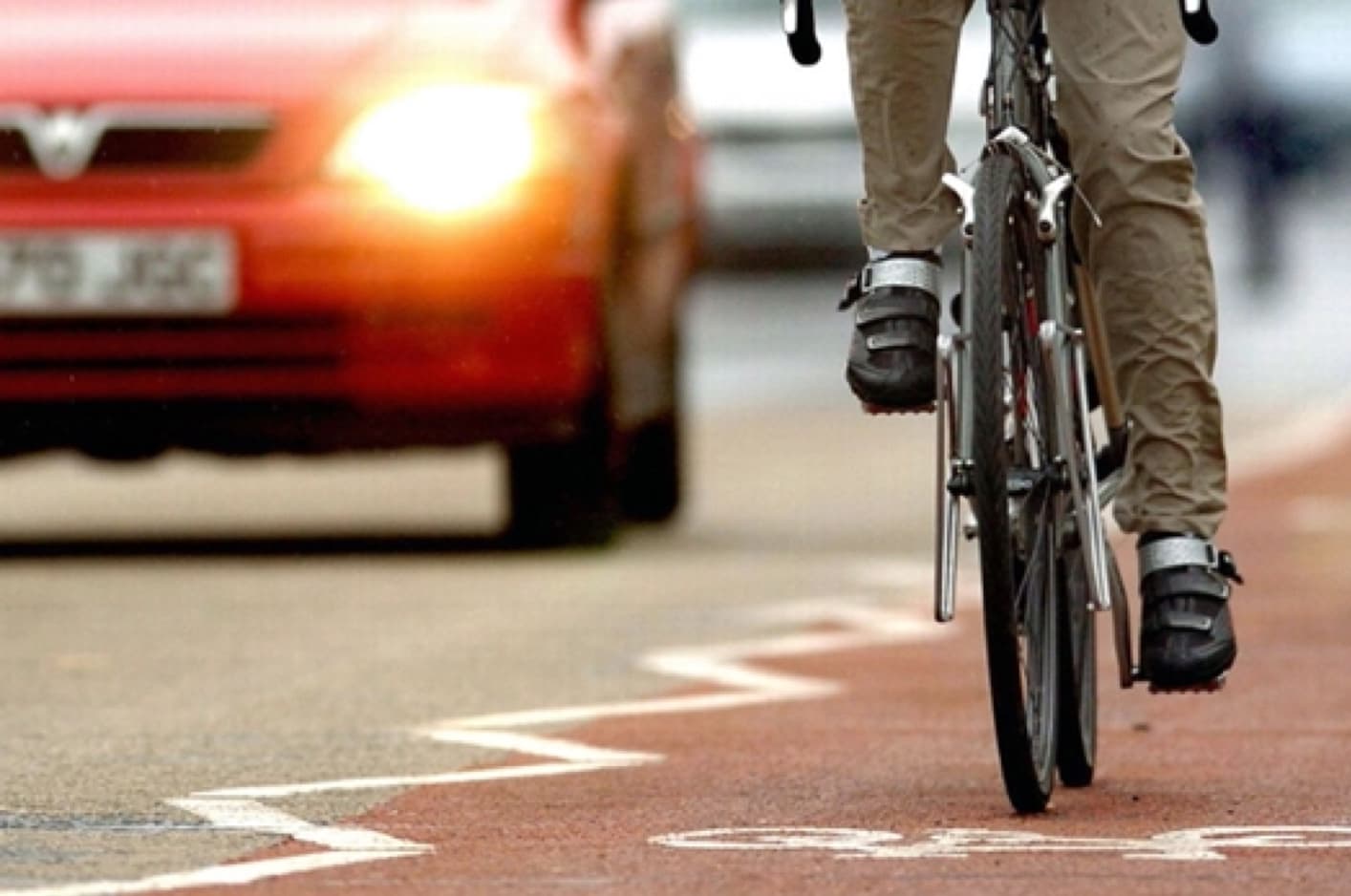
From that bedroom window too, I used to watch as the lamplighter came

on his bicycle with a long pole over his shoulder, at the top of which was a glass shield he could retract, to put the flame to the wick in the lamp outside the house.  It was wonderful, like a fairy tale.  I loved watching the street opposite, people about their lives, my dog coming home.   When I told Pam the Painter, she scoffed “ Oh go on with you, you’re not that old.”   And I paused.   Memory is sometimes very selective.  You remember this, but not that – and it is true that the lamplighter was only in the youngest two or three years of my noticing. 

After that we had a fog piercing automatic light like everybody else.  And I was moved into my sister’s bigger bedroom  (she was in Prestwick, learning how to be a meteorologist) in which to do my homework and store my already “we know what to give you” library. Looking back is very seductive.   Warmer, sweeter, brighter

– we know it was cheaper.   Didn’t we all look better ?  But I’m sure not everything was better.  It was different.

You can get stuck in what was.  It’s not helpful.   You can rewrite history, but you can’t go back and live in your re-invention.   Currently bending my ear is a woman telling me repetitively the story of her miserable marriage, less how it affected her than the “children” who are both now in their fifties.  There was a complicated family history with issues of power and convention, but there is a kind of time limit on reinventing horrors.   It becomes a cop out.  And she left this marriage – with difficulty but she did leave – and after ten happy years with the love of her life, who sadly died – she returned to the marriage.  I can remember her telling me that she was going to do it and why.  Money.

I confess, I can get very sniffy about the matter of money.  In age, I have come to appreciate that I came from not very much.  Professionally I earned well though I had holes in my pockets,

and a late breakthrough to sense came too late for what is derisorily called wealth management – because of course you can only increase what you’ve got. And you don’t know what you’ve got till it’s gone (thank you Joanie Mitchell).

Heaven knows what we can look forward to, less of it, worth less, but it’s done.  And I will feel the cold more this year than in that happy memory.  Children of the milkman leaving pint glass bottles with foil lids, we used to talk about money as “milk tops and buttons.” It’s too easy to be soured by the backward glance.  Face forward. 

continuity

Many years ago in one of my first sorties into a BBC tv studio, I met a slight energised elderly woman who was utterly calm, welcoming without gush, organised without hubris and somewhere along the line,  I asked her name and whoever I asked answered adding “ but we all call her Mum. “  

It is surely significant that, after all these years, she stays with me with the nickname that was obviously given her in affectionate respect of her personal professional continuity.

If you said continuity to me, I think of films.  The person in charge of continuity – often a woman – keeps the integration of the piece in order.  Often, meticulous order.   Shots match, (“No, the other way round, left profile”) clothes match, china on the table matches, the position, the colour.  I think of the mice embroidering the coat in Beatrix Potter’s The Tailor of Gloucester.  

No mice, no embroidery.

I remember a photograph in a film annual, which showed a scene from a historical movie in which a sleeve had slipped back revealing a hefty watch on a male arm.  And one or other of my parents (who loved films) said “Somebody will get a flea in their ear for that, bad continuity.”  So I asked (I was brought up to ask) and got my first explanation of continuity, what it meant, why it was important, why it mattered.

Movie lovers

can’t help noticing continuity, just as they notice (depending upon the bias of interest) script, cinematography, costume and so on.   And as the television wagon or aspects of it pulled alongside movie, the same standards were applied and praised or found wanting.

The other aspect of continuity major in my life has been my psychotherapeutic experience.  Not in the NHS.  I paid for all of it.  And I thus found a marker in my life at a time when there wasn’t a sign of land from the sea or a drop of water in the sands of bereavement that stretched from my bewildered feet to the world beyond, as far as I could see.  But once I had found my “shrink”,  I had a day and a time and barring  his negotiated absence, it was that day and that time and it became significant to me.  

I could get through to Thursday at 6.00.   Thursday at 6.00 was real, it was there, I only had to get through Monday to Tuesday and then another day and then just a bit more and then …  I never pass the door of the building where I went without smiling in gratitude.  There are all sorts of things that mattered but I believe the continuity was very important.

Years later, I could not convince a very troubled if sort of functional young woman, of whom I had had the acquaintance for many years – I am not going to say “known” because I didn’t know her and she didn’t know herself – that the continuity of such a treatment was at least part of its value.  No  course, no crock of herbs would make the same difference.  She wanted breakthrough and I knew if you want a breakthrough, you need an axe

and you become your own.  And if you shy away from the  violence of that image,  let me tell you, there are lots of different kinds of violence and bloodless is not without pain.

There are of course lots of ways of working and only some of them involve continuity.  I can only speak whereof I know.     This morning into the silence of The Funeral, I could hear all the people who make up the Royal continuity,  the hiss of ironing, the jingle of buffing harness, soft feet to many rooms, hairbrushes tugged through  hair,  clothes brushes on the shoulders of the mourning.

Before I started to write this, I looked up continuity in the dictionary.   Oh I love a dictionary, still so often more satisfactory than on line.  And I have an Oxford Concise, an Oxford Shorter (two volumes) and a two volume illustrated Readers Digest which I have learned to appreciate.

And I came on this, one of several definitions, “uninterrupted duration (rare) 1646.”   It is an end but every end is a beginning.  And a continuum.   

what I (don’t) know

I don’t know how I feel about monarchy but I had a real affection for

Elizabeth Windsor. And this must have been apparent because my son rang on the day of her death to ask if I was all right ?   I was taken aback and into that pause, he said “I know there was an affinity, I just wanted to make sure …”   and I was touched and thanked him from the bottom of my heart, said yes, I was OK.  I had known it was serious from the moment it was reported that Harry Sussex flew up to Balmoral alone, God bless and keep her.  

I don’t want you to think that I aspire to monarchy.  I don’t.   But like other public role playing , there are ways of getting it right and she did, in spades.  And I wish our new king and his wife

and family and the estate of royalty -all of which will be impacted by the change at the top – the very best, it’s a tricky one.  Strive to know the role.   

When my father died after 48 years of marriage, my mother had to go back to work.  Pop was good at all sorts of things but he was no good at money.  I am however happy to report that my mother had a fine time in her last years as a supply teacher. The journey was tolerable, the headteacher imaginative, the staff agreeable and, working with a different age group and delightedly coming to understand (as have I in a different context) that white hair says something before you speak, you couldn’t ask for more.

But I had never been through major bereavement (defined as the loss of a parent, partner or child)

before and when she began this late tour of duty, I rang rather nervously to wonder if she could manage.  She said she could, adding “It’s really helpful.”  I was thrown – how ?   “Well, I have to get up and walk the dog” she said.  “I have to eat something, get dressed and get the bus.  The kids are fine, I’m busy and when I come home,  even though I am tired, I have to walk the dog, and eat – and do it again.  It concentrates the mind quite wonderfully.”   I thought of this when I saw the new King leave his car and head for the crowd, to be himself, to show he could be different from his mother, but mostly – to do something.

We all feel what we feel and we all feel differently.  Bereavement causes people great heartache, not only because of the loss and things said and unsaid, but because it’s irretrievable.  Death is the last great mystery.

  We don’t know where you go, or what you see, we don’t know how you feel.  And you rarely try to tell us.  I remain amazed by the number of people professing religious belief who do not find it comforting.  Bereavement can be utterly dislocating.  It can play tricks on you.  You deal with immediacy well, only to break down in tears in the supermarket five months later.  All sorts of other big things are involved – loss, discovery, confusion, anger, hopelessness, probably euphoria.   There are documented stages to grief but they don’t come in the same order or timescale.   

There are people who are open to the choppy sea of loss, who acknowledge its variety, and those who set their faces against it.  None of us, I venture to say, have to do this in public – or in the presence of such a public – cameras, newsreels, reporters domestic and foreign, friendly and frankly not, a sea of cell phones, every gesture real or imagined remarked and interpreted. 

You need look no further than what has been imputed to the Prince of Wales, his brother and their wives walking a path to look at flowers left in tribute and meet a crowd.  When I heard a reporter use the same phrase for the third time, I said “Bread and circuses !” very loudly and switched the tv off.   There is no shortcut to this.  We shall see.            

good news Gabon

They came into the circus ring, over a dozen, each holding the tail of the one before.

These were elephants and I was five or six.   The only other elephant I had seen was Babar and he was a drawing. Clean, cared for and vast, these were real. 

I am happy to report having my face examined by a young elephant’s trunk – she happened to be  there for some other reason entirely when I was doing a “bit” at London zoo.   I was covered with chewed up green but who cares ?  It was a real live curious elephant.

Then, four or five years ago, a name came into my head, I could give you the route but it doesn’t matter.  What matters is that, within a week, a pristine paperback turned up in a secondhand bookshop, the story of an old soldier who after WWI applied for a job in elephant management in what was then Burma now Myanmar and he spent 20 years with the beasts he loved –  less Mr.Williams and more Elephant Bill.

There were wonderful documentaries, indicating the difference between African and Indian elephants, those of the forest, those of the plain, Daphne Sheldrake’s refuge for the orphans, victims of the rise in poaching.  These were eclipsed by the endless ads from the World Wildlife Fund telling us about poachers who kill and maim.   I think I might make peace with a level of killing if they weren’t so mindlessly cruel. 

And here we are, in the last quarter of a bitter year, and as you well know misery, real and manufactured, is almost omnipresent: you can’t get away from it.  Very fashionable, misery.  So when I saw a headline which read “Elephants free to roam rainforest as poachers flee”,

I read on.     

One of the things you must remember about a dream is that you have to dream it again and again to make it come true.  You have to accept the limitations of your dream.  Life is not magic.    You may  have a vision but if the vision is not faced and re examined in the light of day, it will fade, like every other dream.   Dreams are the embodiment of  “if at first you don’t succeed, try try try again.”  Yesterday I met on a bus an Indian professor of computer science whose first love was physics   –  but the study of it was in in decline when he qualified  “and” he said “you must be practical.” 

President Ondimba of Gabon has been just that.   The son of a longlived dictator, he loved the forest which covers much of the country, and its gorilla and elephant.   It is where he stayed when he came home from the Sorbonne and Harvard – Gabon is a formerly French colony that joined the Commonwealth in June 2022.

  Ten years ago, this part of the Congo rainforest, second largest after the Amazon basin (now in destructive hands) with much higher carbon absorption, was doomed.   The President set his face against that and the man he chose to help him was Professor Lee White, a zoologist from Manchester who came to the country in 1989, rose to become director of the national parks agency and subsequently minister of the environment and maritime affairs.

An odd couple, they did what they had to do.  Armed war was declared on poachers, through park rangers trained and equipped by the British Army and both sides took casualties.  (In dreams they may not but in wars, they do.)   Ondimba passed legislation against poachers, ivory smugglers and illegal logging while, at his side, Lee and others laboured to enable legal logging, palm oil production,   using the forest  for those who live there, with new methods of farming

and a greater appreciation of its worth.   Such an easy sentence to write, much harder to make happen.  

Seeing elephant wander forest pathways and gorilla calm enough to notice intruders but not flee is good news.   Seeing two such different men united in a common cause is good news too.  And seeing an African politician set his face against what he thought to be wrong, without quarter.  Seeing any politician make thoughtful choices is heady.

woman

 A wholly unPC friend sent me a silly story about the gifts God gave Adam and Eve. 

Marc Chagall 1912

Adam got to pee standing up and Eve got the brain.  Did I laugh ?  Yes.  Do I believe it ?  No.   Can’t be true because I have just completely mislaid the cap to the disinfectant (I was cleaning a dishcloth).   A turmeric moment (annalog/turmeric) not to say green apple (annalog/the lost apple) moment.   So, if it isn’t just about the brain, what is a woman ?  

The plastic surgeon I worked for 50 years ago was affiliated to The Gender Research Unit in the now gone Middlesex Hospital.   That work was based on 13 chromosomal variants (I think) between normal man at one end of the spectrum and normal woman at the other.  

Normal is used in the then scientific sense of the word – it is not a word I throw around.  Value judgements attach to it too easily.  

Once in the waiting room where I worked, I saw a dazzlingly pretty, slender woman with dark hair in a red Mongolian lamb coat on whom I commented when I took in the next mug of tea to my boss.  He looked at me and smiled.  “I knew her when she was a little Maltese boy, running round Soho.” 

That the world comprised more than men and women was clear to me from my first paying job in the theatre.  I was brought up to be interested in people so who they went to bed with, how they voted or worshipped was part of their backstory.  How they behaved as people was much more important.    

Reading Tomiwa Owulde’s thoughtful review of The New Puritans by Andrew Doyle  (Sunday Times 28.08.22), he makes reference to impossibility of disagreeing in the minds of what is now called variously woke or identity politics, or (new one on me) the Elect and Critical Social Justice.  And he likens the response to the Salem witchhunts in Arthur Miller’s play The Crucible in which I played a small role at 14. 

How my parents treated me and how they made judgements about me and with me seems even at this distance to be remarkably enlightened.   I knew I was a girl, womanhood was something to aim for and you can credit my tough little mother.

 If that was a woman, I was going to try and be one.  The whole aberrant thing about staying a girl for as long as possible and the insane pursuit of a veneer of youth passed me by. I was brought up to make the best of myself in every way and I did, I still do, so that if somebody came after me now and tried to tell me that I wasn’t a woman because of this, that or the other thing, I think I’d laugh. 

But then I am out of the public eye, exempt from social media, no longer important if I ever was– so I am safely left to get on with life’s long journey.   And I wish I could say, this moment or that experience made me feel like a woman.   The truth is, I have never questioned it.  I went through years of being described as “unfeminine” but I knew who I was.  

Women welders 1944

  And the idea that somebody would find something I say not acceptable and therefore judge me not only as lacking but wicked is – pass double take – unthinkable.  But then as Tomiwa Owulde says, very few women have the financial means of JK Rowling to protect themselves. 

When I was thinking about this writing, I asked myself, what made me feel like a woman ? And sadly, like a lot of things, it is easier to define by the negatives – when I didn’t feel like one – than the positives.  I am not going to do that, we currently do entirely too much of it.  I am sick of people telling me the price of their success.  There always was a price to success and there always will be, however you define it.  Sometimes you think you know the price and can pay it and sometimes you don’t think.  We have all made mistakes and that’s called life.  (Fade in Peggy Lee singing “Cos I’m a woman – (spelled out) W O M A N.” )

Jerry Leiber and Mike Stoller who wrote it


p’s and m’s

Do you remember p’s and q’s ? 

That somebody very much the wiser might have suggested to you that in that circumstance of being interviewed for your first job, meeting future parents in law, presenting the details of a case you hoped to win with the help of a famously acute solicitor –  “you might like to watch your p’s and q’s.”   Stands apparently for not confusing your pints and quarts (a quart being two pints) on an ale house tally (1800 or thereabouts)  P’s and m’s aren’t the same.  They’re much simpler.  P’s and m’s just stand for plusses and minuses.

They came to my mind

when I read an extract from a book by a woman who stayed with her husband though she was unhappy and serially unfaithful to him up to and including his early death from cancer – but who now feels liberated by that death.   (All of This by Rebecca Woolf published September 1, £20)  It’s one of the few times I can remember that I felt p and m in equal amounts: I admired her for trying to face some difficult facts – though there is a glaring hole in the middle of the extract of her account as I read it – nevertheless (p).   Though with four children I wished she hadn’t gone public, hoping for a bestseller (m).  

I starting thinking of minuses the other day when the neighbours over the back got raucously tipsy for the third hot night in a row and there was nowhere in my flat to

escape the braying.   I try not to look for minuses.  I confess I have never missed getting drunk with the girls which I would see as a plus.  I have great women friends, but I prefer to be with them one at a time.  And we have got drunk but not to the disturbance of anybody else (surely a p)

I have never seen Everest (m)

or come to that, Tierra del Fuego (the landscape of infrequent dreams) but clearly if it was so important to me, I would have done something about it.  And I wonder if in going off to see the mountain now, I’d have to face the spoiling of the holy Bagmati River with sewage and trash (see NextDraft, edited by Dave Pell).   That would be a minus.  And I can remember coming to the conclusion that most of my journeys were inward (p) rather than outward, just as  mass tourism began to destabilise and soil old walls and wear out paving stones never meant for the abuse of thousands of extraneous feet (m).

Silence and quiet became increasingly something to treasure so although I have hooted with joy at blues and clapped and stamped with enthusiasm at rock concerts, I have never had anything to do with karaoke which I’d say was a plus.     

There is only one piece of synthetic fibre among my outer clothes (p) and my raincoat is actually waterproof (p).   Over time I was able to look at the shape of my life and see that it was different  after my  second marriage ended in divorce (p) and  that’s best summed up by a line in a film about Elizabeth I

“I have become a virgin !” (p)   I was immensely damaged and began again in a different direction, though I suppose you could see that as a minus because I didn’t dare to try. 

I am not keen on oriental cuisine beyond variants of Chinese and Indian – Korean, Vietnamese, Japanese doesn’t do it for me and I loathe sushi (m).   It must be a minus because so many other people like it.

I have had my hair coloured by never bleached (p).  And the current passion for overlong, flattened, sub-Cleopatra locks leaves me cold (m).

Although I read widely, there’s quite a list of stuff I wouldn’t give houseroom (m) and in some cases I have tried (m) but what I enjoy reading, I really enjoy and I still read more than most people I know (p).   If you have relative health, enough to survive on and the personality to go with both, age is a plus.  I call it The Last Great Freedom, much more p than m.   

look back in wonder

So far, so good

– my memory unreels.  Not often nostalgic, I have never forgotten the old lady who said “People say good old days – they were bad old days.”  And looking over your shoulder, there is a list of things we now take for granted which were not attainable to us then.   I hear people go on about reunions and where I grew up – and think well, good luck to you.  Not for me – but my mind unwinds with stories and voices, sights and smells far back – it always has.

Flattened by the heat, I looked at the chest of papers and it looked right back.  And I knew the time had come.  I dread leaving everything for somebody else to clear up,

perhaps because I have been that somebody.

And so I sat and bagged old videos, put a few treasures aside and shredded old documents and letters.  It is so unusual for me to throw away evidence of any work I did, that I sent a wholly spurious email to the lovely Linda who used to manage me.  She didn’t need it, I was instantly ashamed of what a weak kneed thing I was.  And went on.

I must emphasise that I am careful when I dispose of things.  I don’t throw away and then regret.  I sit and comb through, deciding and choosing.   And I had files of stuff from long ago that I had kept out of a sort of trust – you trusted me and I could be trusted with it.

And trust is such a rare word now.

Eventually three black bags stuffed and foul with dust, I got to the bottom of the chest and cleaned that.  Amy Able upstairs likes it and I have just told her, it is hers in my will.  In my last paid job, I had emails and phone calls and texts.  I was very quick to stamp on texts, “don’t use them if you are not going to give me enough detail to respond.”  But one says “In two sentences not addressed to me, you have wiped away 20 years of guilt about my marriage and my children.”    Radio was always special. 

You heard it the way you heard it and nobody else heard it like you.  Another says “Each day I listen to your show, I feel stronger in my many day to day life problems.”   And I think of the BBC receptionist whom I’d seen several times who told me he was HIV positive, and I hugged him.  Not getting rid of that text either.

Please don’t think there is any favouritism in this.  I remember stories and voices and faces and although I have been out of the public eye for a long time, I still recall and you still recall and long may it be so.

I can’t part with an email that says “You weren’t even talking to me but you sounded as if you were and last night I stood up to my controlling husband.  And yes he came back again and threw his weight around but I stuck to my guns and told him to leave.   I cried all Tuesday  and yesterday BUT I SLEPT ALL LAST NIGHT

for the first time in three years.”

I have a wonderful letter from James who became a nurse (he started listening as an adolescent carer) and Martyn who didn’t need me but liked me, Carole and Arnold who both wrote about  handling their marriage and their son, Tim who lost his.  I have a letter from Michael who said I was “taller, strong and more noble” than I thought I was  – where did I think my son got his height from ?    Letters from a man who opened his heart to his long dead father and thus allowed him to be a presence in his life, from a child protection social worker who wrote to help a caller, and this by the poet Tagore: “Death is not the extinguishing of the light, but the putting out of the lamp, because Dawn has come.”   

I am the only woman I know who could have such a party with paper.

Amita Basu

balance

I could write a list of things I don’t want to hear about

for the foreseeable future, from the trivial to concerns in which I am powerless, things that upset and unsettle me, starting with the state of the nation and the state of the world.   The news goes on and on about the same things, peppered with deaths and beatings and the overwhelming cost of everything.   Steadier heads than mine have begun to rear like frightened horses. 

As is often the case, as the foreground begin to grim by degrees, feature articles and books focus on ever more exploitative stories from the past.   As if the present crop of troubles wasn’t enough.  Is there some idea that if we tell you a real shocker about then, you’ll feel better about life now ?  Or is it just that conventional mainstream news, wherever you find it, only keeps an audience by upping its shock/horror quotient to stay level with social media, the buzz flies of bad news ?   and if they can’t find a corpse, they’ll conjure one.

There is a new book about how humans use oil, which goes back far further into history than you think.   But it is death and destruction at every level – and Britain is only one of the rip off artists. The review alone was enough to chill me, like reading a couple of years ago about the destruction of various kinds of whales.  That’s not going to get me through a Sunday morning.

A commissioned poll ie one with the results sought, and over a wide enough number and spectrum to mean something, recently suggested (you have to say suggested because of “lies, damn lies, and statistics”) that descending numbers of people watch news broadcasts in a way that was common even 20 years ago.   But that is only some of the story.   The way news is presented is widely less interesting than it has ever been.   The repetitious content doesn’t help, the same phrases, words, intonations even.  You can switch through 27 stations and the tonalities will be exactly the same

whether you ‘re building up a shine on the car or the Third World War.   What happened to producers  – men and women who told you “don’t wave your hands”/”sorry -not that tie” in your ear, along with the countdown , who had some expectation that you would sound like you gave a damn (see The Newsreader on BBC2 – none of the fuss that has attended upon Roger Allam’s latest outing) ?

Do we any longer recognise that there is a buck to stop ?  

I am disgusted with the BBC that, after all these weary years, court cases, payments, etc., nobody can simply say “that interview won’t be seen any more” and banish the name of Martin Bashir. 

So what has restored my balance this week ?   The help of a neighbour in my still unresolved battle with the energy company  (see annalog/ghostbusters).    Being remembered by an assistant in a shop – think how many people she sees ?   Meeting  Mona (not her name) a pretty woman ten years younger than me, who crossed from being  chirpy acquaintance to something warmer because I banged some part of the ancient undercarriage and was feeling distinctly fragile.   And John, John and Bridget.  

He wrote to me at annalog asking me less for advice ( advice sounds so pious),

more for comments and thoughts.  I wrote back.  He asked  “But how do we pay you ?”   And I had the great pleasure of telling him that this is what I am good for, that I was taught “you can’t take out if you don’t put in” and he wrote again to thank me, and say they were off on holiday.

I don’t care how small it sounds, it’s human.  I loved it.  So that when my young neighbours the other side spoke so loudly that I couldn’t think for the afternoon – we got past it, cleared the air and they went out.   Whereupon  I sat and watched one of several programmes on Paul Simon making Graceland full of African musicians and music  and tributes to talent which is still I want to hear after all these years.