“a few bits”

You can have almost anything in the supermarket but the growing, farming and marketing involves forcing, picking early, travelling and storing in cooled air, loading, unloading and this often makes for  looks over taste.  Last week, half way back down the street going home,  I passed a well established flower pitch,  with four or five boxes, small amounts of various  things, one containing  some smaller orange fruit.  So I asked what were they –

mandarins, tangerines, satuma, clementines – anything, said I , as long as they are not easy peelers (great name for a stripper) which taste of nothing.   He said he thought they were clementines  – “Here, take these and try ‘em”… he offered me four for £2 and then added extra – I wound up with 7.  I offered him a fiver and we were both embarrassed, neither of us had change.  “So you’ll bring it tomorrow” he said.  “It’s £2.”  In the Royal Borough of Kensington and Chelsea, lockdown, 2021.

When I went back, the stall was presided over by Artur who is a tall thin Russian (I bought six reduced price geraniums from him a couple of years ago, after an unforgettably bad haircut, and identified his accent). I bought a ripe avocado (“You choose,madam”), the most gorgeous pale yellow almost beige into grey parrot tulips plus the two pounds I owed.  Artur asked my name, to tell the gaffer with my thanks, which turns out to be what her schoolfriends call his daughter who is really Anastasia.

Fay who runs the dry cleaners opposite with the work ethic that built the Burma Railway says they make her feel better, a combination of what’s possible and politeness along with the quality of everything.  Heartlifting.

I am sure I was smiling which is what caused a woman some years my senior to observe grinning herself “You look pleased !”  So I told her about the fruit and owing the money and going back, showed her the flowers. and she talked about the reduced Waitrose and how they’d moved the tables round in M&S, “just as long as they leave the shop there” she said.  “It’s all change, I’m not keen.”

Change comes, whether you like it or not.  Sometimes for the better, sometimes for the worse.  Wol who know more about money than I shall ever learn took up with Lidl out of curiosity. “Make up your mind to it, there are loads of things you’re never going to touch” he said “but what they do well, they do very well – fillet steak at half the price, lovely flowers, never had a bad piece of fruit or veg.  and I don’t know how they do it, but I have never met a member of staff who was less than delightful.”            

When not economising , Wol has discovered the delights of the local farmer’s market

which has stayed open (the two I use didn’t)  throughout out this weary year. He pays over the odds for everything and has the time of his life with two Australian sisters whom he taught to roast beef,  a Slavonic fish man, Sam the sweet but absentminded, and Paul and his son who flirt with him outrageously, to the consternation of the poor people who only went out for what my one and only family retainer Dot used to call “ a few bits”.   

When I parted from Mrs. M&S, having teased her about doing commercials for them, I passed one of the larger stores, now vacated,   There were so many horribly similar places and we wonder what will become of them.  You want to draw to the attention of the housing secretary Robert Jenrick, to the amount of every kind of property standing unused before he starts building on green belt. 

This is not America, space is limited and chopping down ancient trees or eroding every green corner of our busy cities is wilfully shortsighted. But he won’t get this building.  It is already allocated, advertising, lots of small counters, all under one roof … good luck to them.  We used to call it shopping.

discovered

Last week was a first.

  I couldn’t write.  Well.  I could, I did – but it was tripe.   And there will be those among you who like tripe but I don’t. I sat and moved things round and tried again and my back (pulled muscle) hurt and hurt till I chose the pictures and put it all away.  Of course, it took longer to find the images than it usually does.  And that hurt more.  Eventually I aligned it to forward to Dee my “hands” who puts it up, usually on a Tuesday, and gave in.

I went back to it on Monday and wasn’t sure.  When I went back to it again I was even less sure.  You must remember that, with a blog, you have your own standards to meet – or you abandon them and just blog.  

I am my sternest critic.  And of course my taste is not yours but over six years, we seem to have established a connection – we must have done, such a generous response, thank you, when I wasn’t well.

So at 4.45 on Tuesday morning, I emailed and cancelled the whole thing, wrote a note, chose a picture of a Canadian lynx and gave up.   I couldn’t get to a physio until later in the week but I discovered that standing up was fine and lying down was fine.  I just couldn’t sit without discomfort verging on pain. 

On the Saturday – so often now the worst night of the week on television – I lay in a room with two candles lit and read a book.   I was flat, all was quiet and the book was worth the effort.  Thin Places described those places of time and nature

where the disturbed soul approaches peace – the other parallel world – and the writer Kerri ni Dochartaigh grew up in Londonderry, a savagely divided city, with a Protestant father and a Roman Catholic mother so she fitted in nowhere.   

She evokes the various violences, the tension, the confusion – and she delineates the damages done and how she sought to mend herself – through this concept in Celtic Christianity called thin places.   She also mentions in an utterly unhysterical way the effect of Brexit in undermining the hardwon peace, and the schism through occupation and brutality of Ireland from its own self – its natural world, its history.

We never know what it takes to make a book. 

  I think probably very few are the shape they come out in or indeed book shaped at all.  I remember years ago being introduced to the woman behind a famous bestseller and being told that she had made that book – though only the trade gave her credit for it, another name was on the cover.

And on Saturday again by chance I switched into a documentary on a group of children in Syria, whom the film maker had recorded after their school was bombed – and he followed up several of them eight years later.  There was a point in how many years, for the Syrian War goes on and on like the Troubles did in Ireland .  

The children are young adults now, not all of them made it. And they are appallingly burned.   In Dochertaigh’s book the damage is harder to see but just as profound and though she documents it, she isn’t self pitying.   There must be a cost, she infers, and she had to pay some of that.

It is an odd book, it isn’t easy and I doubt if it will be a best seller but quite early on she writes “I hope you never have to try and sustain a child through such terror but if you do  set them to watching, buy a magnifying glass” and paints a picture of herself in the mud of the tiny council house garden where her journey began.  And I thought of how I have striven for every good, kind, beautiful moment and thing through this miserable year – one year, and I am so aware of the damage done.  One of the worst things about humans is how slow they are to learn and how often they don’t learn out of good will or a willingness to share but out of tragedy and loss and upheaval. 

But not to learn – that’s even worse.

note of absence

Annalog is under the Arctic Dome, isn’t well and won’t appear this week.

Look forward to seeing you next week.

minotaur

Last night, in a trip down memory lane – I cleaned two pairs of shoes

before I went to bed – actually just after supper, so the emollients could sink in.   I felt about 12.   So much cheaper than Botox  !  In the girls’ comic I used to read, it was announced that smiling took something like 21 muscles to frowning’s 150.     And then, train of thought, I remembered the Reader’s Digest. 

Years later I learned about its political and social standing.  At the time I couldn’t have cared less.  It introduced me to words and stories and jokes, and I once found myself interviewing a woman whose memoir about diabetes I had encountered there.  When I was a girl (Oh I have been dying to write that !) information was entertainment.

We had a class at school on General Knowledge, we had GK workbooks.  Of course we chattered and swapped beads – we all had bead tins – or buttons, mostly beads. 

Just because they were pretty.  Remember, this is the 1950s.  We had just come through the biggest war in the world and there wasn’t much of anything.  I read yesterday in the obituary of a Czech Jewish historian, working out of the Hebrew University in Jerusalem, that he had written “… beauty is inescapable”.  I rang Wal to tell him.  He agonises about the death of beauty.

Buns (friend with sweet tooth) sent me a link to the promotion we did for Talk Radio years ago when we were all young and fair, and it was a radio station.  I think sometimes energy is its own beauty.   He had just had the first part of the vaccine and said that his eyes filled because, he realised, he had been afraid for a year.

And then (“real readers are re-readers” Nabokov) I read some more of The Manchurian Candidate  – and noticed I had marked two words I still haven’t looked up.   Every so often, if you are a reader, you read something you wish you’d written because of the sheer accomplishment of it – and that’s another kind of beauty.   What arts writers describe as the arc pulls everything into the right place for this particular reader and makes you want to stand on a chair and shout hooray.

And affection and respect makes you want to shout hooray even louder.  I made a decision last week and as it might affect other people, I wrote to them and they wrote back, carats of care and understanding,

beyond the wildest dreams of diamonds.  ”You will keep those emails won’t you ?” asked a friend with whom I had shared some of them.  You betcha.   Untaxable and indestructible.

I pushed a film called Gifted until my son said “What is it about this film ?”    And I said “It’s about  love, and being a father and you don’t have to be a parent to act like a parent.”  Just listen to Ian Wright talking about Mr. Pigden, the teacher who rescued him from illiteracy and punishing loneliness.  

When my son was put into my arms, I thought how wonderful to have a child sized child – I had known so many taller ones, so many in pain.  Family is indeed a wonderful thing when it’s wonderful and when it’s not, it is an instrument for destruction.   Takes a lot of fighting to survive.   And how you fight and where you fight is a deeply personal matter.

And you can earn and be admired and praised and do a great deal of good, incidentally and with intention – and still be in what we might call deep spiritual doodoo.   The media will not resolve this, they will only feast on it – under lights, with hair and makeup.  Is there some atavistic belief that the bigger the lamp, the brighter the corner, and that when all is revealed, it will be well ?   It risks taking a lot of people down. 

I have never been convinced of the elision between the talking therapies and the personal interview, a confusion deeply seductive and deeply dangerous.   And I have interviewed and been interviewed. The camera is not neutral.  Better stick to candles, understanding is better than the plea to be understood.

“Dances with Wolves and Two Socks.”

the balance

Yesterday a leaflet was posted through the door asking me to join an organisation to ban

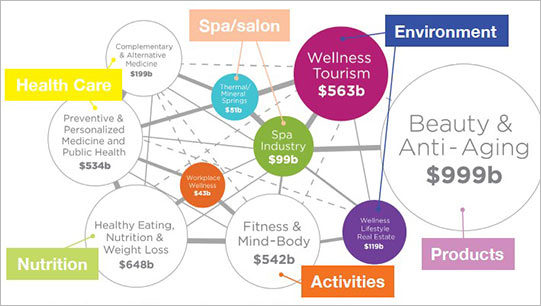
the Chinese Communist Party.    This morning there is a picture of Stanley Johnson and his youngest son, awfully cosy with Chinese functionaries – big fans, it says, of China under the jurisdiction of its Communist Party.   Gwyneth Paltrow says she is suffering from the effects of Long Covid, citing “longtail fatigue and brain fog” and then goes on to detail such a restricted diet one is left to wonder if she is simply hungry ?  Wellness is an old word placed anew, I am so wary of it.  And Wol, pragmatic and well remunerated professional, suddenly asked me – oh conspiracy theory – if I thought the pandemic was real ?    And the trouble is the balance.

There are two reasons why you know things: one is because you find them out by chance and the second is because you set out to discover them. 

And in both cases you have to understand what you have discovered.

Yesterday a friend lent me a book (Kiss Myself Goodbye by Ferdinand Mount) about a strange relative who lived in one of the great modern houses in the south of England.  Came WWII and it was taken out of private circulation and used for engineering research: after that, something else and then, industrial diamonds for Gulf War missiles.  In the meantime the house had vanished.

  It wasn’t even indicated on Ordnance Survey.   Its presence and function were not admitted until much later.  Discovered by chance.

The news has been patterned for a year – which is a long time – by what this politician or that says,

what this or that government functionary says (agreeing or disagreeing) and the alternative position voiced by housewives, medical staff, mothers, teachers, bin men, assenting and dissenting scientists, other party politicians and so on.  News stew. 

The unsettling message of this is just what my friend has responded to.  He doesn’t watch the news.  He finds it unattractive, monotonous, utterly confusing and depressing.  He’s not alone.  And, when all the shouting’s done, he doesn’t know what to believe.  It was his partner of 25 years who made sure he had the first vaccination.

“What is all this ?” he asked me last night about Covid

and because our conversation was one to one, and I was trying to be clear about it, he listened.  I think.

I have heard some sense about Covid.  Sense to me means sentences I can understand, delivered in a tone I can access, by a speaker who is not trying to sell me a position – or at least, not one that gets in my way.       Everything I have found out has been by listening or reading (same rules apply) and I was never any good at science or maths at school.   As soon as you start quoting figures at me, I glaze over.  Amalgamate one lot of figures with another,  I know it is unreliable and I switch off.    

But show me a patient who thought it was going to be “just like the flu” and has learned to their cost that it isn’t, the exhausted nurses and doctors doing everything they can to help, often without success, show me the paraphernalia of wearing and changing protective clothing –

the human cost I understand. 

And because of the segregation of one person from another, one group from another, there are endless home made contributions which apparently sit well with the majority, endless quite separate talking heads –  which visually undermines the notion that “we’re all in this together” . . if we ever accepted it.

So it is hard to tell what this means because if you’re anything like me, you don’t understand.  You haven’t found out by chance and you didn’t set out to discover.   So, may I hope that you like me are  not going out when you don’t have to, not having anybody in the house, washing your hands like a religion or using sanitiser, wearing a mask in every closed space eg bus, train, shop ?  It’s called being sensible, holding the balance.  And it is what we can do.       

just talking

The ballerina’s name was Lucette Aldous

and the company was Ballet Rambert.  I was 9 or 10, and they danced on the platform of the hall in a new school to which children of various other schools were invited for the performance.  When I mentioned the noise of the toe shoes to my parents, my father explained that the wood of the platform hadn’t enough “give” to absorb the impact of the shoes plus the weight of the body.   I was impressed then, I still am.   I had never seen ballet before and I fell in love with the illusion, the shapes and the soft pretty steps, the lightness and the line, the floating, the humour and characterisation.    It was years before I began to understand the discipline and the training and the endless harnessing of muscles into magic.

Recently I watched two actors Steve Coogan and John C. Reilly make sketches of the wonderful Laurel and Hardy (the wives played by Shirley Henderson and Nina Arianda were wonderful too.) 

The script conveyed frustration, disappointment, getting lost in the maze of your own fame but it didn’t convey – perhaps it couldn’t convey – how much sheer hard work went into the effortless charm of their little dance.   Just wonderful.  How did they get to the wonderful ?

There are all sorts of people who can make difficult look easy, whether it’s making meringues or balancing on a highwire or playing a sport – and we grant them that little word – “just”.   Long ago, God bless that man, a senior figure somewhere in television gave me the chance to interview Michael Aspel,

who always made everything look and sound as it were second nature and he were falling off a log – and I discovered a completely different person, whose father had never understood his aims or endorsed his talent, who worried and sweated and worked at the illusion that everything he did happened, occurred in some marvellous puff of smoke.   I so admire that ease.   

And we all have our favourites, people who fooled around and fell about, danced or sang, interviewed, preached or taught, painted or sculpted, made furniture or wove cloth or just were in some special magical way – the common signature is that they made it look easy – “just” whatever it was.

We did two programmes on four letter words, and the general public as contributors were their funny, generous, insightful selves, long before the current days of bloodspitting.   Just is one of the words of which I am most wary because it is so often to do with diminution as in “he’s just a carpenter”

or “she’s just a sempstress”:  OK.  Can you do that ?  I can’t and I know I can’t, let alone do it and make it beautiful.

My gift is even more ephemeral and harder to describe.  Think of smoke or frost flowers. 

No class for those. Somewhere along the line  I thought about a one woman show called Talking for My Life.  It came to nothing and I am totally fatalistic about that. Everything happens for a purpose, not mine to know or necessarily understand.  When I began my current adventure, one of my friends took longer to come through than anybody else, then a brief email followed by a phone call in which she described herself as “proud of you.”  She then bit it back immediately but I thought I knew what she meant because she has far more gifts than I and that makes her able to recognise a gift when she sees it.

Long ago when it was intimated to me that what I did was “special” but indefinable and therefore couldn’t be evaluated or praised,  I interpreted that as not amounting to much, no frame or plinth, no terms equals no worth.  And I have lived long enough to know it is not true.  Just because you can’t define a thing, it doesn’t follow that it has no worth.

We are busy discarding in the aftermath of something that has unsettled us (how I wish I could amass the cardboard of Mr. Bezos’s packing and put it where the sun doesn’t shine) and inevitably, in cultural shakeup, the baby may be threatened with the bathwater.  But babies come through –

and so does just talking.

ups and downs

“Oh” said Pam the Painter with feeling “ British Telecom !   Just seeing one of those Openreach vans  is enough to give me a  spasm !”    But I had to start somewhere

because the batteries in the landline device are dying in the key and volume of Florence Foster Jenkins, John Lewis is closed and I feel like a trapped rabbit looks.

The number on the box was answered by a man who said good morning as if he meant it so I told the truth.  “ I am the silliest woman you will speak to today” I said “but I need your help.”  He listened and he gave me another number .   The man who answered the second number was just as forthcoming so I told him my tale of woe, what a fool I was about these things and besought his patience.   Laughing, he diagnosed the difficulty, said he’d send batteries

and somewhere in there, aware of an intonation with which I was familiar, I asked where he was calling from.  “The north east” he said.  “Yes” I said “ I figured that, but where ?”  “Newton Aycliffe” he said.  I know Newton Aycliffe.  We laughed, I thanked him and left unreasonably comforted.  Voices do that to me.  (Up)

Of course my hands are weakened with age and arthritis (fade in violins) and I am scared of breaking something so I haven’t been able so far to do what was advised and will need help. (Down)  Rescued by a neighbour in HazMat. (Up)

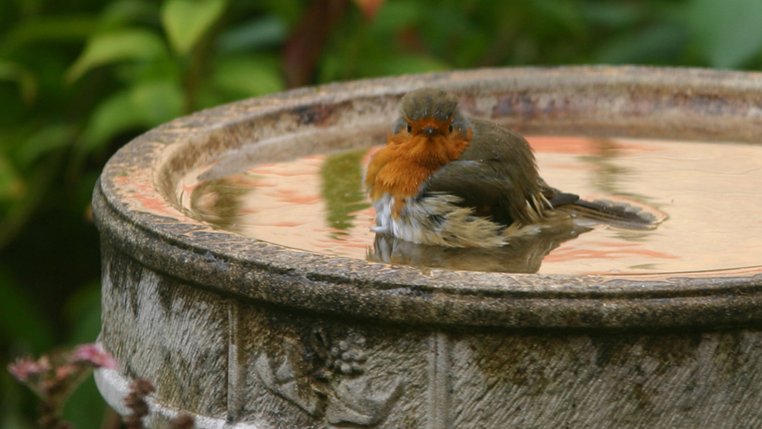
One morning I came out of the house at 7.00 into the snow – I love snow – and a foot from me, on the step, was a robin.

(Up)  I always speak to animals.  With respect.  And then I retreated as fast and as quietly as I could to the kitchen where I had recently decanted pre fabricated breadcrumbs.  The  robin looked at me with pity before hopping off to look for something edible.  Not even a squirrel will eat those breadcrumbs.  I’ve just thrown them all away, nothing to do with bread. (Down)

I asked my gardening neighbour whether she thought I should cut back the arums which have grown great foliage completely out of season – and this was before the storms settled in for a run.  She thought not, just let them be.  They now look very  battered by snow and frost and sleet but may pick up as the weather warms.  And this morning, beyond half a dozen blossoms on the winter broom, I noticed an arum in bud, which is definitely an Up.

It is just as well that I cannot properly locate the unhappy yapper, a small dog at the back of the house.    If I could, I would be calling the overworked RSPCA  – but then it may just be an ugly bark – there are enough ugly voices around.  (So that’s a Down)

While 15 years ago I interviewed a woman who had drawn from her own life in cartoon how an abusive relationship is made and maintained,

exceptionally useful to people who aren’t going to read a tome.  And I liked her.  So we have stayed in touch, the odd card and email , her next and terrific book about her parents (They Gave Us Everything published by Penguin )and around Christmas she sent me a sweet picture of her son and his wife  and their new baby.       

Today was cold and grey in London when the letterbox flapped with a small cantaloupe coloured envelope which contained another picture of her lovely granddaughter.  “I feel so grateful you came into my life all those years ago” she wrote.    Me too.  (Up)

And then a little later there was a big bossy bang on the door and I went to open it where stood the tall young man from the building site opposite of whom I had asked advice about the hole that comes and goes in the garden front of the flat (rats ? water ? subsidence ? disturbance to the underpinnings of the city ?).  He recommended more pea shale , I had asked where I could buy it, he’d said, don’t try – it’s heavy.  “I’ll try to remember to bring some.”   And bring it he did so I bet I am the only woman you know who was given pea shale for Valentine’s (Up). 

under b

Earlier this week, a known actress

– you might call her a star, I wouldn’t, very few stars in the sky of my imagination – was described as not being pretty enough to be believable in the lead of a new film about what we used to call a working class girl (what Americans call blue collar) bettering her lot.    Said actress communicated her displeasure to the writer.  For some reason it was thought important that he was a freelance – as if the show business bible for which he was writing would never have said such a thing, though they commissioned and paid for the piece – and the man/woman thing.  And in jumped the speakers for women, the speakers against women, other wellknown players under outrage and “what I would have done”,  and so on.

Height of the pandemic.  Cinemas closed, 

terrestrial tv running out of product, not all of us are  invested in Netflix/Apple etc and not all of us want to watch new product on a screen of smaller size   (See David Thomson’s The Big Screen: it isn’t new but it is important).

Said actress has one of those funny little mugs we used to call appealing before that word was ditched as patronising.  Shot from the right angle she looks lovely (skin to die for) but the beauty shifts, as does most human beauty – straight or gay, man or woman, young or old.  That’s one of the things that keeps you looking – you might miss it. 

“come and gone says it well”

Very few people and very few things are always eternally and from every angle beautiful.   And at this point I say nailing my colours to the wall, I am of the opinion that beauty is an absolute.  You see it when you see it.  You miss it when you miss it.   And it is a much abused term.

You can perceive beauty in anything.   You can know that it’s the term others would apply and not wish to join them.  You can lurch toward whatever it is with your mouth ajar (see annalog/instinct) – there doesn’t seem to have been a process between your brain and your response.    Like me meeting Reba a thirteen week old black Labrador puppy in whom beauty isn’t flat, it’s 3D – fur, paws, young smell, unafraid response, not mine , the dome of that silken head – a whole thing.  You can hear beauty, smell beauty, feel it through your fingertips …  the dictionary says “a combination of qualities that delights the aesthetic senses”.

But why would you argue with what a reviewer says about you in a role ?

  Wouldn’t you say to yourself “Great – that’s good for a talker ! “ And anyway, why is it wrong to say what you think, even if  the recipient doesn’t agree or doesn’t like it ?   Yes yes yes, we can have a whole argument about how you say it, context, matter of degree, what you meant, why you meant it, vested interests but you come back to the response.    The term beauty is bandied about in the 21st century.  It is far too widely applied, used without knowledge or appreciation. 

It is too often presumed , and always was, that beauty has to do with money – therefore we could argue- how could the heroine of this unseen film be beautiful or even pretty – when she was poor ?  This is probably why beauty

is referred to as a gift, inferring value.

(Aside: off on  this riff, I am back in my English class aged 13. |I have drawn my subject from the pile and I now have to speak without hesitation for 5 minutes on   – making tea …  Makes you think.  Makes you speak fluently too.  It isn’t beautiful but it takes you to an adjunct of beauty which is bearing – aligned to our old friend, confidence).

Because that’s what struck me about the known actress and the critical review.  Were I the subject of this item, I wouldn’t defend myself.   I know who I am, what I am trying to do, what the film was trying to do.   Earn your money and go home.  This is not about Beauty and the Beast or the Battle of the Sexes. You want a pure politically untainted example of beauty ?  The endlessness and focus of the subconscious mind.     

“by Sindre Aalberg”

Personal:  new radio station launches 14 February.

My first contribution (my son kindly said not your best, just your first) evening of the same day, rerun following Wednesday.  

May I thank all of you who have encouraged me and stayed with me down the years since broadcast was my breath ?

see BOOM Radio.

instinct

The first polar bear cub born in captivity here was called

Brumas and we all bought pictures and cooed with excitement.  Such a thing triggered all sorts of fashion and comment and jokes.  My father remembered every funny story he was ever told and told them to collective family mirth.  My mother remembered very few, like the one about two polar bear cubs  called In and Out, there’s a lot of In and Out as you would expect, and In gets lost.  When Out eventually finds him, mother bear asks how ?  “Oh” comes the reply” Instinct.”

Instinct was respected in my family, running parallel with education and intellect.  And I think of it every time I meet a particular neighbour who speaks to you as if you were a small child with dirty knickers, very full of himself, probably not helped by the fact that I am not a man.  I want to smack him.  I don’t see him often, thank heaven, and then I clench my hands for this is not the moment for instinct to out.

And then there is Tito, the opposite end of the spectrum, older, poorer, Afro-Caribbean, conversationally gentle but if there is time to exchange more than two sentences, he immediately launches into a long unwinding discharge of every bit of bad news and conspiracy theory

you have ever heard about and 26 you can’t imagine, unconnected.  I wonder how it all began, why he thinks that this stuff is any more use than the garbage through which we are wading at the moment.   I gently ease myself away, telling him it’s cold, go home.

And of course I had to meet both of them, one after the other, in the cold and pouring rain.  I can’t wish the Bully badly, his hidden good qualities have brought him a delightful wife and a very bright and beautiful son.  And I don’t wish Tito badly – I just want to know where he gets all this rubbish from, how it started, what is its appeal to him, other than endorsing paranoia.   While my instinct is completely contradictory: I want to hit the twit

and be very patient and gentle with the other.

Instinct is sometimes impossible to explain.  And I don’t spend a lot of time thinking about analysing it.  I respect it, acknowledge it, file it and draw on it.  It’s useful. What you feel is your reality and if that’s what you feel, there will be a reason for it. 

Deep in conversation with Snowdrop who had rung from the frozen north, I confessed that I found the present Attenborough series on BBC1 difficult to sit through because of the music.  Snowdrop is a film and radio academic – he understood immediately.   “Too much music” he said “distracts your attention from what is in front of your eyes. 

  It’s pulling you in another direction, delivering cues you may not need or want … and interfering with the voiceover which is Attenborough at his best.  I am sure it sells it to a lot of people but it is unbearable to me.”   Thank you.   Not just blind instinct but instinct as a trigger to thought, a process of choice …   We are all different, thank goodness but I don’t want music and speech and pictures.  The bits don’t fit.  Each to his own. 

Perhaps we are not really talking about speech or music (or speech and music) we are talking about sound.  The other day by chance on PBS (an American network I have had to explain twice in 2 days) I saw Ben Ferencz, whom I did not know and whose name I have never pronounced, now 100.  At the time of the Nuremberg Trials he was the youngest attorney (27) and it wasn’t what he said  but the sound of it that I found really uplifting because it was pragmatic and plain and accessible.  He was dry and funny and I know that part of his appeal was his very old hands . 

I like old hands.  They’re like maps .   When you ask people to go through terrible things, you must be prepared for them to reach deep into their instinct to survive and go forward.     Better if they can explain some of it to you.

sign of the time

Because I went to the US when I was young (19), certain images have remained with me.  It was in New York that I saw my first dead person, a girl propped up against the top of a subway entrance.  I asked the policeman how old she was.   Same age as me.   “What happened ?”  “Drugs” he said wearily. And in New York

 the streets were marked out (mostly) in blocks and I still refer to blocks.

My mother too referred to the block opposite the house (Cleveland/Kingston/Greenwood/Briarvale) as the little block, the loop that included Kingston as the bigger block.  I still hear myself refer to a shop as being “on the block near Sainsburys” or somebody’s house being “two blocks over.”

I was walking up the street one block from home when I saw a collection of objects on the left hand wall: a jug labelled Thousand Island, a glass container with a matching lid, half a dozen any old how plates, two bashed up paperbacks and a candle.  

by Bert Broomhead

  Still Life in the time of Covid, I thought. 

One of the things that time on your hands has made many of us do is go through the drawers and the cupboards and the files.   Both the Swede (next door but one) and my lovely friends who left for Turkey (currently roosting in Dubai)  put out books in boxes and I did well out of them.   But what I saw (eyesore)is a perfect example of the difference between a discard and a dump.

I dream of a manageably large single story unfitted building like a garage, dry, in which friends and I could set up a book store: oh yes, one entrance and one exit, two prices (£2 and £5), strictly masked and not more customers than whatever it is – three or five – at a time.   You’d have to do with people who like books because only they can even approximate alphabetical order. 

The charity book shop which took me through my leanest years was run by a former bookseller so you could find things.  Now it’s huggermugger which encourages lingering and fingering but not buying. 

When it was raining the other day a friend said he went through all the cupboards to put out two black bags of things he’ll never miss – but not the books.  I am in the same boat.  I have homes for one or two special volumes to go to but it saddens me that the only way you can get rid of a collection is to give it away.  Well fine if you want to endow somewhere  – but where ?  Books are heavy.   You are not going to send them far.   Teachers are weighed down

with extra responsibilities under Covid, the absences from Covid, the suspension of the syllabus and so on.  It isn’t fair to ask them to take on incoming books in number which have to be catalogued and stored.

Book burning heralds shut minds and the fear that comes with it.  Drowned books – sodden and impossible to dry and if dried, unusable –  are a sorry mess.  But books ignored, killed by neglect, by being dumped  – and thus you come to why (lockdown permitting) I hike my disposable reading matter along way over to a charity book shop that treasures books.  “Why bother ?  Why don’t you just take them up the road ?” friends say but you see, up the road, there is nobody I know of in any number to buy them and they will be dumped and pulped.

It’s not about making money, though I am very happy to make whatever we can for my charity of choice.  Or yes, when I look at what I have spent, I’d like something back.  Something – almost certainly – towards the next lot

because (as my son long ago discovered) you can always give mother a book.  And very early on we arranged that whatever else, I would give him a list of book suggestions so that he need never risk my notorious taste.   When he began to buy things for me independently it was thrilling. Though this year we agreed – no shopping – no presents – lovely cards.  And that too is a sign of the times.