no

Long ago, a man rang my then newly established radio show and (as people sometimes do) went on and on telling me the rigmarole of his life, without hope or insight, clearly expecting me to be brilliant and sort it all out, the adult version of “kiss and make it better.” He never drew breath and when eventually he paused, I answered the last reiteration of a much repeated question with “No.”   End of.   I am not a shock jock, I wasn’t trying to score points or be a clever dick. I recognised that either I devoted the whole programme to him or I gave him a response he could kick at – so I did the latter.   I only remember doing it once. But when you listen to these stories, layer upon layer of misunderstanding, convention for the sake of it, confusion reinforced by endless social silt and repetition, there is little you can do. Learning how little I could do was always chastening. I remember reading in Isaac Bashevis Singer that “it is better to do a little with a good heart than more out of obligation.” I thought so.

Of course there are occasions when you say yes and regret it afterwards, just as in other circumstances you decline and wish you hadn’t.   This is not a short course in rectitude.   There is no guarantee that learning to say no will mean that you only say it at the right juncture but permitting yourself to say no when you mean it can catch you a psychological breathing space.

Although I am aware of the advantages for women alone, the ill, the elderly and so on, I have had a mobile for three months only and I have never missed it. I am cackhanded, use two pairs of specs, hate the sound quality and have a deep antipathy to being removed from focus on the moment.   I don’t want to take pictures, play music, message friends on Facebook, tweet or twitter.   I have eyes, ears, a memory, a landline and an email: that will do.   Oh and an aversion to having to have what everybody else has, just because they do.

Recently I have read quite a lot about social media, the maladaption of the young to the constant presence of some screen or other.  It is as tough to be a good enough parent nowadays as it is to be a healthy enough child.   So although I could have done without the latest Google horror story (“… makes millions from the plight of addicts” Sunday Times 07.01.18) , I am not surprised. I do not buy on line. I do not bank on line.   I live an older simpler life. I just said “no.”

It would not occur to me to say no to (small amounts of) dairy: I am not allergic.   I am a convinced omnivore, eating fruit and vegetables in every widening variety but don’t start telling me what I shouldn’t eat: I come from 1950s austerity when we were grateful for food we didn’t actively dislike and we learned to cook for taste and nourishment.

You go to the sales if you like, but surely it must have begun to occur to people that the prices are set artificially high so that they may fall and you go when you go and pay what you pay but the endless lauding of the bargain is as much a fashion statement as the updating of the mobile. Walking through a department store currently is like discovering the aftermath of a hurricane: if it isn’t nailed down, it is for sale. Where does all this discard go ? And we have been manipulated with damnable skill away from what I need to what I want, and want (God Bless Michael Wolff) is the cry of the child.   Acquiescence doesn’t necessarily make you happy.

Learning to decline was one of the most important lessons of my life. Yes was inevitable, socially agreeable, but looking at something and deciding against it was liberating. There is always pressure to agree, to concur and sometimes to say no is difficult.   But then – whoever said life was going to be easy ?

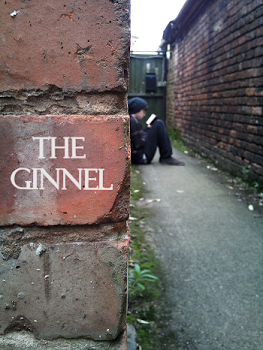
in the corridor

I saw my son on Christmas Eve – he was working through the holiday – and as he left, the cold arrived.   Waking at six or so on Christmas morning when it was still dark, I shrugged into a shawl and went from room to room, lighting candles in each, big fat beeswax numbers that were my present to myself this year.   And then I went back to a bed I didn’t leave except to lie on the sofa, for the next week. It sounds joyless (cough/splutter/sneeze/sweat/repeat) and it was certainly tiring, but I gave in.

I must have been ill, I couldn’t concentrate to read. TV programming reached a new low and food didn’t interest me much.   The cough medicine has been returned as unfit for purpose – now made under licence some other where which is just an excuse to shift units.   Brandy and tonic was much more use.   And lemons, lemons till I was yellow round the edges.

But the quiet embraced me. Everybody was away. I could hear birds occasionally and a brief glance into the street showed it still.   I’m trying to remember when I became so aware of silence: maybe it is just that the world grew noisier as I aged. A great deal of what the rest of the world tolerates as a matter of course is intolerable, hands over ears, to me. The quality of sound fascinates me, though what it is and how you interpret it is in the ears of the beholder.

In autumn 2017, a friend, much brighter and more down to earth than I will every be, remarked in conversation how threatening London felt – that the aggression in the air was tangible. In the 25 years we have known each other, she has never made a remark like this.   Perhaps it is simply that we use sound to deafen ourselves against the thudding of our nervous hearts or we use sound to perceive.

The silence over Christmas is largely to do with the falling away of levels of sound you tolerate in a city.   Every kind of traffic slows or stops, you notice the interruptions but they are few.   And if the silence isn’t broken, you begin to listen to the silence.  Apart from silence that just is – because it occurs – there is a silence born of snow and another that comes with fog. And then it’s about levels of perception. Snow is benign if you are warm indoors and can contemplate it, less so if it’s many feet deep and you’re stuck in it. Just as fog can vary between romantic mist and deadening white out, frightening to travel through.

So the last days of the old year passed, leading up to the drama of New Year which I haven’t shared for years because a new year is like a new person, you don’t know how it will behave until you learn a bit more about it.   I think of New Year as a tiger: very beautiful but cuddly it is not. And I wait to discover if it is going to let me get past it or I am going to have to wrestle with it. I love big cats but forget the anthropomorphism.

So this is Day Two – Wolf Moon tonight – and we are in the corridor.   In the corridor at work meant where you put things you had no space for in your office. In the corridor at school meant you had misbehaved and were sent out to wait until the teacher had time to deal with you.   In the corridor, I thought this morning, the passage in between two places.   I looked it up, derives from the Latin “to run”, running between, on the way to somewhere.   Good image for New Year.   In the corridor geographically means the passage between a landlocked territory and the coast.   The journey out, the way forward …Travel safely.

“golden spike on the Eastside Rail Corridor”

pause in transmission

It’s the end of one year:

Happy Christmas

And the beginning of another:

Happy New Year


There is a pause in transmission because of the way the dates fall this year so

Annalog will resume 4 January 2018.

Thank you for reading, writing in and reaching out – more to come.

I send you verbal flowers

Till soon …

the festival of hope

Never has the build up to Christmas so resembled rickety stairs – here a joist, there a mousehole, watch where you put your feet. Everything that isn’t nailed down is reduced (why does the word reduced conjure a sweating endomorph in a plastic suit?) Wiser heads have already started opining that you can only have the money once and in between Black Friday and bringing the sales forward to pre-Christmas, when it’s gone, it’s gone. Fear stalks the land under the glitter – and I was never convinced that glitter was good.

An old song opines “When I’m worried and I can’t sleep/I count my blessings instead of sheep/And I fall asleep/Counting my blessings.”   And it seems to me that there is a rider this year, for however much we appreciate the blessings we are counting, they may not be enough to get us through.

This year has been a real mixture of highs and lows, neither a white Christmas nor a black one, but clearly chequered.   Because really, for every up I can think of a down, and the other way round, personally, nationally, globally. I have had medical news I’d rather have been spared but then, it hasn’t happened yet and you can’t live – at least, I can’t live – in expectation of the worst or the best. I am too busy with living each day the best way I can.

Years ago, when Shaker furniture had its moment in the stylistic sun, I read that they strove to make a chair so beautiful that an angel would want to sit on it. I can’t sit on the day but I acknowledge the sentiment.   Doing your best is a phrase out of fashion. Too often it means just doing enough. But it doesn’t to me. It means what it says and it brings me treasure.

This year, the year when Harvey Weinstein and company came to represent much that was brutish and distasteful about how men deal with women – and the bucket of dirty water flushed out men who were horrid to men too – I was the recipient of smashing exchanges with men – from the Italian to whom I gave a lift when the traffic was bunged up, who kissed both my cheeks, to the driver who saw me for the second time in London’s millions and held my hand while he talked to me, to the GP I have never met who wrote to me, to the boy who came to sell me something, came in for a warm and a glass of wine, delighted to talk about books and movies.

Like a lot of older people, I find the blurring of the seasons unsettling – many of us cling to anything that reliably marks the passing of time (my father would have said “You can’t control it, you can only measure it”) but the result is Christmas roses are flowering up the road, a red geranium managed just one bloom on Remembrance Sunday and the white ones are budding. The arums have leaves galore and winter broom is living up to its name.   It would be “I’m Dreaming of a Green Christmas” in my garden.

Well heeled women mutter resentfully “It’s quite cold now” and I restrain myself from pointing out that that they have boots, coats, scarves and central heating – this is not a refugee camp but winter in Britain and give or take a degree or five, it comes every year. I cheer for the Sally Army and Shelter and every other relevant charity for drawing attention to the want, especially to children in temporary accommodation while the brand new developments go on building unaffordable flats – one of the most touted in London just found a convenient loophole and cancelled 250 affordable homes, may they rot.   And I know you may not feel that’s very Christmassy of me, but Christmas is nothing if it is not real – real thoughts, real feelings, real plants, real food, real effort and real reciprocation.

That’s why I write cards, and I always send one or two that are pies in the sky, to people I have lost touch with, who may have moved on but I still think of them, an offering at the altar of hope.

white stuff

Pure White and Deadly was the title of nutritionist Professor John Yudkin’s book about sugar, though with that title, it could just as well have been about cocaine. I shrink from demonising food, being horribly aware that at any one time, whole sections of the human community haven’t got any, let alone enough. But as her sweet tooth famously blackened the teeth of Elizabeth I, and Fast Food Nation (by Eric Schlosser) blamed salt as much as sugar (also white) for the terrible addiction to all the cheap delicious things our culinary nation is heir to, I can see that just because it’s white doesn’t make it right.

In the west we wear white to claim purity or at least the right to magnificent impracticability, while the east features white for another kind of purity, that of all passion spent – death and mourning. There are people who don’t look well in white and the perverse, like me, who prefer winter white and summer dark though, facing up to the present soiled city in which I live, I don’t have much winter white (I once had a white flannel dress) and what I do have is washable ie white corduroy trousers which have been a great success.   I dream of white silk, adore white cotton and cherish white wool.

I like every other colour pearl than white which add 20lbs and 20 years to me, though they look wonderful on Her Majesty and pounds of them on the odd model are pretty special too.

White hair gets me the darndest compliments – by which I mean from unexpected sources – and we all prefer our teeth white though there are as many shades to white teeth as there are to white snow, whose variations include 20 plus words in Inuit to describe it.

There was a famous agent in Hollywood’s heyday who only ate white food – vichysoisse, chicken hash, meringue – whose wife and cook (two different people) liaised to keep him from boredom on his narrow menu. No good to me – there is no such thing as white steak, I don’t like white wine, rarely eat white rice or white bread.   I was brought up to yearn for a bit of red, a bit of brown and as much dark green as I could eat.

There is the inference of good and evil (“he’s a white man” – no not a Caucasian, rather, a decent person) or Conrad’s Heart of Darkness, blackness inferred.   Balletically, there is the White Swan and the Black Swan though in life, they are as differently beautiful as each other – but maybe that’s the point.

For years I preferred white bed linen, white towels and white knickers: now only the last apply. Something to do with not putting dubious dye near those important parts. I loathe white fur, white high heeled shoes, white gloves of any length and we’ll just not talk about white handbags. I like white shirts, white jeans and white sneakers on other people.     I dislike white eye makeup, whitened lipstick and white nails – no thank you.

I am not keen on white furniture but I like white walls, white lighting fixtures and white flowers – any white flowers except lilies. I like white paper to write on and brown envelopes to send: my mother used Basildon Bond blue and when using it did not confer on me her best qualities, I struck out on my own.

I understand white as a description of blinding pain or light but nothing prepares me for the softness of snow light or the sound of snow.   I am of course over privileged: I don’t raise livestock or crops that might be threatened by snow. I have never passed more than a night without some heat or light or food I needed. I have never been snowed in, body or building. And I love the snow with the unreasoning always new sense of a child.

It is true, it’s only sleet and snow mixed this morning in London but the sky has the soft tousled quality of yellowing tissue paper (which I associate with treasures) and the flakes almost clear the streets of traffic and soften all sounds.   Nothing illegal, immoral or fattening about my white stuff: just lovely.

…as to a bridal

What I liked best about my father’s funeral was the double line of his comrades from the Great War, lined up at the top of the churchyard. Kind and nice things must have been said but I was so deep in rage and pain that I remember only that the vicar seemed to suggest that if he was a very good boy, could he get into the kingdom of heaven. The tone and the inference infuriated me.

When my mother died 20 years later, I rode in the car with her youngest sister and my sister while they told me what a pain in the neck I was. It clarified for me that I would infinitely rather be me than either one of them so when the presiding priest, who didn’t know any of us, asked my sister if she’d like to speak and she did that “Oh I couldn’t possibly” thing, I stepped forward, Biblical quote in my handbag, determined to thank my mother and her neighbours who had made her last years so enjoyable. A retired RN type said he couldn’t imagine why we played a black communist (Paul Robeson) at her passing so I said “Because he was her favourite singer. Thank you so much for coming” and walked away.
I am never sure whether the service is for the departed or those left behind but few are as honestly emotional as the one in Four Weddings and a Funeral, where love and loss stand shoulder to shoulder.   The form bothers me but so does the lack of form. The last one I committed myself to was for my friend Jiz (see annalog 18 October 2016) and typically she had left instructions as to how she wanted it done.

In ringing a friend recently to enquire about his health, I mentioned I had seen the obituary for Pam Powell: she was a great age and I hoped her end was peaceful.   “I’m going to the funeral” he said (he was her hairdresser). “Why don’t you come with me ? It’s at St. Margaret’s Westminster, where she went every Sunday.” So I did. I met Pam Powell once and Enoch Powell twice and I cherish the memories. But nothing could have prepared me for how this felt.

The church is not big, simple and rather beautiful and if you look it up, you’ll see it is very old. The presiding clergy made everything sound as if they meant it. The gathering was not enormous but it was my sense that those who were there, went because they wanted to.

“rosemary for remembrance”

For one reason or another, they liked Pam Powell and they wanted to wish her well at her passing. Family members contributed while the eulogy was offered by Enoch Powell’s archivist, a barrister. And we should all have somebody like that speak at our ending.   He was informative and amusing. Early on he said (I paraphrase obviously) “Don’t think of Pam as just a political wife. She was politically committed in her own right and she wanted to be of service to her country.” Oh yes please.

Along the way there were hymns we all knew well, and the choir sang a setting of the 23rd Psalm we used to sing in the school choir.   The language of the invocations and prayers were those of the old church and the King James Bible and I had a quiet eye fill over my parents who would have loved the sweet gravity of it all.     The last of the three hymns was I Vow to Thee My Country which has all sorts of meanings as we change and the world changes and anyway the cadence of the opening catches the throat and the heart.   And then it was done, the flower decked coffin was born away to private interment, so we filed out, spoke to each other and I left to come home in the cold.

But it stayed with me.   I felt privileged to have been there, and oddly comforted. The form was not rigid but held you, making room for what you believed and where you stood, and yet inclusive.   There was no over egging of any part of the pudding.   And I realised I had dressed for the rite as seriously as if it invited some kind of future.   And maybe it did.    

butterfly mind

Last week, one friend had a cancer scare (clear), another’s husband collapsed with what turned out to be pneumonia, a third’s husband was having a back operation, Wal’s beloved dog died and Lydia had migraine. Misery loves company indeed.

Television was terrible, I couldn’t concentrate on a new book that might be disappointing (I’ve had a couple of those recently) so I re read Hilary Mantel’s two Cromwells, which have for me a unique appeal. There are passages of that lovely writing that sound just like my parents talking. It’s not that they were hardworking Tudor fixers but that the cadence, the music if you like of the language, is wholly familiar and thus very comforting.

My artist friend now renamed Salad because that is how she rendered her name when sending her first email had a birthday and typically, when you go to give her something, she effortlessly returns the compliment. So, upon hearing my son was coming to supper, she gave me organic Jerusalem artichokes which I learned to cook differently, hooray for Nigel Slater. We cleared out the fridge – venison sausages and black pudding panfried with the aforementioned artichokes, an enormous green salad, a reduced bag of banana shallots simmered whole in a mean mixture of oil and butter.   It was cold, we were tired, it was heavenly.

In my ongoing celebration of London as a geography lesson with real people, I met an attractive Albanian manicurist, a tall but tiny wand of a self-described Malay Chinese/English girl, a splendid lady from Singapore who explained the validity of that description (Malay is a nationality, not an identity, thank you ma’am): John from Ghana who got out of the cab to stand in front of me saying “In my culture, you only shake hands with a woman if you are on the same level”. I met a translator (of Chinese among other languages) who has spent years in Spain, now relocating here because her daughter is at university. And an apparently talented barrister, and noted the discrepancy between his eyes and his mouth.

When I was about 12, I found two 1930s film annuals in David Smith’s garage and asked his mother if I could have them. “Yes, love” she said absently. “Are they clean ?”   I was half out of the door and home to a duster and it was years before I realised what she might have meant.   They were full of names I had never heard of and one image that has never gone away – Joan Crawford without jewellery in a full length gold lame trench coat. My mother looked over my shoulder at another face on the page and recognised Miriam Hopkins, whom she described as “the woman who acted with her mouth.” I asked her to explain and she said “People say eyes are the window of the soul – but eyes can lie, or just not tell you very much, or tell you something that the person is at pains to hide.  Or the eyes have a concealed message and the mouth sends what message is appropriate.” I began to look at faces very carefully.

The BB (beautiful barrister) had a smile that reached his cheekbones and above them, eyes of cold dark pain and fury.   The discrepancy between the two was quite shocking.   I’ve seen it before.   It’s a disconnect. I mistrust disconnect, it means unresolved difficulties, no peace.   And people with no peace of mind lash out.

Nowadays, outside a psychiatrist’s office, we talk of integration as something socially desirable but the first integration is to put the bits of personality together. We may need help for that and recognition before we seek help. Some of us are unwilling to even contemplate the process, too difficult and too uncomfortable.   But if you don’t face yourself, you carry your emotional difficulties around and play them over and over, learning nothing about yourself except painfully that you have a pattern and you don’t seem to be able to change it. And you visit them on everybody else.

To be sure, therapy doesn’t work for everybody, especially not the six weeks-to-a-breakthrough kind, but I can never forget the relief of realising that the load was lighter.    

africa story

Michael Raeburn gave me his name and I kept it. Best thing he ever did for me. He was born in Cairo, his father a British colonel, his mother an Italian Jewish family born there.   Displacement and colonialization from the first. Brief sortees into Britain and Kenya yielded to settling in what was then Salisbury, now Harare. Michael grew up there and when Mugabe’s policies pushed what is now Zimbabwe into unnecessary hardship, I remember him telling me how he used to trot down the garden with Micheki the cook to plant an avocado stone in the rich land where it would settle in and bloom in short order, the earth was so rich.

I would not have put Michael’s parents side by side at supper so how they conducted a marriage is a mystery to me.   Still you know people do. They do and they do, and they make it up as they go along and we, watching, either don’t see the cracks or we connive at not seeing them, the oddities are just that marriage which is always a mystery to everyone who isn’t in it.

Michael talked about the Alsatians his mother kept, that she went through half the population because she couldn’t keep staff (except for Micheki to whom Michael promised a bicycle – and showed me the photograph of it and him).   His mother was always angry, there was not enough of anything, not enough clothes, not enough music, not enough society, I suspect not enough love and she alternated between telling Michael how she nearly died having him and taking him to the best hotel for an expensive tea with cream cakes. His headmaster father retreated into the bottle. Michael lay in bed, curled up, hands over his ears to hide from the screaming rows. When he was off to Europe, the University of Rhodesia and Nyasaland was then part of London University, he said to his father – one of the few people he ever loved – “Divorce.”   And Daddy Bill did.

I call this “lace curtain Africa” when the standard of living, the wide open spaces, the fruits and food generally, the animals, the land is beyond the pretensions you can only aspire to if you are the settler.   I remember nearly falling over laughing when Michael launched into a diatribe in Chilapalapa – what was called “kitchen kaffir”- how you spoke to servants and even as I was laughing, wondering at the divisions between what he knew, what he saw, what he suspected, what he felt.

Because the lasting love of Michael’s life was Africa. Of course he became politically involved.   Of course we knew people who … Of course it rarely worked out well because the journey to political consciousness is never straight forward, there is always a price tag and it is heavy, often unpayable.   Michael was every bit as displaced as his mother had ever been.   His mother’s mother (called Anna) had lived with them in her final illness. These families spoke English, Italian, French and Arabic so, while at university in France, he advertised to teach English and met Hugues from Martinique, who spoke French every bit as well as he did and was a child psychologist. And was black.   And described how taken aback he was.

I did not see Michael after we split up for over thirty years. I have known two men who were marked by their tortured love for Africa and tortured is not a word I throw around. Any human mistress I will face – but not Africa because it refers to their childhood, their dreams, their guilt and their joy.

Somebody died in Zim and Michael went back to sell a house.   (That his mother had kept all her treasured carpets rolled up and they had rotted seemed appropriate.)   At that stage he would not condemn Mugabe as many of his people won’t, because he was part of the liberation struggle, to wave goodbye to Blighty and run their own show.   No fool Michael, he knew that the financial underpinning was the next great colonialization in Africa: by China. But he didn’t want to think about that – until another journey some years later.   And then he talked about devaluation and money and hunger and finally, finally the raped earth which no longer would grow the seeds that Micheki taught him to plant.

…Growl

Words and terms get lost in the relentless twee of modern parlance.   Less dumbing down than dumbed.   We can’t all know everything, we don’t all have flexible vocabularies.   But my teachers used to rule against “nice “ as a description for anything.   I still use it very carefully, even precisely. It’s too big a fuzzy blanket to do more than obscure.   So I saw the John Lewis Christmas ad last night and went in search of lemons.   Mary Poppins would never forgive them, it isn’t “a spoonful of sugar”,

more like a bag.  And I think I saw the M&S which faded instantly into overloaded short term memory. We used to say that if you didn’t remember the name of the brand, the ad failed. What can it mean if I remember the brand but not the ad ? Debenhams was slight but fresher faced – it was so last year too – and as we reach six weeks and counting, everything is draped in red ribbon and it’s hard to find cards that aren’t for Christmas.   Makes me growl.

“Bored of” makes me growl. It’s tired of and bored with but tired of is in narrower use, out of fashion, now usually referring to bags under your eyes, so the constructions have elided and become as you see – I so dislike it, I can feel myself turning into Lady Bracknell as I write.

Hard fruit makes me growl.

“a snow leopard to make up for the one some idiot shot this week”

You either shop around – I have time and buy in small quantities, you wouldn’t if you were working or had a family or both – or you are in the land of Take What They Give You.   I paused 48 hours ago and exchanged sympathetic glances with a small woman as we confronted “perfectly ripe “avocados.   “Stones” she said clearly.   “And that notice is such a lie.” We commenced to feel our way through the crate.   “You buy it hard – it’s all chilled – and it doesn’t ripen – it saddens and withers …” I agreed.   I buy eating apples in two different places, cooking apples in another, oranges in a third. We used to call that shopping, when one stop shopping was experimental.

I never thought I would say this but I bemoan the loss of the queue so that I go and stand and wait for a bus, and some chippy thing steps in front of me without so much as a smile or “Excuse me” – worse still, children seated or bags seated while humans stand promote a whole series of bloodcurdling noises emanating from the bottom of my diaphragm.

Noise makes me growl – like wandering into Fenwicks (I was looking for a special present) and getting caught up in its pre Christmas “shopping event” – how twee is that ? – the building shaking to formless music, screaming young women (you’d have to scream to be heard) spending somebody’s money like water, under lights where you can’t see the colours.   I went round the corner to the quiet Asian owned pharmacy which has done good business for years, where it is clean and not overpriced, thus not getting a present but avoiding a headache and the dyspepsia of disapproving old age

My mother used to threaten I’d turn into Vinegar Nell and it seems she has wished it on me, though I strive for the same kind of balance as I tried to maintain between hope and experience.   I used to say I was 49 per cent cynic and 51 per cent child and as long it stayed that way, I’d be all right.   I count my blessings, I tell of nice moments and pleasant exchanges but sometimes something just pulls you into growling mode. And I would rather growl from time to time and admit to it, than become the sycophant of those trilling voices trying to sell us everything from a moorland view to the next winners in some ghastly game show.

There is a knowing cadence to all kinds of speech that I can screen out when it’s in something I have choice over but when it inhabits the throat of the newscaster or the weather girl, I feel the growl working up my throat to a bloodcurdling yelp.   “Goddamit !” I say – and channel a grizzly.

a piece of the jigsaw

It doesn’t happen so often now – old age is very rewarding in that – but every once in a while I feel that I can’t keep up or I don’t fit in and I can taste being lost like old metal in my mouth.   I was trying to explain to a girl of 12 why I went to church and why I gave up.   (There is a background to this: she adores her father, the family were initially Roman Catholic communicants and then “my father read a lot of books” and renounced it all, taking his very young family with him.   Mother’s comments are unknown.)

I was brought up to go to any place of worship, be respectful, pay attention and see.   Discovering that my playmate Derek went to the local Methodist Chapel, I went to Sunday school with him for a long time: my most vivid memory is of hearing an elderly missionary explain the Chinese ideogram for “faithfulness”, showing us the drawing of a man standing by his word. I went briefly to the Congregational Church, and then to two different Anglican congregations, the second of which I gave up on when my sister’s fiance was killed in a plane crash.That embodied my first crisis of faith, when I knew I needed something but I didn’t know what. There were two other occasions when I lost touch with the Master, wide apart, but that’s it: my God may not be your God, but He’s very real to me.

At school I didn’t fit in because of my accent. Both parents were from the South and this was the industrial North East, another country.   And then I discovered that the mixture of vocabulary and voice made schoolmates laugh and even defer to me, and used it all shamelessly. I practised to be an eminence grise long before I had grey hair.

Often I didn’t fit in at work. (I was a secretary for ten years).   I read too much, my mother said I thought too much.   But I hadn’t been to university so I wasn’t quite one of “them” and it was doubtful if I was one of anybody else.   A passing man gave me good advice: accept you don’t fit in, and work out of it instead of against it.

Looking recently at a 40 year old piece of film of me working on air at the first incarnation of Capital Radio (it’s now on its second), I hear myself learning to say what other people in a similar situation might think. “That’s what stopped me from ringing in” exclaimed the man who rescues me when the computer shows its teeth. “Where did that ability to confront come from ?”   Out of fear, I said.   “Well, Anna, it’s the most extraordinary volte face” he said. “Nobody would ever think you were ever afraid of anything.”

“nightjar”

Protective colouring, my friend: always sound as if you know what you’re doing and try to make sure you do.

Parties are not for me. I can’t find my feet. I think I have enjoyed three or four in my whole life. Oh, the headaches I have pleaded, the glasses I have washed!

And then, years ago I was being interviewed by a woman who left me briefly to do something else so, of course, I looked at her bookshelves where I found this quote from China’s Great Helmsman, Mao: “war is politics with blood and politics is war without blood.”   That I have remembered it and how I found it says something and I thought of it again as I watched a magnificent documentary by Ken Burns and Lynn Novick on The Vietnam War.   And for the hours that it ran, I belonged – because so so many of those young men thought they knew and discovered they knew nothing.   They were all lost and picking up the pieces that worked for them too.   And I watched and I paid attention (it is a paean to the art of documentary). I wept and I watched. I realised that I have seen the world – even in my small experience – as deeply about the nature of war and politics at a viscerally simple, personal level.    You know we say “It’s a war out there” ?

No kidding.