Monthly Archives: May 2013

Food for thought

Unusually today, I had lunch at a pavement cafe, alone, and enjoyed every mouthful.

The food was splendid, reasonably priced and I was so busy enjoying it that it wasn’t until near the end of the meal that I realised I had.

Over the years, I have learned to do all sorts of things alone.   I don’t have any difficulty entering a room alone, appearing in public alone, though I am ambivalent about being ill alone.  You may want to be left alone but you want to know somebody cares.

But with regard to the lunch – I have never been any good at eating alone in public.
images


When I came to London from Middlesbrough on my 17th birthday, opportunities for eating out had comprised fish and chips with my parents in the car at Stokesley and probably three Chinese meals, two with my mother.  I could just about handle coffee or a drink, but I was evasive about eating out with anybody.  The group of friends I made drank in the pub and in those far off days of luncheon vouchers, four or five of us saved them all week and then met for a blowout lunch at The Stockpot.  All women, I could manage that.


I was so terrified by the first meal in a French restaurant that I forgot all my French, ate soup and an omelette, and threw the whole experience away.  I couldn’t look at the waiter; I hoped devoutly he wasn’t looking at me.  It was so embarrassing that I felt as if I had blinkers on and could only see what was directly in front of me.  I remember everything about it and it was agony, to be avoided.  I used to meet for  what we called “late dates” i.e. eat first and drink later, or simply lie and say, I had already eaten thank you.   I don’t know where this came from.

528875_630263116055_1576169783_n

Always perfectly happy to eat a home, in friends’ homes or on picnics, I have never had anything resembling an eating disorder as I understand it but sitting down in any kind of eating establishment produced a lock across the back of my throat reinforced by another lower down, across the stomach.


I was saved from much difficulty in my early relationships because none of us had any money to spend on eating out and then along came a job that required me to take clients to lunch.   I had to do it to keep the job I loved.   So I did.  I honestly believe this helped.  In the beginning I pushed my food round the plate to the manner born but in time, I ate a bit.  And then you have more or less beaten the fear into submission – you eat a bit more every time.  Until I had to eat with someone I was keen on, when the whole thing reprised and I went back to playing at “not very hungry”.   This continued until I was in my early thirties when I beat it by marrying a man I loved who liked to eat out.  So for twenty years, we ate in a variety of restaurants large and small, glamorous and otherwise, and I assumed that “that was then and this is now”.


When the marriage ended, I thought I was older and wiser and it would be fine.  And in many ways, I was.  But it wasn’t fine.


Eating out alone makes me feel conspicuous.  Even in the quietest corner and masked by a book, I feel I am disturbing the harmony of the place, that there is something discordant in me that means that I am not whatever it is that would make me acceptable.  I don’t eat out alone much but I do when I can because I feel that the ills of 50 years ago have no business in my life.  Part of the problem is that I am naturally gregarious so I long to share the experience but I am working my way past that whenever I can.
20281-otkrytki-russkoe-zastole

Last year, I swept into a place, tempted by feta and honey on hazelnut bread and my first ever glass of Temperanillo rose, which made me so happy I could have skated round the restaurant.  A spendthrift as soon as I am remotely intoxicated, I promptly bought a book I didn’t need.


So today was not an exam.   More like course work and presume it will stay part of course work until I can say “Eat out alone? Of course.”
 

I Saw

I have never been a fan surrounded by the chosen image embellished on record sleeves and teacloth seeing film or performance over and again, shouting at the match, going weak at the knees in the street.

Quite early on I began to separate people whose physical impact I responded to from people whose achievement I admired, though I also came to understand that intelligence rendered much beautiful to me that wasn’t appealing to other people.


And I am an enthusiast.

Once asked what kept me young (apart from flattery!) I answered “rage”.
Did that mean I was always angry with people?


No.  It’s closer to the French sense of the word which means, among other things, passion.  Long ago. a very important man in my life with a temperament very similar to mine, remarked “People like us should be paid for living.”


At the time, I thought it was the height of conceit but I have come to see what he meant.

I like life.  The Jewish toast “L’chaim !”  (“To life !”) says it all.  I like some bits better than others, of course I do, but I never forget Auntie Mame (film, 1958) abjuring “Life is a banquet and most poor suckers are starving.”


Life is a series of doors opening on to vistas which shock and amuse, horrify and teach – and I want to be moved, churned up, made to think and choose and be rendered speechless.
Which is what happened when I saw a film called The Gatekeepers.

It is a documentary.  I am pretty guarded about documentary which has been eroded by the merchandising of the corporate brand, the rise of infomercial and reality tv.  

tumblr_m9zwuwROhr1r43b3vo1_1280

Throwing everything up in the air, avowing that “anything goes” results too often in less – less thought, less imagination, less impact.

But the Channel 4 series Unreported World shows that other people’s lives are quite different, often stranger than fiction, and that the difference is 
interesting..

Other people make choices we don’t even dream of defining.

The Gatekeepers is about the Israeli internal security operation Shin Bet.

The film is short, subtitled and it goes on a small list of documentaries that – apart from newsreels – affected my adult life.


These include a film about World War 2 pilot Richard Hillary, one of Sir Archibald McIndoe’s plastic surgery “guinea pigs”, one about the jaguar in Brazil, one about the black rhino in SA’s oldest game reserve (in both cases for what they taught me about the humans involved, as much as the animals) 
and The Fog of War, about former Defence Secretary Robert McNamara under whose aegis the US burned and was burned in the wars of SE Asia. (By no means a complete list, there are lots of other influences but a psychologist would make hay with the importance of threat in my cherished perceptions.) 


The Gatekeepers is an exercise in how exhausting decision making is.

Think what you like about Israel, here is a film, the length most films used to be and for my money more effective for its brevity, featuring as talking heads the men who have been charged with policing a small nation in a particularly vexed geo-political situation for 40 years.


You are invited to contemplate candour about pragmatism to such a degree as to render much of current British politics the consistency of cream crackers – familiar, useful, a bit bland, a bit brittle, forgettable.

Six men – intelligent, frightening, weary – not pretty, not actors or pinups – thoughtful, troubled, adult.

It was outstanding.

george-christakis01

One definition of documentary is an assemblage of facts – what people do, what people say they do, which may deliberately or inadvertently tell
us the watchers something of what those people think.

How you put the facts together is immediately open to differing interpretation.

In a film, you can make things happen in an order or a way they did not, for greater impact.


You can argue that all the elements were true, you just arranged them.
Is that still documentary?

We used to say bitterly to one another, me and my film loving friends, that acted film was often more truthful than documentary but sometimes – in the exception that proves the rule – the structure and design, the setting of a documentary tells us something we did not expect learn.

It is not to do with my advancing age that I am aware of weariness.
I see what I see and you either grasp the emotional costs of a series of actions and responses, or you don’t.

I sat through three hours of Wyatt Earp (1994) to learn how tiring is the procurement of death in the pursuance of order, because however you choose to get there, the end is the same: too many die.

The Gatekeepers taught me much more in 95 minutes.

Bad Habits

We cannot see ourselves.  Even the mirror only shows a reflection, you could say a perception, and that quote from the Scottish poet Robert Burns

“O wad some Power the giftie gie us

To see oursels as ithers see us”

is thoughtful enough to get over the clunk of the way it’s written.

Bad-habits-illustration-001

When I was younger I was punishingly self conscious and I wouldn’t wish that on anyone, but I wonder what people would say or feel if they could see what they do unthinkingly, to which the rest of us are helpless witness.  At worst, it’s a kind of psychological dumping.


Small children suck their thumbs or pick their noses and this is usually amended by a handy adult.

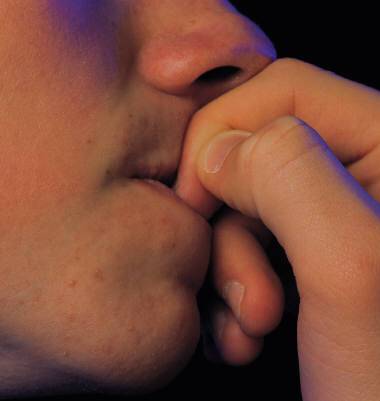
Nail biting is harder to correct for the biter and the guardian but we can assume it’s not desirable.  I have never heard of it being encouraged.

In the past, a bad habit was controlled where it might be seen.  All of us have bad habits – no moral high ground here.  There was however tacit agreement that what you did in private was not what you did in public.

But – just as it is no longer unusual to see people go up the road in their nightwear – nightwear that has ceased to be advertised for sleeping but has become what you wear “at home” and may go to bed in – and as millions of us have been busy watching people exhibit themselves warts and all – or maybe just warts – for every kind of camera, there is a gruesome obviousness in flaunting what was once deplored.

nail-biting

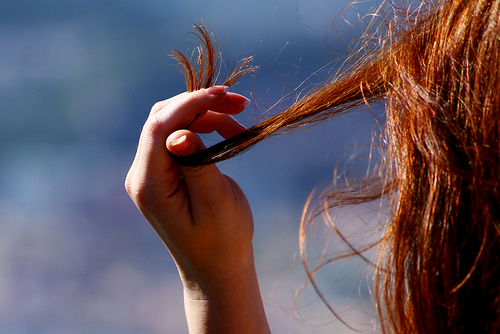
A young woman sat grooming herself for the 20 minutes we shared a bus.  Simian, she ran her fingers through her hair over and over, shook it out, pushed it back, twisted it round, shook it out again and repeated the process.  Like a tic with a pattern incorporating a pause, the routine ran, over and over.

And you know that if by some clever scientific wheeze, you could tint the air so that she could see the dead skin and bacteria she was shedding all over, her mouth would pull into that familiar pout of distaste which people employ when they don’t like what they see but they can’t associate it with themselves.   A new take on denial?

I’d like the same idea applied to public transport when people sneeze and cough, not using tissues or handkerchiefs, and are so darned generous with their germs.

But this is passing irritation.


There are more serious forms of personal malpractice, laden with anger turned in or pushed out; perhaps depending upon gender though I suspect it has more to do with individual personalities.

ht

In my casual observation, nail biters are 50/50 male and female but nose pickers are mostly male.

Like the young man who got into a crowded train on a cold day, medium height, attractive, well-cut dark overcoat and sat next to me whereupon for the ten minutes it took to travel two stops, he methodically picked his nose and wiped his fingers on his coat.


Recently in a well known West end store, I went to a saleswoman and asked if I could pay her for something not on her pitch, fished out my wallet and said quietly “I don’t want to buy anything from somebody who is so busy self-cannibalizing.”

Her male colleague’s eyebrows shot up and he went round the corner to look.  I explained quietly that the assistant to whom I should logically have gone was busy eating her nails up to the wrist.  The man came back shaken to remark “That’s not on, is it?”   But it is increasingly common.   And if the nose picking is distasteful, the violence of the nail biting is unsettling.  So what is this all about?


Are we in the process of losing any notion of personal privacy?

Is this behavior on the spectrum with lab rodents pumped with a stimulant that may attack each other and/or themselves?

Is it about longing to feel relevant and recognised but only feeling insecure, so that you attack yourself – like pinching yourself to make sure you are awake?


In the spirit of morbid curiosity, you may want to see television films about people with all sorts of psychological difficulties, distortions and disabilities.   But that’s the box.   You can switch it off.

This is life I am looking at and it is harder to get away from.


Waterworks

We didn’t have floods in London, but we did have a great deal of rain.

Day after day, mostly chilly, showers, heavy showers, the odd thunderstorm, a bit of hail and lots of steady downpour.

It is of course bad news for the retail trade dependent on seasonal selling; Pale thin linen isn’t high on the wardrobe list when the sky is battleship grey.   Picnic equipment isn’t needed.  There isn’t (yet) a waterproof barbecue.  And sales of gumboots have improbably overtaken sales of sandals, espadrilles and other footwear for warmer weather.

As the temperature swung between medium low and a bit higher, we all sneezed, complained and muttered to each other that we were tired of the rain.


And yet – the meteorological gurus say that we are short of water after two dry winters and recently severely depleted rainfall.

It would be best – you can hear them rolling this round their collective mouths – if this sort of weather continued for the rest of the year.

dew

Weather is one of the few things you can’t lay at the door of politicians.

Weather systems have causes, or are at the least subject to influence, but most of us don’t care how we got here.

We are only know that we are in the umpteenth week of unseasonable downpour and mightily sick of umbrellas and raincoats, damp shoes and sniffles.


But the Olympics were estimated to be pulling in an extra one million people, further straining the bulging seams of the capital, people who need to wash, eat, drink and void themselves, all of which takes a lot of water – more in this country than in many because our systems use a lot.  We have always had water.   A shortage of it is a new idea to us.


Years ago I wash washing my hands under a flow when my hostess reached over and turned off the tap.

“We don’t do that in Africa” she said.   “Water is scarce.  We save it.”

Where they were then, we are now.

And like every other major concern, response to saving water is personal.

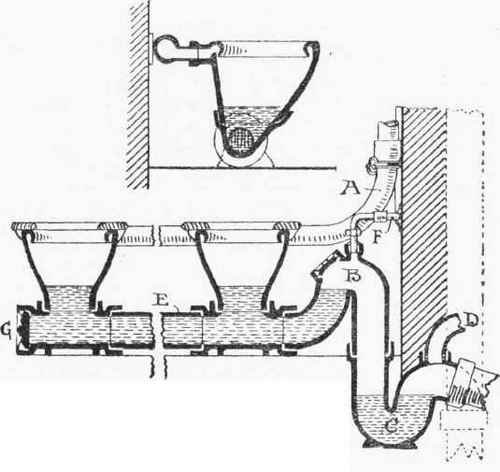
Fig-127-Range-of-Siphonic-Latrines

Our last dray summer got me to use the shower more than the bath because received wisdom said showers used less water.

I have long conserved rainwater for the garden.

Though I wish someone would explain why running the tap, whether for teeth cleaning or washing up, seems to engender a sort of pleasure.   I do try to turn the tap off but I am aware that I prefer it running.

What I don’t know is why.


But when we start to consider a major influx of humans into an already crowded city, you know that water will be needed for all sorts of thing, in quantity, and that getting athletes, the entourages and the crowds to queue at standpipes isn’t viable.


And where are they are going to relieve themselves?

A friend came back from Istanbul saying there were lavatories (both hole in the ground and pedestal variety) all over the place, and directions to find them.

Rain-on-window---shannonkringen-via-flickr

We are mean in the provision of water closets: public lavatories were closed down, centers for the homeless, the erotic, the drug taker and the most appalling excretal behavior.  So now we have the old/new experience of increasing numbers relieving themselves in the street – I’ve just seen my first woman and my third man, this year.   All in areas far from run down.


The big stores provide facilities (only Harrods charges) but in far too many restaurants and bars, the facilities are poor or none.  And sadly the exclusivity of a place doesn’t mean that its toilet facilities match – oh, I could tell you stories.


In Florence (personal experience again though I know there is no relation between the size of the city and the size of London), the smallest cheapest bar has some kind of lavatory (sorry I hate the word toilet), somewhere to wash your hands, loo paper (not always soft) and a towel or hand drier.  The astounding figures for reduction of infection in hospital highlight that washing your hands afterwards isn’t a nicety, it’s essential.  No wash?  No pee.


I wonder if that statue is still on the books which provide that a person may go to the door of any dwelling in the land and ask to use the privy.  I’ve always thought that was useful, with or without the Olympics