Monthly Archives: October 2017

contrary*

I don’t want to write about the abuse of women. Any abuse especially sexual abuse is both simpler and more complex than it appears to be, hard hard hard to make rules about, because so many aspects of it are about individual perception, because of the many reasons for it, both in the case of the subject and the object, and because of the bandwagon syndrome as in “Oh, that happened to me too.”

I don’t want to write about Facebook or its clones WhatsApp, Messenger and Instagram which I regard as the technological equivalent of bubonic plague, carbuncles on the soul.

I don’t want to write about the price of a cashmere sweater (Times 30.10.2017) because most of the cashmere I come across is a poor shadow of the lovely thing it once was.   Perhaps this is a perfect example of why everybody can’t have everything for the mass production of it has impoverished its quality, feel, line, endurance and value in every sense including warmth… but of course we don’t need warmth now because everywhere is centrally heated – so what we need is cashmere because its name means money, but it’s no good if it’s too warm because we can’t wear it. Last days of the Roman Empire, anyone ?

I don’t want to write about HMRC exporting function involving the tax matters of British nationals to a US company (madness) or a former Whitehall IT chief breaking rules designed to keep senior civil servants from benefitting other commerce with insider knowledge (revealing).   Both are horrid examples of “what the eye doesn’t see, the heart doesn’t grieve over” – only this ignorant heart does.

I don’t know enough about Spain and the Catalan secession to write about it, though this seems to indicate further fractionalisation of the European dream.

I don’t give a damn about football and thoroughly resent its intrusion into national news.

In the last couple of weeks I have seen longer stays in prison invoked for people who are cruel to animals, people who throw acid, and returning jihadists or Isis sympathisers.   Will somebody please tell me where these elastic walled facilities are, because the prison system is full to overflowing, its staff demoralized and inadequate in number, while taking offenders off the street and into a lockup environment was never more than a short term answer to much ?

I don’t want to read another article about the shortage of housing and the ever extending numbers for the new build.   I do want somebody to explain – certainly in London – why existing property is allowed to stand vacant for years while the young and the poor struggle in B&B or worse ?   Surely – even as an interim measure, because building on any helpful scale will take time – the law could be changed so that a building, commercial or domestic, may only stand for one year and then it reverts at the lowest market price to the local authority, where it is mandatory that it is used for housing, this law having to be reviewed annually so that abuse is minimised ?

I fear platoons of hastily built ugly housing on green belt when it is widely agreed that space and light are increasingly essential to mental wellbeing.

I don’t want the weather forecast sold to me – gloss over today, sell you a better tomorrow, urge you into looking at the week ahead – when we all know the weather systems are less perceptible than they used to be. Are these meteorologists or sellers of snake oil ? I cheered when one of the better practitioners said last week that he could only tell you tomorrow and urged watchers to keep their eyes open because it wasn’t clear, even to him, how things might go from then on. It has come to something when you find the relative honesty in a weather forecast uplifting.

The idea of the contrary* comes from Arthur Penn’s film “Little Big Man”, when certain braves did everything back to front in a First Nations version of examination of the nature of paradox, when films were something to see, enjoy and think about. Old looks more and more inviting.

Ain’t I a Woman*

Linda used to wear, among other scents, Caleche (Hermes) and Mitsouko (Guerlain).

“A perfume organ in Grasse”

The trouble with modern perfumery is that it has discovered that synthetic fixatives – the thing that make the perfume endure – are cheaper than natural substances.   But they have changed the smell of the smells as we remember them.   Mitsouko wafted very faintly of chrysanthemum and I was reminded of it because I have ten great big bronze blooms in the living room. I buy them every year I can afford them (some years I couldn’t), they last and the centre, where the petals grow tightly, is exactly the way the hair grew on the head of the son of a friend. Seth’s hair was a celestial fingerprint.   I cherish my sense of beauty but more than ever recently, because the world’s horrors come unendingly, funnelled through the news coverage, and there is only so much misery a person can digest before it leads to torpor and depression.

Which leads us to an initiative from HM government petitioning the United Nations to refer to “pregnant people” rather than pregnant women in case we offend the truly tiny number of transgendered who can reproduce.   So, let’s get this straight, at a time when women globally are still fighting for the right to choose to have a child or not, equal pay, parity in law, freedom from workplace abuse (dream on baby, dream on – as Tammy Wynette would have said), sexual slavery and domestic violence, and are beaten to death, scarred with acid, broken, (in Vivian Merchant’s life haunting phrase) “just flesh” – we are going to give up being called women.   I always thought woman was a fine thing to want to be and I still do. I have known some splendid women, starting with my mother. I have also known some deeply unpleasant people who happened to be female and no, I wouldn’t want to eat with them. Nobody’s perfect.

The title* derives from a speech given by a former slave, Sojourner Truth, at the Women’s Convention in Akron, Ohio in 1851.   I first came across it rather later in my life, my feminist reading being less than complete, and it moved me. In slavery, there may have been gender inspired division of labour among house slaves (women in the kitchen and the dressing room, men in the garden and the drawing room) but beyond that, work was work.   I remember my friend George Vargas speaking proudly about his aunt, “as good as any man” in the olive harvest.   As a cash crop, you wouldn’t risk less than the best in the hard work of collection. I loved his aunt, taller than me, she and her husband watching me talk and asking George something in Greek. “They say you are like no English person they ever met” he explained. I asked him the Greek word for gipsy – tzigane – and said it to them. Shouts of laughter – their side of the family !

I don’t know what men say because I am not a man but among themselves, women may be heard to say “Oh, I sound just like my mother !”   And this can be the cause of anything from mirth to consternation.

At 7.00 or so the other morning, a man came down the road towards me, fine eyes and a bad suit, picking and flicking the contents of his nose into the street. For a moment I was lost for words but when I spoke, I was my mother, down to the inflection. “What do you think you’re doing ?” I demanded. “Your mother would be ashamed of you.” And I continued to stare at him which discomforted him more than anything I might have said. Just for the record – I don’t call this a man. Rather, a tall unpleasant child, thoughtless, uncaring.  And before you say “Oh, well, London … “ It’s a great city, London: it has, as it always had, problems with bacteria.

We used to have discussions about the difference between being female and being feminine and everybody has a personal view which is coloured by home, hormones, life experience, social mores, expectation, function and usage.   On the basis of the foregoing seven pointers, no question: I qualify.

modern times

I came home to two envelopes containing identical letters (yes yes -I know, the computer) from my energy company, who have booked an employee to come and read the meter between 12.00 and 4.00 on Friday.   It says “If this time is not convenient, please call us at least 48 hours beforehand on (telephone number) to re-arrange our visit.”   So I rang. We’ll set aside how you work your way through to the alternative that seems to be for you and then – because there is a wait – how to endure the kind of music that makes an MRA scan sound like a delightful option.   And I wait.   Well, it’s Saturday. I can wait.   And wait I do, eventually answered by Keith (not his real name).

Keith was great.   He asked for my account number. I gave it. He asked for my name and address and my date of birth. “Why ?” I said.   Instead of mumbling defensively, he giggled.   “Let me see if I can ask you something else …” he said, and the penny dropped.   “Sorry “ I said “security ?”   He said yes, I told him and he asked ”How can I help you today ?”

“You could change the music for a start” I said. He agreed it was awful.   I told him about the meter reading and said I would like to alter it, I couldn’t be available for when it was booked. I offered the 23,25, 26 October. He said “Can’t you read the meter ?”   I said “Young man, I am an old woman, and we have arranged that my meter, recently replaced, should be read.”     He began to ask about the meter being replaced, found the entry on the screen and countered “But you don’t need to do this.”   I said “The letter, both copies of it, says –“ and I quoted.   “So “I said” I am calling, with lots of time in hand, to rearrange.”   He said again ” But you don’t need to do this.”   I asked why, if that is what the letter tells me to do ?

“Well” he said “it depends on the meter reader.   Usually what happens is, the meter reader arrives and if you’re not there, he puts a card through the door and tries to come back within 24 hours.” “Then” I said “why does the letter ask me to ring this number ?” He said he didn’t know. “Normally (!) what happens” he reiterated “is that the meter reader tries to come back as soon after the missed call as possible, and he leaves a card so you can read your own meter – “   I said I wanted the meter read, particularly after it had just been replaced and if the meter reader usually came back, then this call therefore is a complete waste of time ?   “Well, no” he said, the laugh warming his voice.   “But that’s generally what happen, if he’s a good meter reader.”   I said “Keith, give me a break: can you see me walking up to a man I have never met and asking – are you a good meter reader? “   He said he could see my point. “So what you are advising me to do is to leave it till the meter reader comes, and work it out from there ?” He agreed. I told him that if I had to listen to that ruddy awful music again, I would invoke the protection of my civil rights (he laughed aloud) and when he finished the script with “have a lovely day” he sounded as if he meant it.

I tell you this because it made me laugh and a laugh is good thing in a week of starvation, natural disaster and not one single person who knows the film industry thought to explain to civilians (the rest of us) why women put themselves through the Weinstein mangle. Gifted producers are rare, and often when somebody in the industry says “I’d do anything” they mean just that.    I don’t endorse the way the power structure works but my biggest single insight was that all sorts of companies function the same way as the movies do without as much reward for the unspeakable.  

Wwan*

There is a moment in Out of Africa,

African Lions (Panthera Leo) living at Out of Africa Wildlife Park in Camp Verde, Arizona

set in the early 20th century, when the car engine fails and between them Meryl Streep and Robert Redford crank it again and again until (thank heaven) it coughs into go.   We may have more sophisticated machinery nowadays but when it falters, it is hard to restart.

Where we are now* feels like what I have read about the phoney war, the period after the declaration of WWII when the allies lined up their troops, the public was briefed and – nothing happened. Brexit suspended animation has gone on for much longer (a trade war is just as expensive and punitive as a military one) and the clinging to relentless normality – too much of much when there is so little of things we need as opposed to want – superficially reassures us into believing a start has been made, however difficult it was to do. But conditioned by 21st century technology, do we perhaps expect a series of clicks and all to fall into place? Not a hope.   For all sort of reasons – not the least the unpicking of several decades of human history – this is going to take a long time.   And the trouble is that there are various interested parties who would like it to go slower while others would like to speed it up.   Balance and keeping interests on board is difficult.

In the meantime the Tories enjoy their new sport of maykicking. Nothing these guys like better than kicking someone who’s down, especially if it’s a woman. Sexual prejudice is an aspect of racial prejudice because men and women are two different races – a thought leading straight into sixth form psychology about social constructs (I’ve been dying to use that word), hormones and whose parents did what to whom for several generations.

Last week I received a complimentary copy of a new magazine – the usual overstuffed mixture of relentless consumerism and features on what’s “hot” with one exception – a truly terrifying and very informative article about transgender called “When Girls Won’t Be Girls” by Charlie McCann. It was a very long way from Brexit and women in power. But it was to do with a change in perception, that where in the past, time had been taken to do something difficult carefully, now life changing permissions were granted far too fast, in the current belief that slowly and (more) surely would be a problem in itself.

I was interested in this article for several reasons.   One is the small paragraph I had read some months ago about a young man who transgendered into being a woman, wasn’t happy, changed back, and was still unhappy, so he killed himself.   I was interested because the first person I ever went to meet when I worked at the slightly po-faced sex publication where my journalistic life began, was a man in his late forties/early fifties who was contemplating a sex change.   I remember sitting with him in Green Park and being aware of the role depression played in all this.   When Jan (formerly James) Morris wrote the book Conundrum, Germaine Greer raised thoughtful points about gender and took the flak.   Simple it ain’t.

But now speed is God.   Do it fast, it must be right. And the more interests that have to be represented, the harder it is to make a start and continue at a reasonable clip.   Any form of democracy from physician’s office to parliament takes time – time to listen, time to be heard, time to debate and choose and time to decide, the very opposite of a pressed button.

Mrs. Clinton has never met Mrs. May but they have one thing in common: under pressure, they do not speak well in public.   They take refuge in a limiting formality which risks sounding like bright girls wanting to be taken seriously by the all male sixth form. The pressure on the female voice in public life reminds me of the stories about male presenters “fixing” mikes at the BBC so that women sounded shrill and insubstantial, and were thus discredited.   Of course it’s not the whole story but it is some of the story – as are personal likes and dislikes, in or out of Europe and the terms thereof and what makes a woman.   Where we are now* (see title).  

Lists

Sometimes I fall on the keyboard with enthusiasm, thinking oh good, I can write about that for annalog : about the Chilean lady of the new family moved in up the road, a real delight, and meeting the Jungian who helped me face up to my part in the failure of my second marriage on the bus – of course, the bus – would I have a life without a bus ? How the magic of her unthinking perception and Louise Gluck’s wonderful poem Hesitate to Call changed the game. I want to tell about the garden, in that last blush of growth and warmth as autumn is and winter calls, the pleasure of the programme on Auden on BBC2 last night and Anna Jones’s recipes in the Sunday Times colour magazine – the first time I have really wanted to cook something new for ages, no moody stuff with overrated kale, pineapple and some hifalutin’ spice combo you know you’ll never use again. My mind is like a stuffed shop.

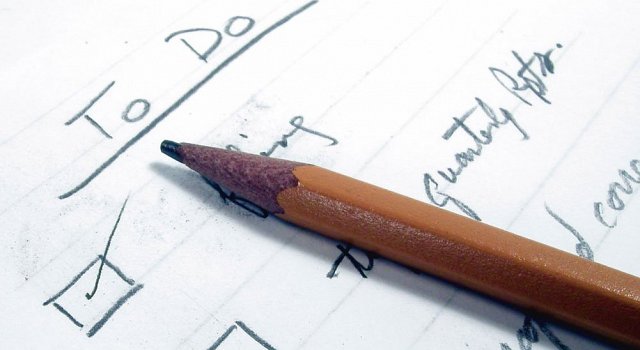
So I make lists. I don’t make them every day and I don’t fixate about them but I do make a note of things. Otherwise I’d just hide in a book. I don’t make New Year’s Resolutions which all too often become a case of ”now I’ve acknowledged it so I don’t have to do it” ie drink less, exercise more, have one night a week with all the communications media switched off, one night a week off (not the same night). Resolutions of that kind are omnipresent chez Raeburn, addressed every other day if not daily. I am a great believer in one day at a time – only do Monday on Monday.

I have a book list in the notebook I am rarely without.   Every so often, I read through and dump things I have tried to remember for too long. Other things stay with me (or have more descriptive titles) and I work my way towards them. I keep notes of films I love or want to see, of artists I admire

Byland Abbey, Yorkshire by John Piper

and every so often of some cosmetic wonder that is going to work a miracle on my face or my hair – though I should add these get crossed off faster than anything else except shopping items.

I have a Big List – new boiler, ring the gardener, sell Pop’s medals (? son), renew passport.   And a weekly list – call the IFA (not next week, he has exams), book the inhouse soft furnishings cleaners (once a year), dentist (this side of Christmas or yon ?).

I have a daily list – milk, potatoes, salad, rubbish bags, citrus, call the plumber (about the new boiler, a domestic god which murmurs and is every bit as unknown and frightening to me at the stone heads at Easter Island.)   And I do try not to just slide things from one day’s list to another, though the list is not conventual rule and I don’t go anywhere unnecessarily in the rain.

There is a small sense of achievement if I work through several things on a list. At other times I wish I had never started but acknowledge that now, there is only one way – forward – no going back.   Forward is frightening, the boiler again – but I can’t rip the darned thing off the wall and throw it away, however much the idea currently appeals to me. I knew what I was doing when I embarked on it though the midwives of domestic improvement probably lie as much or more than the ones who deliver babies.   “It will be fine” and “Don’t worry” are not phrases that do a lot for me.   It will be fine – for whom, I want to know ?   And as for don’t worry – it is the only thing I do to Olympic standard.

There isn’t a list for everything. Some things you don’t plan to do – you just do – like the amount of effort I have put into my nails this year, having all the strength in my Samson hair and nails like tissue.   There isn’t a list for the woes of the world – it would be too long.   But putting an item on a list acknowledges it and crossing it off says it’s done – or “well begun is half done.”   Thank you, Nanny McPhee.