Monthly Archives: April 2018

“But I thought you meant…”

How uncomfortable is the misunderstanding.Especially when you have made (or thought you had) every effort to be clear and the other person hears something else entirely. I love words and I believe in communication but it is rarely precise and, whether you look at international diplomacy or face up to the fact that with this particular relative or friend, you can’t say right for saying wrong, misunderstanding is chastening.
You can’t spend your life saying the same thing over and over again – as if through a Victorian ear trumpet, ever louder – in the hope that the recipient hears the words in the same way as you say them.   There is the matter of trust, and trust dented, if not broken.

Sometimes you read, see enacted or are party to the mending of fences, how someone covers the gap between you or how you in turn reach them. It is almost frightening if you care about the person, to have got it so wrong or that he or she has, and then suddenly, there is a bridge, to be sure a small bridge, single file, but there it is, swaying the breeze of breath – a bridge which enables you to reach him or her or the other way around. However, what is even worse (and throws you for a loop) is when somebody you have communicated well with for years suddenly doesn’t get it. Or mishears. Or misinterprets. Or just plain misses.

On such occasions, it is well to remember that humans can all make mistakes. If such mistakes have piled up over the years like discarded old socks, you have one set of expectations but if down the years, the channels of communication have been open (if not always comfortably), it is a shock to hear yourself (or the other person) admit “I didn’t think you meant that at all.”

Without the order of words and their emotional energy, I find life infinitely worrying. I am not confused, as much as I am anxious. I don’t understand when other people don’t understand that words for me are like gentling a horse. (I don’t know much about horses but when you read about or listen to people who do, there is an interdependence: Mary Renault writes of Alexander the Great and his mount Bucephalus “the mercy of invincible hands, the forbearance of immovable will”).   That bridge that I referred to in an earlier paragraph is my life’s work: reaching people so they can say what they need to say and move on, one step, from where they got gridlocked.

I have trusted and mistrusted the spoken word and writing since I was small. People talk about something “ringing true” – yes, that’s music I hear – and just as surely ringing false.   Of course taste comes into this, experience, personality, what you expect of yourself or the other, how you were brought up and going on from that, the track record, how long you have thought this or experienced that – of this situation, this writer, this person.   And all of that involves trust – yours of me, mine of me, yours of you, mine of you.
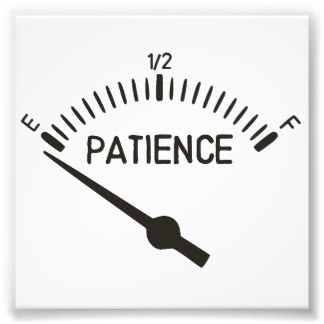
I suppose the bit that’s missing from all this is how you learn. And it is a fact that many of us learn the big things in life not through the gentle voice of the admired but through the harsher voice of the dreaded. You only learn because something you have taken for granted isn’t what you thought it was, indeed was spectacularly different, perhaps even to collapse at your feet like a punctured balloon.  How we admire people who pick themselves up, dust themselves down and start all over again though often, while easy to say or write, it is often a long march through desert to accomplish.   When you seek to explain to others the discomfort of your misunderstanding, what is offered is rarely big enough or warm enough to soothe you. In a major misunderstanding with one with whom you have always communicated well, the answer is patience. I wrote about that only a few weeks ago so I shall take my own medicine.
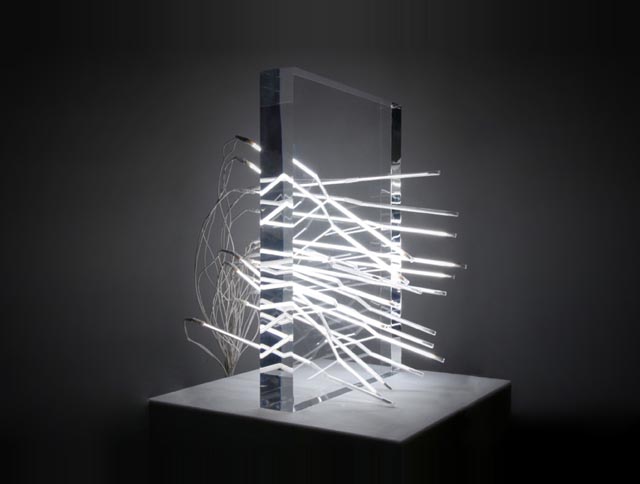
“A moment defined by a point and line by James Clar”
waiting

You can always find somebody in any one of the countries involved who will tell you they are frightened, that things have never been worse. You can always find another person who will talk with equal sincerity about not taking it any more, not giving in, bombs and raids and retaliation. Why is a line in the sky any better than a line in the sand ?

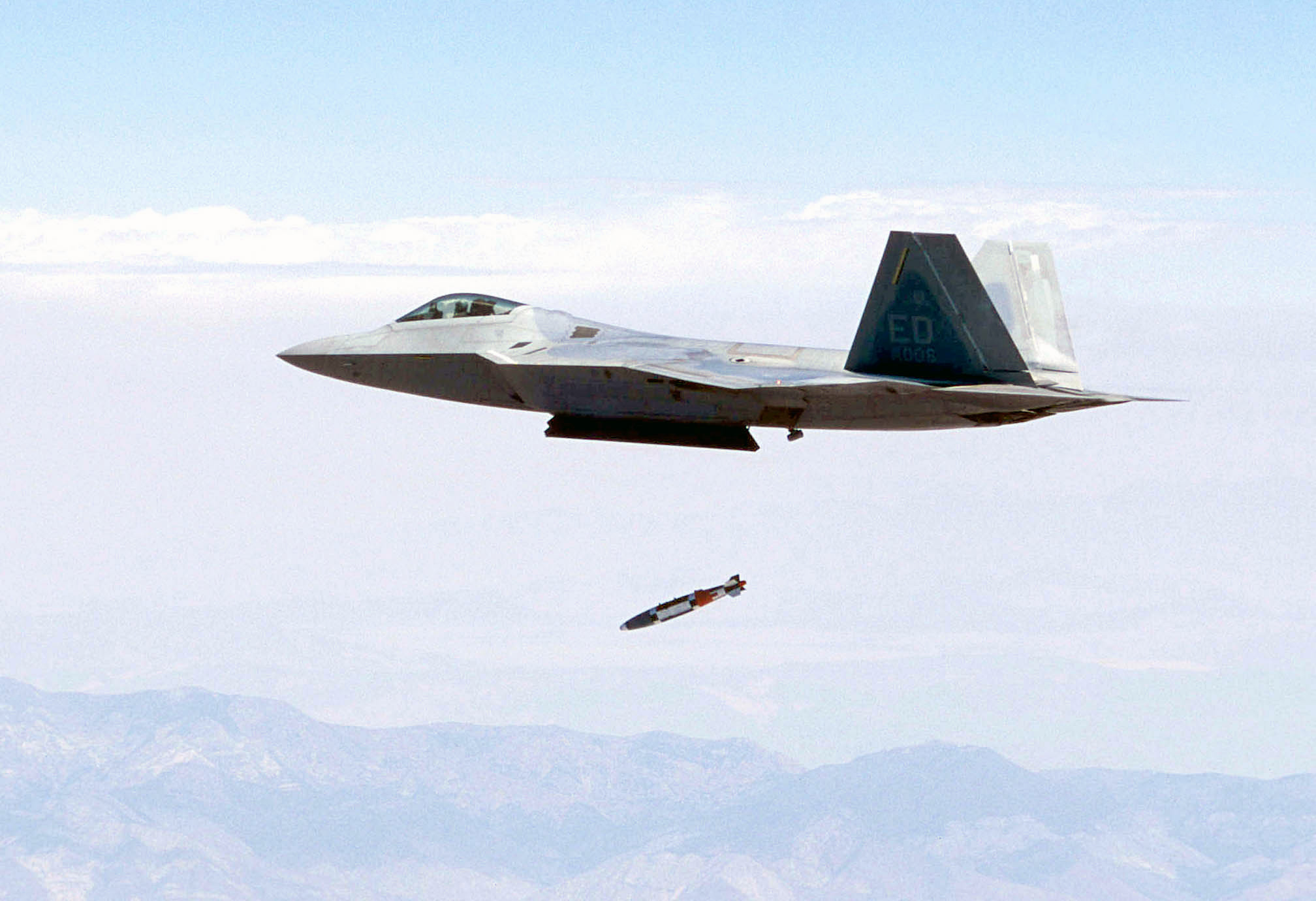
There are contexts in which you have to fight, but how and when – this has to be clearer to me before I can get my head round it. And what happens when the engagement is over is part of the battle plan. The French/US/British raids into Syria just flown were targeted on places where chemical weapons are under manufacture.   But from WWII onward it was admitted that “precision bombing” was wishful thinking. Obviously, machinery to direct and target has improved in accuracy – but how far?   And when a friend said “What is so different about chemical warfare?   It procures a horrible death: in war, is there a nice one?” I stopped and thought. Is the only way to stop the escalation of a war, escalating it in a different way ?

A veteran war reporter commented on the over crowded skies above Syria – officially Syrian national forces and Russians but unofficially all sorts of dissenters and who knows who else ? I don’t know what is sanctioned and what isn’t: and even if I knew, I would suspect that a lot is done quietly, without admitting to it or only admitting to it if it goes “wrong”. What we know and don’t know is always a two edged sword, more than ever now.   I heard a man’s voice say quietly on television the other night “This is not the new Cold War – it’s the same old one” while another added that “you will often find the military are the most considered: they know that war means death.”   The focus changes but the idea of your domination versus my domination has never gone away.

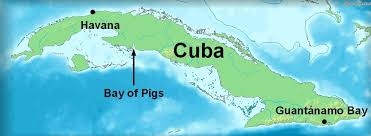
The Bay of Pigs (1961) when the threat of (then) Soviet nuclear weapons was in striking range of the US froze us with fear. I only understood the oppressive silences, the wary glances, the lowered voices when the children were around. And then I caught my mother in our tiny bathroom and said I didn’t understand, why was it so important and she turned on me, her blazing eyes full of tears, her voice shaking – “Because it will be the end , the horrible end of everything !   Why can’t they stop ?   Oh, I wish I’d never brought children into this world…”     Quite a lot of us feel like that at the moment.

I first learned the phrase “collateral damage” in the context of the Vietnam War (see the documentary by Ken Burns and Lynn Novick, PBS on Wednesdays) I could have learned what it meant through the study of many wars, maybe all wars, certainly anything after the American Civil War (1860-5)   It’s the bit you don’t plan for.  You don’t plan for more men to kill themselves back home than died in the conflict, you don’t plan for the endless fallout of wounds that don’t heal, people who can’t sleep or work, substances that slumber in the ground or on the trees and poison the earth for years.   You don’t plan for millions of people being driven out of where they live with nothing, nothing, and no hope of anything. And sometimes collateral damage is part of peace too (see Command and Control by Eric Schlosser).

Syria is such a vexed case that I long for us to be honest, to admit to the Syrians (through the language barrier) and ourselves that seven years of war is Assad’s war against his own people but they are a sovereign state, it is their business. We drop food, medical supplies, toys, toiletries, everything that will help the embattled survive and we stick to diplomacy. Or we admit that we cannot stay out because Assad’s main backer is Russia and then we haven’t progressed from The Great Game of the 19th century. No wonder we don’t sleep.

many happy

A man I know in his later thirties is mentor to the children of his female friends. No I don’t mean he is a closet paedophile. I mean he is the purveyor of encouragement, technology and treats over the years to his six god children, the oldest of whom, a very bright girl, announced that she wanted to see him privately about her upcoming 16th birthday.   She had her mother’s permission. In due course, she told him that when she was 16, she wanted to take his name. He stared at her. “Well” she said “ I carry the name of a man I’ve met twice and you’ve been, like, my presence.” A very level headed person, he thought fast. “OK” he said. You can change your mind at any time, no harm done, but if this is what you want and your mother agrees, I’d be honoured.”   I don’t know how he got through the rest of the time they spent together but he told me that when he got into the car, he pulled his knees to his chest and cried. His own back story makes this even more important but isn’t that one of those “the offer is as good as the reality” things, adoption in reverse ?.   Many happy returns of that day.

As I was writing this – not for the first time – I hit some button and vanished the copy which made me pause: I wish we could do away the things that bother us as quickly and painlessly. We say time flies when you’re having fun but I think it flies anyway. If the years are good, you’re busy enjoying them. If they are difficult, you endure.   Sometimes you lose a passage of time which was different from the rest of your life. You were in hospital say, abroad, getting through a breakup or trying to help somebody you love through difficulty. And several months become one long day and pass in the blink of an eye.

When you were little, a birthday was important with candles on the cake and a party. Better still, in my home it was a day of indulgence which is why when I was about 10, my mother and I went in and out of shops looking for the silver shoes upon which I had sent my heart.   I didn’t know that my mother hated the whole idea, knew it was a whim and was determined not to spend very much on them (which we managed). But it was my birthday. I recall both her and my father saying they would or wouldn’t do this or that, supported by the other “it’s my birthday.”

Somewhere in my teens I came across the Russian idea of celebrating the day you were christened which offered a chance of changing something most of us see as set in stone. But by then my mother had indoctrinated me into my birthday . ”No child of mine was going to be born on April Fools’ Day!” she declared.   I didn’t think you could argue about such a thing and I asked what she did, probably expecting a spell or a charm. “I held on and thought about something else till the day was out” she said, her hands busy as they always were.” And then I drank castor oil, scrubbed the kitchen floor and you came.”

I thought with great affection the other day that I really was a mistake. My parents had been apart during the war and saw each other rarely. Ma had only a sketchy idea of menopause and after she and Pop had reunited (isn’t that a nice way to put it ?) she went to the doctor who told her she was five months pregnant. Pop was thrilled, Ma less so – she knew she’d have to do the lions’ share of bringing me up.   And I was a pain.

But nobody suggested ever to me that I was less than welcome which was probably why I so liked the old Family Planning slogan “every child a wanted child.”   That warmth is what I remember on my birthday. I love the cards and the books and the small private sense of celebration but what I wrap myself in is a sense of my beginnings. Not a bad news day my birthday.

patience

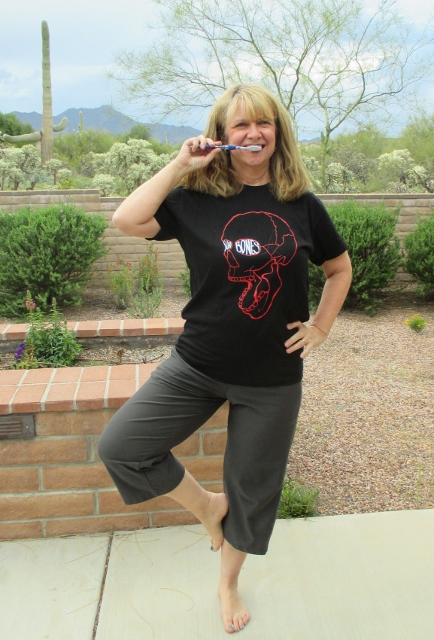
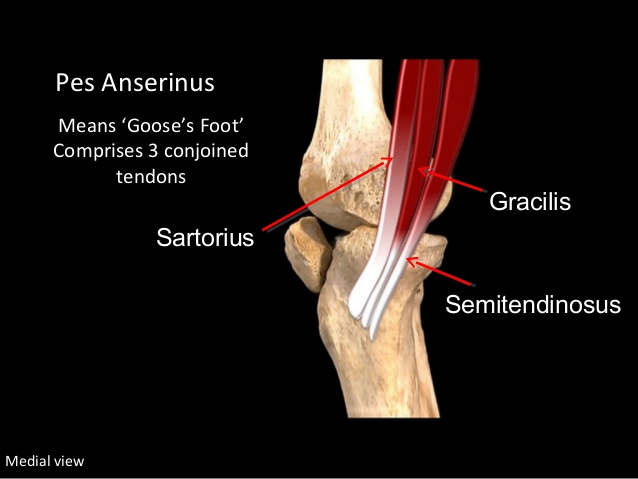
The woman was in her fifties, and her left knee was strapped up so that she had to use a crutch to manoeuvre herself awkwardly into the bus seat.   When I asked her what happened she said that she fell and broke a bone (that’s what she said) in her kneecap.   And I shuddered.   I fell four weeks before, not for the first time, not drunk or incapacitated, just clumsy and unlucky.   And pain lasted and lasted and lasted. But I didn’t break anything , how lucky was I. The helpful physio reassured me “Keep it warm and rest” and gave me an exercise to do – balancing on one leg while cleaning my teeth. Apparently the reverberations felt from the electric toothbrush are enhanced through the system if you stand on your left leg on Monday, your right leg on Tuesday and so on. It is shamingly hard to do and please don’t talk to me about yoga – the secret of yoga lies in the teacher. As in so many other things.

So I have had to be patient and, like lots of us, I am rather better at being patient with somebody else than with myself. What is patience with you feels like skiving in me.   But I didn’t want to go to the doctor: long wait, possibly irrelevant xray and painkillers. I waited three weeks (three weeks !) before I went to a reliably recommended physio. You can’t stop altogether if you live alone (which may be a good thing) so I went out and got the papers and then out to shop for food and then came back, tried to find somewhere comfortable to rest my leg and read. I found bits of tv, domestic things to do (only ever get a C for housekeeping) and I was reminded of the old saw “sometimes I sits and thinks, and sometimes, I just sits.”   Every time I felt my butt spreading under me, I limped through the house, swearing at the pain. (It was remarkable how much less it hurt when I knew what it was.)

Lying on the sofa, I can look out of the upper half of my front windows which recalled a programme we did at LBC about weather. It produced wonderful stories, including that of a bedridden woman whose bed lay under a big sky light, describing how she watched the weather modulate and change, the man who found his dog under the fog and the boy who fell in love in the rain. I like stories better than any other form of writing, stories are unending because they are about people and people are endlessly interesting. Though I have had to be patient with the book I am currently reading, a book which spoken would fascinate but written, requires a high order of concentration and just when I think “no more”, comes up with yet another story. So I persist.*

And when I falter and begin to wonder if – really – I am not trying hard enough – whether with the writing or moving – I go back to the poem entitled Patience by Edith Wharton which my son found and wrote out for me, which lives on the noticeboard.   Because it seems patience isn’t one thing but several.

There is a kind of patience to do with endurance. Previous experience or information suggests you may have to contemplate that the outcome won’t be good but you endure – like the scenic designer married to a successful actor who had already fought three rounds with booze and drugs. They shared a home, had children: he died of an overdose. She endured. She probably still is.  

While another kind of patience is quiet but not passive, where you wait but with attention. Gardening requires this kind of patience. So does growing your hair.   The difference between hearing and listening requires this kind of patience. You can hear all sorts of things but listening is about attention.

There is a patience where you say “I must wait – it is out of my hands”, perhaps in the outcome of a vote, tests or a medical intervention.    And there is an end to patience, where you demand “What is going on ?”   Patience is a matter of degree: some patience is admirable. Too much is for saints.   Not a chance.

*Farewell to the Horse by Ulrich Raulff (Penguin)