the Christmas stocking

The Liberty bodice

was warm cotton, no sleeves, buttons down the front I could do up and two buttons at the bottom, front and back, for suspenders.  These came from the haberdashers, a tiny shop with drawers and glass fronted cases, mysteries full of cotton (now thread) and fastenings and embroidered handkerchiefs with “out the back” which my mother explained was women’s underwear.  Men’s was bought separately.  And I had woollen stockings.  I predate tights.  (The fashion then changed to warm knickers with pockets for a handkerchief if you wore them for gym or where you kept the house key in school: and over the knee long socks.)

The stockings were used for Christmas.

In annalog/the Christmas itch I wrote about a dream Christmas tree and decorating it with all the lovely things discovered, remembered and intangible, instead of glitter and lights.  Most of the stuff I remember shines on its own. 

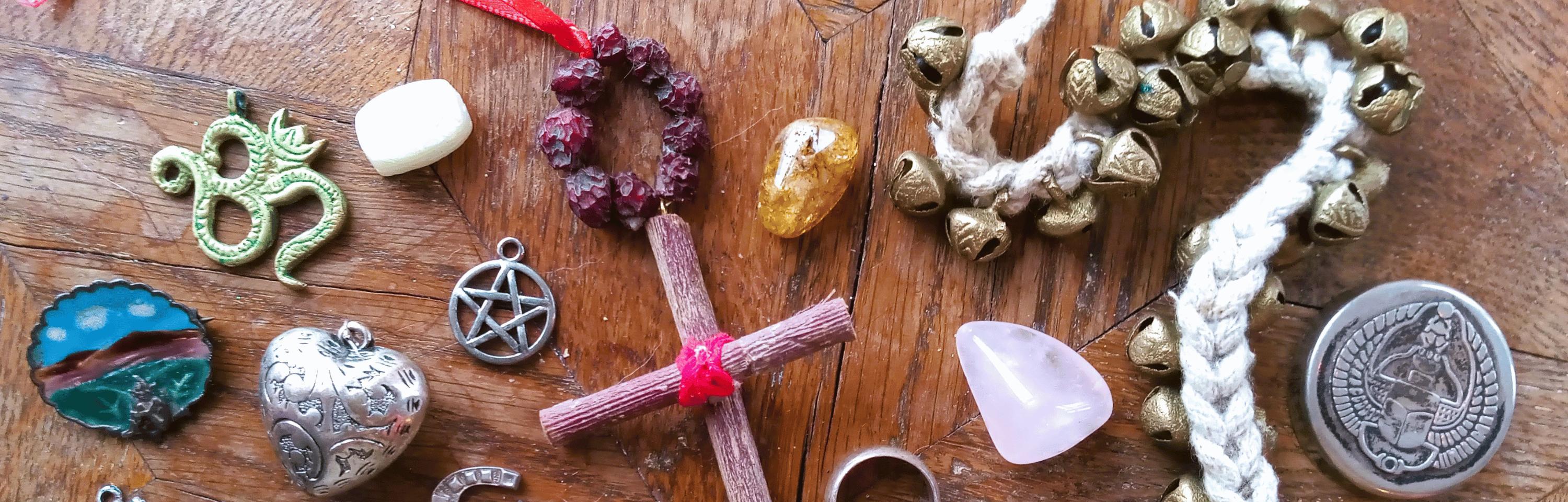
In my childhood stocking there were all sorts of little things – my mother called them “sillies”

– and there would be one of those puzzles you couldn’t work out.  You put it aside and went back to it after the Christmas meal when we sat in the warmth and read the Christmas magazines (no television).   

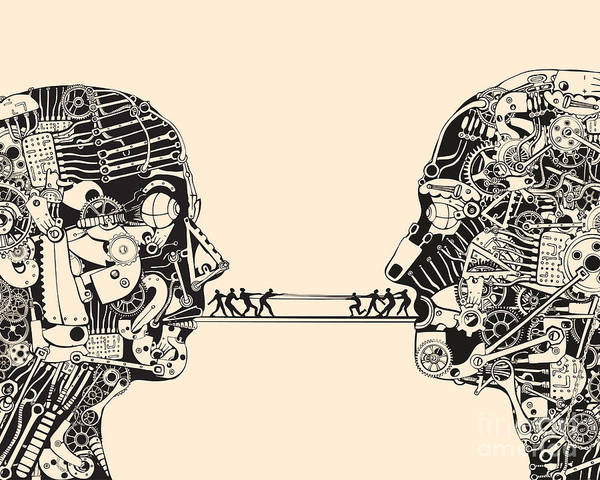
Imagining a puzzle, I think of how people do and don’t relate to each other – how they think they do, but they don’t. In interview an Israeli peace activist was asked if his views stayed the same.  He answered yes.  How could that be ? asked the reporter.  “Hamas killed my mother as an act of war on October 7” he replied.  “We were not at peace before.”

I think of the people I know that I don’t know – not really – bits, bits over years but what you learn is habits, behaviours, responses but that person remains like the links I fiddled with long ago, out there somewhere,

beyond …

The point of the remembered stocking was not excess but enough, enough because it was all surprises, good will, time passing from daybreak, into which you awoke before Christmas came, waiting to see.

I’d have family for my imaged stocking – about a million miles away from the sentimental EastEnders claptrap – an immensely powerful unit, for good or ill, socially, politically, emotionally.. 

And I think of meeting a woman in a headscarf at a bus stop with whom I had a good natured, waiting for the bus, conversation.

She suddenly dashed back to the block where she said they lived, returning with a piece of fresh cake for me.  Stunned, I thanked her.  She had a daughter she said, she baked.  I saw her several days later, waved and said the cake was delicious !  She beamed.  And then coming home in the cold and dark, I saw her get out of a car with a big bespectacled man and a girl of about 13.  She recognised me as I reached for the girl’s hand and explained what had happened.  “I won’t keep you in the cold and I know Christmas is not your thing” I said “but I wish you some time together and a really good New Year.” And we all beamed at each other. 

I’ll have them in my stocking.

And the beautiful lady from Bermuda, fine features, skin like copper, who in a conversation outside a shoe store said “Oh you’ve made me laugh !  That’s all you need  – faith in God and a sense of humour ! “   And when things go unexpectedly well for me I say “God smiled” the Master of my Universe.  Laughter would go in my stocking, where would we be without it ?. 

In the stocking of my imagination would be memory – the smell of my son’s skin as a baby and nights in Crete with the salt from the sea and the herbs and leaves.  Clean towels and fish and chips on a cold day.  All the unexpected kindnesses, intangible joy of words to reach and touch – free,

freely given, freely received. 

And there is an old exercise of which I never tire: just as you think of the all the things that have gone wrong – it happens to us all – so list the good ones.   I do – and they go in the stocking.

the christmas grump

I was going to write this anyway. 

I didn’t need the Centre for Social Justice report  to tell me that there are two nations – the have’s and the have nots.   And that as the haves got more, the have nots got less. I’ll leave the “up” because not a day goes by without us being told about yachts, millionaire hotels, extravagant properties, £1000 for breakfast – gelt gelt gelt.  Sometimes you wish they’d eat the money and choke.   But the down have been faced with cruel social arithmetic fed into dysfunction by the unobtainability and unsuitability of the dream machine Aldous Huxley called soma and we know as television. 

And mine is the simple model.

The Centre was founded by a Conservative so the party has come a long way from its tradition of help for the poor. Never mind what it called the others (this is the classic story of us and them), never mind the terminology for its help.  To hell with what you call help as long as it helps..

But the present systems have imploded. 

Some of the figures for mental ill health among children are exaggerated.  Whereas in my generation, even a partial diagnosis (whether for child or adult) gave you a direction to go in, now it gives you a label under which to behave. An accredited psychologist, working with the young, commented that some of ADHD diagnoses she was seeing were inaccurate, more to do with family behaviour and lack of structure.  I am sure you too could write about lack of structure.   One of the great British ills is lack of management,

but it is easier to leave a job than a family!

in families, in businesses, anywhere.

But children and young people are unwell.  Boys and young men are increasingly at risk of suicide. The figures for addictions and domestic abuse are through the roof  (almost certainly related), all exacerbated by poor housing, the disparity between benefits and poor pay so it isn’t worth working at low paid jobs, family breakdown and school absence.

And for us (forget “them”) money is worth less and less.   The report says lockdown is the dynamite that blew everything up.  

But this isn’t new.  It’s been coming since I worked at the old Talk Radio on the third floor above Oxford Street and looking down on a sea of black, a sprinkling of denim, but lots of people dressed in black, I thought  “The new Victorians.”

I remember the falling away of the pressure groups and helpful associations which gave so many support while they sorted out how to go on, when things had gone wrong.   Technology has taken over the NHS and I am here to tell you that  a couple of weeks ago  I could not access the programme they used, they subsequently sent me an incorrect email address so when I tried that it bounced back while the last ditch morning of the appointment telephone number (theirs, printed) wasn’t answered, even by machine, three times  – from the time of opening, 15 minutes later, and fifteen minutes after that.  I am not seriously ill but I wonder what would happen if I were.  NHS 111 is now medical students reading prepared text.  God forbid you should ask a question and get an answer.

Some years ago, responding to a terribly ill friend on the far side of London, I rode late night and early morning buses from time to time.  And I remember the tangible utter weariness on those buses.  The carol says  “Silent night, holy night”

but those people were quiet because they hadn’t the energy to speak.  They were hanging on by their fingernails.  I wonder how many have dropped off into cold (punitive heating bills), poor diet (cold bad food – so nothing heals), broken hearts and sullen deprivation.

A favourite television column asked its readers – what do you think of tv in 2023 ?   My reply is unprintable.  The BBC is in default of its own remit, and wants more money to offer unthought repeats times 10, endless quizzes, and gladiators of goo (not one cooking programme about “making do” or nutrition).   Surely the mark of a gifted presenter is that he or she can make anything interesting ?   

Yes, this is a grump but it’s worth remembering, you only complain when you care.     

real

It’s one of those four letter words,

like kind and love and like and hate and road – this last in tribute the Romanian who rang the programme  I did about  four letter words, having explained no, I was not inviting bad language, to say it was her most important four letter word.  When I asked why, she explained “It can take you to something you want very much, and away from something you dread.”  I told her I couldn’t express that in Romanian,  I will never forget her. And real is a powerful little word.

It’s the opposite of fake. 

  “It looked so real” we say and it is a profound compliment.  “He’s just such a fake” we say of a politician we don’t trust, a public personality (usually an actor) we can’t like.  Real food tastes quite different from the made up stuff and real trouble is real (underlined) trouble – in health, or debt, or relationships, personal or professional.

Part of my Christmas for the last three years has been a craft fair sponsored by Selvedge magazine. 

  I can’t remember how I got to the first – there’s a shop with the same name, I  probably rang them, I’d read their publication – but I moved heaven and earth to go the next a year later.  I found small special things, I looked and admired.  Even the colour palette is uplifting.   And this year reserving the tickets proved unbelievably complicated until the wonderfully named Hester said “I am sending you two free admission, print it out , forget it, nobody should have to go through this.” 

So Annie and I went yesterday, to a beautiful church (St.Mary’s, Wyndham Place )

where the fair was twice as big as before and well lit and for nearly three hours all you heard was the happy buzz of people talking and making room for one another, and everything was real – wood, cotton in many forms, wool, velvet, gold, vermeil and silver. We didn’t buy very much, we wandered around happily, we came out into the hush of the back doubles of Marylebone,  And I fell.

I don’t know how I did this — not drunk, no difficult shoes, beshert. 

I missed my teeth, my nose, ankles, neck, even my glasses. I have a black eye which swelled up immediately and my left knee is bruised and grown painful so I shall have arthritis in both.  Oh joy.

The pharmacist was sensible, had no ice pack and warned me that on blood thinners, one of the post stroke medicines, the bruising would be considerable.  And it is.  Was I dizzy, pain in the head, blurring of vision ?  No.   I bought arnica.  We found an ice pack in the second chemist and had a late lunch/early supper in a restaurant I know where, as we waited for the bill, a handsome woman with a tiny mark under her right eye, came over and said “I can’t leave without saying to you, that will look so much better in a week  !”

It was all real, real kindness, real consideration, real knowledge.   Like the Bulgarian who sat next to me yesterday, before I had the black grape special under my eye, whose English was not fluent but remarkably pure.  He was surrounded by a miasma of loneliness. And we managed a real conversation, real good wishes, real exchange.  And he saluted as he got off the bus with the raised fist of solidarity.

That’s only happened to me once before, and never from a European.

While on the bus home I sat next to a young woman (she looked 10 years younger than she said she was, from Kildare) with her arms full of a splendid seven month old called Huck – as in Huckleberry Finn . And we talked about the Irish and how my father had told me  “When you go there, remember, they are not English – the Romans never got there.  They have their own history…”  When she got off the bus, she hugged me round Huck and kissed my cheek – “Don’t change” she said.

You remember that tree I wrote about that I imagined hung with all the good and kind things that have happened to me ?

I think it’s real.

the Christmas itch

I thought of the kitchen appliances as I awoke – the neat row of fridge, freezer, sink with a cupboard underneath and washing machine, all shut tight and wiped down. I saw them closed, then grim and then smiling

– and I began to laugh.  And then I thought of the Christmas trees at home and the ones I made for my son.   And I imagined another tree which I dressed with people I have met, or loved over time, legion kindnesses., with warmth and humour and generosity of spirit – which I had to imagine of course – how to package and how to hang on a tree.

This is a benign form of the Christmas itch,

the sort of countdown which builds from acquiring the comforts of a pleasant day off with those you love to  “how much can we sell you, for how much, before you notice you don’t need any of it ?”  Like Buns calling from Mayo – you could never call Buns Scrooge   But he’s not keen on the Christmas hype so he rang and asked “Have you bought your Christmas china?”  What ?   “Have you ever heard anything like it ?” he asked.  “You use it for two days’ max and then where do you put it ?  Have we not all got enough stuff ?”

Stuff is the stuff of the consumer Christmas, totally unnecessary bits and pieces and trinkets  – some of it seductively pretty, but frighteningly expensive. Six carefully chosen items will stun the wallet.  And as Denning said yesterday over the phone “It’s not December yet !”   Hence the Christmas itch.

Looking forward is part of the human DNA and for years Christmas was contingent with family happily reunited (even if you had to get over your father’s wind or a disagreeable neighbour), time off,

the rewards of food and wine and warmth, maybe for Christmas week, otherwise for two or three days at the most. Boxing Day sales were fun, you went out of the house to look as much as to buy..  You dressed the house with evergreen, you bought holly to go on top of the pudding and mistletoe to go in the hall so that everybody who arrived, was kissed.  

The itch now starts in late August through September.  (I thought it was bedbugs or allergy – but no – though as pernicious as the one and as hard to diagnose as the other.)   I confess I tire of Christmas movies, I’m very weak in the “aaah !” department, and the price hitch which gets worse and worse as the season builds among the harsh glitter..  I love carols, but not offered as a musical cue to “what can we sell you ?”   And the machinery is terribly effective because none of us want to be the pooper at the party

or to be left out.   So you have to choose how much you scratch.,

I love Christmas cards – to send and to get – but I don’t think they are long for this world given the price of postage, the state of Royal Mail, and roulette of delivery.  But this year, yes – on more time.  I have a red box with the lists and the cards including spares.  And – bearing in mind it’s always personal – sending them is an act of affectionate remembering. 

My Christmas list is shorter than it has ever been. It’s not that I don’t love you but because the things you really need – warmth and food you can afford, health and some kind of hopeful continuity– can’t be giftwrapped.   And I am damned if a toy in a fake fur coat, even labelled “from  Love Island” will “say” it or do it. 

On my happily imagined itchproof Christmas tree, hanging in a crystal ball, is the gift of communication, how to say what you really mean.  Too may people take refuge in formula like “Y’know what I mean… ” Supposing they don’t ?   Yesterday a really handsome young woman made room for me to pass and I thanked her as I did.  Then I turned back and asked please, where was she from ?  She told me The United Arab Emirates.   I said “Then you come from a culture of courtesy and I am its happy beneficiary.  Thank you.”   No itch.    

the other side

I don’t hate Jews.  

They are the only tribe that ever claimed me without introduction, no word spoken, sometimes in a foreign language. Who knows how ?  My model of Jewry is Yiddishkeit – northern European Jewishness – the word Dov (Israeli, brought up in a DP camp in Ulm) wrote in the front of my first Isaac Bashevis Singer novel.  I had to ask what it meant.  I am not a secular Jew, rather an ignorant one.   I did not know about my Polish Jewish grandmother until I was 15.  Nothing sinister about that.  I was the much younger (by 13 years) of 2 daughters, all the grandparents were long gone and my parents weren’t geographically or emotionally close to their siblings. 

At about the same time, I learned that my mother’s father  –  the same genealogical distance on the other side – was Rom, gypsy, big south east of England clan called Lee. 

The Jewish line is by matrilineal descent so I was ( as a man said to me, live on Radio Four) “nothing.”   Years later, I learned from a Joseph Kanone Cold War novel the term from the Nuremburg race laws “mischling” – mixed.  That’s me.

Among all sorts of misty branches on the family tree – Irish, Spanish, French – I had the security of a loving family and a liberal tradition at home and at school, so I laughed with my mother when she said  “Mongrels are the best dogs – intelligent, nice natures, bright eyes “. 

But there is always another side.  My experience of racial prejudice is small compared to the number of people who didn’t like me or my speaking voice.  But as a child, if they didn’t like me, what I was or might be, soon came up.

  I couldn’t be my parents’child – they were too old, I was too dark, they had adopted me.  I told my parents.  They told me honestly what they knew and thought, and backed me.

Living now through the daily coverage of war, we hear two versions of everything, at least two –  we find it easier to dismiss what Putin says because we know he lives in his own state-controlled world.  And we side with Ukraine, well served by a devoted leader and the enduringly courageous. 

The Unkrainian Trident

In the Middle East we have to contend with what the Israeli Army (IDF) says, this is what Hamas as the governing body of Gaza says.  Other Israeli voices are added – various sides of the political spectrum, the families of hostages, the critics of Prime Minister Netanyahu, this voice from the US, that one from the Palestinian Authority, another from the West Bank, Egypt, Jordan, Lebanon.   Not to mention who is caught in the crossfire, justified or not  – the collateral damage of children on both sides, the ill, the frail, the powerless.  And journalists looking for emotive pictures. 

There are always two sides to everything, mostly more.  

Look at what we look at, aside from endless repeats..  Because this is a wonderful series or film, it doesn’t follow the sequel will be any darned good at all. (French Connection Two is the rulebreaker, better than the original.)   Re Australian screen product, The News Reader (BBC2,series one and two) has been great: Scrublands (BBC4) may have been a terrific novel – but whoever says that what works in a novel will work on screen ?  Monotonous.  I bought the impressive Killers of the Flower Moon in hardback –  but nobody could ever have thought it would make a film.  Except Martin Scorcese in the long fight of his old age as an auteur, to make one more movie…  hours and hours of it. I think back to the discipline which formed so many scriptwriters, cameramen, actors and directors – two hours was exceptional, aim for 97 minutes.

There are other sides of fashion ie from high to none.  There are fashions in skin care, health , education, thought, social interaction.  There is even another side to common sense.  At the moment, it is noticeably missing (£146 million spent of the resettlement of refugees in Rwanda so far -and nobody has gone there.)   It’s about perception.  My commonsense may be your unkind judgement, the other side of whatever is under discussion.  

Remembrance

On Saturday evening I became a fully paid up Old Bat. 

I had watched some news coverage – I can’t imagine that the blow by blow coverage of a war is going to do me any psychological good and I am haunted by my mother’s words through tears over coverage of the Troubles – “They worship the same God !”.  I watch serious reporters, mostly BBC News Channel and Channel Four. 

Cathy Newman (C4) interviewed one to one Steve Hartshorn, the head of the Police Federation and a former Met Police firearms officer.  Nobody sounds authoritative when shrill.  He handled her well, refusing to be drawn into any opinion about the Home Secretary’s remarks or anybody else’s which could be construed as political.  Not the role of the police.

As Ms. Newman’s teeth closed once more on Hartshorn’s turnup, I switched off.  Well named, Mr. Hartshorn – we used to mix hartshorn and water to revive the fainting.

I rang the relevant section of the Police Federation.  To the woman who answered I said “To whom do I speak to express my appreciation of the handling by the Met and other forces of the demonstrations today ?”   I don’t think such a question had come her way before and she got her manager to whom I said “I just want to tell you how grateful I am to the police for their efforts at appropriate response and containment today, and tell your Chairman he handled himself well on Channel Four News this evening.”  She acknowledged the call, I thanked her and rang off.

I then pulled up the Met on the search engine and found a form where I could express my thanks, again as matter of factly as possible.  They knew the job and they did it. 

Other than personally, it has become increasingly difficult to say anything pleasant let alone express thanks because everybody is busy being guarded against the nasties.     Perhaps a good sociologist would explain that this is how human society works, certainly in the 20th and 21 century, it swings one way to open and then closes down.  

Being open will come back into fashion again, if you can wait so long.  Not in my lifetime I fear.   

In the past if you wanted to tell a publication how well they had done in an article, or in the comments of some particular columnist, you rang and left a message.  Good luck with that now.  I don’t think they even pretend to acknowledge you or pass the comment along.  Expensive letters are not often acknowledged.

Email ?  Well, email … I love it but there is a widening culture of people and concerns who don’t reply.  Just listen to the young trying to get a job.   25 applications and not a word.  The energy companies are probably not alone in making money out of this.  They leave you floundering, knees in the breeze, while the meters tick to their manipulable favour.

And all the rest of it from mobile phone to WhatsApp you can keep unless it works in a context for you.  That I respect.  Personal choice, horses for courses. 

In the last couple of years I thought for the first time ever, that I was glad my esteemed parents weren’t around to see the mess we are in – environmental, human, political, weather (incurred by humans), national and global – surface, surface, surface – less and less substance.  This may just be my increasing wish to remain integrated in the face of social splintering, projected on to someone older than me whom I love. 

A friend recently said asked me how I managed alone because unless you are a natural solitary (I’m not), being alone has to be managed and I said “I live a day at a time.”   She asked how I did this and I said “By act of will. I only do Sunday on Sunday, Saturday is  behind me and Monday is yet to come.”   You can’t do this if you’re working.  I lived and died by my desk diary.  But now as I set out daily, as much to avoid the dog mess as to smell the roses, I am open to every good and wonderful thing no matter how small.   It seems that has become an Act of Remembrance.   

demising *

My sister and I had a very difficult relationship

with not much in common   But the best day we ever spent as adults was with my mother, going through her little house at her request with her – deciding who’d do what, who’d have what – when she died.  It may sound morbid but we drank tea and laughed – we had a fine time.

Whether it is Ukraine’s worst attack since the war began, Sudan blown to smithereens,  Afghanis thrown out of northern Pakistan where they have sought refuge for 3 generations, or the Hamas pogrom in Israel, there is a lot of  death about.  

And I was stroke-struck five months ago which concentrates the mind so, somewhere in there, I thought I should show my son where to look when I had gone to glory.

The best word to describe the enormously big, strong and thoughtful man my baby boy has become is overextended but he had just had a break and he suggested coming to supper, indeed, he persisted through my demur with the phrase “I have to come, you want to tell me about your demise.”  Now, there’s a word. We laughed.  I made supper and showed him the preparations I have made – lists of things he needs to know, names, numbers, bequests and details, the will, the lease – that’s there and this is here.  “But Mum” he said “it’s all so organised.”  Don’t sound so surprised.   “It’s what I can do for you.”   He asked me if I had some premonition.  I said no, I just wanted – the mantra of my childhood – to do my best,  
 We both know I pray for it to be fast – not blindess, dementia or disabling stroke – but God sends and He’s busy.

When I told Wal about this, he who does not do death, he fell off the phone laughing and began using the word as a verb* – hence the title. There is no value judgement in all this.  Out of a clear blue sky is just that, you can only do what you can do.   I am not saying you “should” but I am saying – second generation of “works for me”.

In marked contrast Cas (not her real name) lost her mother when she was 16.  That phrase is for once quite appropriate.   The hole of that loss is unclosed. 

Her family is the classic two party state – here, Cas and her mother, there her father and her older sister. Not much détente.  Her father is a bully and her older sister apes him, indifference as a survival strategy..  And Cas’s luck after that beginning contains two other major catastrophes – a marriage that ended badly and bitterly and an accident to an excellence that was her secret weapon – in which she was so badly injured, she will never compete as an athlete again.   

I don’t know her well.  She lives locally, we like each other and she has been nothing if not kind to me.  But I sense that for her, as for a lot people, “managing” means not saying what you really want to say because not a lot of people want to hear it.   She is very capable, bright, attractive, working – managing. But the wounds which she told me about because I am interested, have time and will listen, remain open.  Dangerously so.

I asked her what she wanted to do for Christmas.  She told me what her father and his sweet, heavy-drinking partner wanted.  I asked her a second time.   She told me what her sister wanted.  I asked a third time, pointing out it was,  and I wanted to know what she wanted.  She said “I don’t know.”   And I said (Hecate the Hag) “Well you never will if you don’t face it. And you are running out of time.” 

What I fear for her is that she will risk her current everything, in the hope that something out there – child, trip to Samarkand, esoteric research – will resolve her pain.  I doubt it will – and what do you do if it doesn’t ?

When she left – I like her so much -I was tired to my bones.   But I felt moved, useful – not demised yet.

as lovely as a tree

Every tree

is a leaf on a bigger one. It might be a tree with leaves itself, it might be a tree of fruit.  There was a lemon tree outside the second hotel room in Crete – I can still remember the smell.  I’d never seen lemons growing.  There were olive trees in Crete, older than time.  Trees are a root.  That’s why so many people got so upset over the destruction of that mighty tree in the north. Trees take time.  We might inveigh against time but we accept its power in our lives.  And, we say, time heals all wounds.

There was an avenue of trees

near home.  I can remember looking down it, the light breaking through or excluded, the shapes, the shadows. You can hear a tree, the noise it makes in the branches, the soughing, the movement of the leaves. A recurring theme among children’s books is the child’s relationship with or observation of a tree. Trees in storms are pulled out of shape, branches bent, leaves flattened, and watching, you hope the trunk can stand.

The better known of two best selling books about trees in the recent past is wrapped in the depths of translation as well as intellect.  I’ve tried to read it twice, I keep it to have another go.   I feel I “should” read it.  Trees are important. and I don’t know a lot about them.   In Henry Marsh’s current book (And Finally) he talks about planting a tree that prefers the ground into a big pot

where it seems happy, he writes, like an enormous bonsai.

I can’t get round the cutting to make bonsai.  It is a discipline that produces shapes and sometimes loveliness

but I am bothered by the cutting.  You prune a tree to help it grow, to keep it from overgrowth, to help it flourish.   I have always been wary of pruning, I don’t trust myself to do it.  Alex from next door has no such fear but then he is young.  And I did have a happy afternoon with the cherished winter broom (one of two shrubs I brought from north London south of the river 23 years ago) where I took off every dried dead bit and fed it and crooned (under my breath) so that it settled and grew again. It has yellow flowers on it. 

And I don’t know why I should be so mealymouthed about cutting trees.  Without cut trees, no fire, no charcoal, no paper

and without paper, no books.   You make separations among  things what trees are for, as you do among people.   “Don’t ask that of her” we say.   You accept to say hello and pass on with some but you linger with others.  Some become friends and some never will.  Some grow into friendship and flourish, some fail and die, some are knocked or cut down.  Just like trees.

Back as far as the eye could see in the Transvaal in South Africa, the road ran white, the sky was blue and the red flowers of the flame trees lined the road. 

One of those unforgettable lessons in colour.   And Prince Albert, Queen Victoria’s husband, was better liked for the popularisation of the fir tree at Christmas than a lot of the other much bigger and better things he did, that same fir tree still central to the visualisation of Christmas though generations have cursed the pine needles, unless they get a particular variant or an artificial tree – which always seemed like a contradiction in terms. 

Trees are real.

The week began badly.  One magpie perched on the house, one for sorrow.  Apposite.  But then I saw an old documentary on a man who has devoted his life to black bears, getting past the mythology of tearing claws and fearsome temper to find a huge, remarkably even tempered beast whom he can now feed by hand in the biggest wild and beautiful forest on the eastern seaboard of the US, in Minnesota. And, sitting in the kitchen, reading, I looked up to see a single enormous furry bumble bee, checking everywhere in the garden for late flowers and thus late food. And I thought of the image of the Tree of Life and what that has to teach us.    

small world

Illness makes the world shrink. 

And I have only had a cold, a blocked up, unlovely, can’t get my breath without coughing or blowing my nose or both., can’t sleep because I can’t breathe –  cold.  A common cold. Though when you have one, it feels personal.  The hacking and wheezing , the lack of any kind of energy.  Oh Lord, for the last two weeks I have been an even weaker vessel .

It wasn’t Covid or anything else. Or flu. It was one of those very powerful four letter words again – it was a cold.

And I crawled out like a leper with pockets full of tissues, coughed expecting to be arrested, came home with the essentials and sat – choked lying down – and watched tripe telly (plenty to chose from) in a stupor.  A salt water decongestant (Sterimar) rescued my stuffed up nose, lots of lemon and honey my throat – though there is a limit to how much lemon my aged tum will take. Staying in a constant temperature is remarkably hard to achieve unless you stay in bed or indoors all day.  Which has led to the mythology of working through it.

Never a heroine, I found constant temperature helped.  But I have move about.  I can’t just sit, bad for the body, and all it took was to be exposed to the eerily mild weather and a bus with winter heating on full blast when it was unseasonably warm outside. A frightening reverse.. 

I watched the news, I

felt helpless, I switched off.   Out of everything I have read and listened to, I now know more but I am just as frightened.  I have heard people say “I was so frightened, it cleared my head.”   And I am sure this can be true but waiting and not knowing is an illness all by itself – anxiety.  One of the two very young women at the door (Jehovah’s Witnesses) asked me “Do you believe in peace ?  Is peace possible ?”   And I was caught between history, news, belief systems, wanting to reply and not being able to speak .  Maybe just as well.  I made half an answer – yes but there has to be collective will for peace and somebody always makes out of war. 

I wanted to say please, accept that certainties are personal – don’t try and tell me yours.  The evangelical aspect of Christianity has long bothered me – but then I think of a contributor to the magnificently re assembled Summer of Soul (1969)

saying “The Pentecostal churches were where black people were free, anything you wanted to bring and let it be” and I remember that dream as something really worthwhile, even watching from the outside.  And oh, that music.  Trumpets of Zion …

I know how lucky I am. I have a place to live, food, warmth, can nearly pay my bills (interestingly edf is back to estimated meter readings ) and the fortunate list follows of what works and I don’t take for granted – feet, back, guts, eyes, hands, and so on.  And I can read.

At school we were taught to aim for “reading with understanding” which briefly left. But that’s come back and old fashioned Covonia (late afternoon and then just before bed) has given me my second night of sleep for the first time since this all began.   The remedy in the Middle East

should be so simple. 

And if I don’t write more about that, it is not out of disinterest, it is out of respect.   The situation is intricate as far back as you care to go, worsened by successive bad decisions by everybody involved (Britain included) since the 1920s.  And two wrongs never make a right.  But you can forget “wiping Hamas off the face of the earth.”   Hamas is violent obsession with an idea – and you can’t kill an idea.   I find it hard to believe that Hamas did not recognise that the price of this insurgency was Gaza – so they threw it under the war bus.  And we watch in horror.

A man used to walk round the west end of London with two sandwich boards.  I never got to the second because the first stopped me short. It read “the wages of sin is death.”

confusion

There are times when I think the world has gone mad and times when I know it has.

A week ago, the BBC lunch time news itemised the Hamas attack and several other stories, ending with yet another promotional piece about its four part series on Jimmy Savile, plus extracted insert with a “real life” victim –  I hope you can tell fiction from fact.    A new low.  I recoiled.

Bad enough the story should be made (to what point ?) and promoted so relentlessly, and by the BBC at that – but on the news ?  On a day of the outbreak of another war ?   No competition between Ukraine and Israel, a war is a war.

War by Paula Rego 2003

  People use increasingly deadly weapons to kill, maim and displace other people.

And the evening news repeated the same running order.   Awful.   

God knows, I know the world goes on.  I live in the part of it which does, occasionally staggeringly but not yet invaded.   And I have nobody to complain to because handling complaint has become expensive, inconclusive (if people complain, they expect some response)

and unpleasant.   Enter social media.

A friend who has just laid out major money for a kitchen refit from a respected store, just round the corne0r from her in a smart area of London..  She won’t be the easiest customer for various reasons, not least because her son and daughter have to intervene at intervals (“they are so much better at this than me”) so you take on one and get three.  Nevertheless, the woman with whom she negotiated the job is no longer available to her.  Her replacement is neither skilled in language nor customer relations. And the young man who was designated to clear up the mess and misunderstandings and get the show back on the road – all this costs money,

her agreement for God knows what, their profit – is based in Manchester.  

I have only heard a fragmented version of this story – the full edition is a long running soap – but weeks into major domestic disorder which is so depressing, there is no end in sight and she took on the project with this company because she though they were reliable.    Who do you call ?

The weekend papers are full of standoff and misery, misunderstandings and accusations,  debacle and demonstration, history and the present  always half the tale, the versions vary is all – it’s what and who is in the wings, waiting, that makes my heart shrink. 

But the newspapers are also full of holidays waiting to happen, clothes to buy, books to read, all sorts of bits and bobs from major interview to new cosmetics, anything to titillate the tired mind – and food, food everywhere – lovingly photographed, ravishing pretty.  Harvest home indeed, season a bit out of whack, but lovely. 

It’s confusing.        

Do I want the broadcast news to be all one note ?  No I don’t.   But the way this is put together has run amuck.   Of course you do better on radio  – no image – because with a camera,  if there is a war, you must have pictures of it.  And the pictures must grab you.   Perhaps you haven’t noticed but only the weather changes in wars. Not much else.   And for the rest – how we are told about it – we depend on fashions of “making the news” (repellent phrase).  And somebody else’s taste.   Hence my retreat to the print where at least I can spend time and distance, making whatever sense I can.

Juxtaposition – what follows or is bracketed up against what, and how it is handled – was always a problem.   What used to be called “guidelines” have been taken over by marketing which has one simple rule: sell.   And that implies that everything is for sale.   What an epitaph for our times.