you just don’t know…

Up the road

and round the corner lives an American architect with his French wife, two hardly seen sons and a hysterical Labrador cross.  I might have said hello to the wife out walking the dog but I encountered her husband in a fight with some local developers.   And then I suddenly became aware that I hadn’t seen him for ages.  As is often the case, as I thought of him, he appeared.  His brother died last year, he told me, after a long struggle with cancer and now he has it. 54.  Not fair.  Otherwise, unless you live in a fortunately interactive  neighbourhood, you just don’t know.   

Next door but one live the “boys”  – sometimes noisy but agreeable young men about whom I have written before because I lived for years with disagreeable neighbours and they aren’t.   Next door to them however, lives a story – a young woman with a small child who tried to tell me how living underneath them was impossible, they disturbed her child sleeping, and wouldn’t I help her with them ?   You can’t avoid the vibe.  She didn’t need my help for anything.  I wrote her a truthful note (record) which I put through the door saying I had lived there a long time, I had had unpleasant neighbours in every direction but that was not my finding with this group.  I suggested she should talk to them. What distinguished them from others was that you could always talk to them – and they listened.  She did a rerun a year later.  I wrote a second note.

Well she’s still there and I wouldn’t be if you disturbed my child.  But there is something that niggles at me.   I never see anybody else visit. 

I have given up greeting her on the rare occasions we meet in the street because there is no response.  I didn’t do what she wanted and so she has washed her hands of me ?  Possibly.  Of course I write a story in my head, but it is fiction. 

I don’t know.

The local police wrote at the end of last year in the person of a community officer, with a list of crimes, asking which was of most concern to me.  I looked at the list and wrote back saying that although I had lived here for over 20 years, nothing on the list had directly affected me and I wasn’t looking for problems.  I would however like to record that my slight interaction with the police had been helpful and polite – like his email – and I would like to thank them for all their effort.  He acknowledged appreciatively.

You know how you know there are certain things you could never do ?   My mother used to say that her vision of hell would be selling shoes

and having to deal with other people’s feet.   I read a considered article this week about the nearly 30 years ago layers of negotiation between the IRA and Sinn Fein, MI5, MI6, the government of the day and the back channel.  I learned that the violence continued at the hands of the IRA while negotiation was pursued through the political wing (Sinn Fein) and that too took place on several different levels.   I could never do that.  My brain wouldn’t hold it.

Over time, I coined phrases for myself “When in doubt, don’t” and “Be tempted – don’t fall”.   Discretion is never a mistake for anything important.   The wife of a much younger couple who briefly lived locally invited me to walk with her and the baby in the park, in the midst of which she said quietly “I so appreciate that you never ask about what Robert (not his name) does.”  It’s the only time I used the phrase “high security clearance.” 

We both drew breath and went on talking about what we were reading.  They moved a couple of months later.

I am as short tempered as anybody else and I think I am getting worse but I accept that my response to being unable to move as I want, or get on, is self interested and ignorant.  I don’t know what’s going on with other people.  Sometimes I guess and I am right, sometimes I am told – but without these two options,

I just don’t know.

lost

I wish had a scientific mind

but I don’t.  I got as far as botany and biology at school, I remember clearly an exercise book with “General Science” written on the cover.  But physics, chemistry and their connecting thread mathematics ?  Not a hope.  Later in life I mourned that I had not studied medicine – until some kindly soul remarked that the way I worked would have been impacted by that discipline and I would have been quite a different person.  “Oh, good” I hear you sigh ?  Indeed.  But it was not to be.

The whole idea about losing an hour and gaining an hour is political and economic

rather than actual.   Man can measure time, think of those wonderful stellae in various former famous  civilisations, ancient calendars in South America, water clocks, sundials.   We measure it and build ideas round it but time is.    I just wonder where the lost hour goes.

Is it stuck like a ball at the back of a heavy sofa ?  Has it slipped down a crack between two tiles in the bathroom ?  (This also raises the idea of the material of a hour – is it squashable, easily folded or rigid ?)   Has it rolled outside, and become wedged at the back of that awful old bucket ?  Has the hand of a Keeper scooped it up  to hold away from  mind and vision  until whenever it is, and we get it back ?

Do I feel the loss of this hour ? 

I have done.  But not today.   Last night, peacefully assisted by one Flarin and one Paracetamol, plus half a chapter of Margaret Irwin on Elizabeth I, I knocked out the pain in my knee and drifted into sweet sleep, to awaken, look at the clock and alter the time pieces  to where we are now.

I went to get the paper but of course, of course – it was late being delivered.   And contained the usual slew of misery  – I shall not recycle the bits I noticed, I am sure you have your own.  Though I laughed out loud at shoes of such surpassing ugliness Widow Twankey must surely have been consulted.

In my family, there were two varieties to mislaying something important – there was “it’s probably in a safe place” –

which meant it was going to be hard to find.  Or “it’s under something” which implied  that whoever it was, didn’t realised it was important, so covered it up and now we’d have to look where we never expected to look,

on the off chance.    The hue and cry and loss of temper which attended either (plus working for various people who thought I should know, and I learned to) helped instil into me putting things – no matter what  – where they could be found again.  What I also learned was that, just as nobody is irreplaceable, so nobody is infallible.  The phone goes, the dog barks, the doorbell rings and your attention is distracted just long enough to mislay whatever it is.     

And you don’t just lose the tangible – your keys, your wallet, a coat.  You lose time, not because you waste it ( and pleasantly wasted time is a wonderful thing), but because it’s a one way ticket. 

Last week in the truly terrible television programming, I watched most of a documentary on Josef Stalin

which began with the best bit – that when felled by a big bad stroke, although various members of staff and family knocked at the door and called to him, he couldn’t reply and nobody dared go in.  He had given orders that he was not to be disturbed.   File under “be sure your sins will find you out.”      I was reminded of Boris Johnson about whom  some learned committee is still debating whether he did deceive the House, or if he did, whether he meant to deceive the House, when the finding of any observant person  must be that he neither knew nor cared whether he did – which is amorality – no sense of moral responsibility, and evidence of that abounds, in the House and every other place.   But remember “don’t care, was made to care …” etc.  Time out, quite lost.


stories

“You look like a carthorse” said Julie as I left Waitrose loaded.  I said immediately “I knew a carthorse, her name was Blossom”. 

I was sent to the country to Mr. and Mrs. More, who had a smallholding with chickens and a pair of heavy horses .  I remember the birds flying behind us on the rut as we ploughed and I sat, small thing, on Blossom’s neck – the smell, the leather, the air, the earth.   Almost everything leads to a story and the stories vary with the teller as well as the listener, what is heard, what is omitted, what is inferred, what I would call if I were a musician, the tone..

As television programming declines, I read and thank God for Moorfields.  But I have other “books”, albums of ideas, impressions, memories.  I usually write on Sundays and I do not read read … that’s what I said to myself … read read.   My mother had a trick of repeating a word for emphasis.  I read  the paper, not a book, before I try to write.  Not read read.  She’d describe the weather as “not cold cold.”   It came to me this morning when I couldn’t sleep.  If I follow this sort of story in my mind it leads to kitchen furniture, the pantry, the back garden and my mind seeks memory

as if it had fingers.

All stories are prismatic, they have lots of sides, and how you interpret the side you’re told varies too.   We have different ideas and perceptions, we are different people, we respond differently to all sorts of input to the human and no machine is ever going to rival that.

Unusually, one day last week I switched on the tv early.  I loathe the so-called breakfast programming, whoever does it.  So I went to the BBC News Channel where I saw a man in a legal wig

sitting behind a bench, the word “Preston” in the top left corner of the screen.  He was a judge and he was summing up.

I had never seen such a thing.  If you say “summing up” to me, I think of a well known actor in an film or a play, a couple of minutes and the story moves on.  I didn’t set out to watch this, I didn’t know what I was watching – but it is a very good insight of how  the same story plays different ways to different people.

There were nine counts, evidence was assessed, put to one side, its perception explained.   It was the story of a young woman now 22 who had made through what the judge called sophisticated use of telephones, keyboards and other all too accessible accessories false allegations against men,  Caucasian and Asian,  involving alleged repeated rape, sex trafficking,  brutality – and none of it checked out.   The police involvement over three small towns went on up to and including riots in the street – those who sided with her, those who didn’t believe her, the destruction of businesses, homes and health. 

The judge continued, adjusting the length of the sentence to include different tariffs and time that must be allowed for this or that.  There were 2 psychiatric reports, one of which he set aside explaining why he did so.    He sentenced her to 16 years which he cut by half because of her extreme youth.   He spoke of how she would be managed after that, what she would be allowed to do and not do.

On the evening’s Channel 4 news, I saw an item with a good reporter which included a brief interview with the mother of the accused.  The word that came to mind was “unreal”.  

I’ve seen two pieces in the paper, heard a couple of news items and they are all reduced for a whole slew of reasons including historical relevance, interest and (I imagine) a great wish to move on.  It is a complicated case which doesn’t lend itself to easy journalistic compression and was out of the main stream.

It was one side of a story, I had never heard that story or that side before.   It did not close the gate in my mind.  It made me think.   Now I know why  “know-it-all” was such a criticism in my family.   We don’t. 

“knock hard, life is deaf”

When I first began to write annalog,

stomp box – perfect!

I asked what would happen to past pieces  and was told they would stay on the internet.  I thought that was odd, untidy almost –  though probably better value than a tombstone.   So there’s a decade of annalog including odd excuses for technical problems and holiday breaks.  And Jiz.  Except the words aren’t there.  Any banging on the door of wordpress will be much appreciated. 

Jiz was a wonderfully generous friend who pulled me gently back into standing position after the knockout of divorce. She was wracked with cerebral lupus (a variable syndrome, hers was punitive) and eventually she departed this life, leaving me to remember her and the above – a quote from a French Canadian surrealist called Mimi Parent.

I thought of it about 4.00 this morning, an hour with which I have become all too well acquainted lately.

The man who asked the questions for the survey at the Office of National Statistics (far too much expensive printed paper for a take up of one in three) asked what my father did.   “Director of Physical Education for the boys in the North Riding.”   I explained Yorkshire is the biggest county,

used to be four ridings -north, south, etc.  and he oversaw maintenance of playing fields, equipment, made suggestions, haggling to provide plimsolls that could be borrowed so that boys, whose parents couldn’t afford them, could take part in  gym and sports.     “Did your mother work ?”  Her title was Deputy Superintendent, Further Education for Women, in Middlesborough, organising classes on a wide range of subjects, making the schedules, finding the spaces and keeping the peace, eventually in her last years teaching English and Arithmetic to student nurses. Then he gave me a date.  “What were you doing then ?”    “Working for IPC Magazines.”   So was he, as a production manager. In all the millions, we met on the telephone.   

So knock hard doesn’t only suggest noise to me, it suggests sticking to things, endurance, memory. Names may change, ideas vary, things fall out of use (those long mellifluous titles my parents had, for one) but you are still trying to get a handle on life, so you can deal with the bad bits and enjoy the rest.   Knock hard means there are people who won’t understand why

– why Van Gogh painted as he did, why Stravinsky composed his music, why it takes humans until they have nearly wiped something out and ruined it before they realise and begin to look after it better – see Paul Whitehouse’s programme on British waterways.   

Knock hard suggests not being afraid to be heard and having to account for the noise.  Knock hard  suggests life is tough, nothing sweet or soft or furry except in passing.   The knockout World Nature Photography Awards 2022 includes a wonderful picture of a leopard climbing.  Oh that rump – velvet eat your heart out.  But sweet ?   Not a leopard.  

Many animal lovers contribute to a language problem with this.  There are those who think that we must be soppy to animals so that animals will be soppy back, forgetting that when God made animals, he didn’t make them soppy. He made them worthy of respect which is a rather different ballgame. 

I think life is often deaf because the knocking is cacophonous, we bang and hassle and it’s not coherent – the opposite of the clarity of persistent knocking, which is.  There is so much noise in the world that we can’t hear the question.    So it’s a kind of circle.  We should knock  – because life is deaf – in order to hear more clearly but often all we do is add to the noise and obscure any chance of understanding.   The BBC’s current ructions are a perfect example.  I’m sure you have an opinion though all we now know is a perfect example of half the story. And I am waiting for respected colleagues to make it clearer to us – without the paranoia that woke me at 4.00 am.   Because I am stuck with remembering of  “systematic delusions of a persecutory nature” (paranoia): just because you think they are after you, doesn’t mean they’re not.     

A Paranoid World by Richard Bentall 

box

Buns – so named because he can be bribed for a cup of tea and something munchy sweet to eat –

has moved to a house in its own ground in Mayo, Eire.  The consideration of this took years (literally) and  as it is not near anybody else, he can sing as well as clean and paint.   And I rang last night.  He does. 

So we spoke of the weather, his book and my book, and his meeting a Frenchman who came and spoke to him in the library because he overheard him use a Gaelic term.  And then he told me that he had caught up with an old broadcasting acquaintance, 14 years in the BBC, who now has to reapply for her job –  fill out a form,  make a tape, in other words act as if the intervening years never  took place. 

  What a waste of time and how utterly cynical because whoever is in charge knows full well how many jobs must be cut.   Wouldn’t it be more honest to lengthen the time of notice, call in those whose names are on the “out” list, apologise, be straight and let them get on with rearranging their lives ?  You can’t make it “nice” so why try to ?

Several years ago, I watched the review of the year at New Year on the BBC News Channel (now also threatened with amalgamation and tosserdom) and was so impressed that I waited and took the name of the producer to whom I sent an email saying how much I had enjoyed it, cherry topped by the Aretha Franklin song at the end ? 

Not only did she reply  but she sent me the  uncut item, writing “I think you might enjoy this !”   So we are in touch once a year.  

Christmas 2022, after 18 years with the corporation, she told me she is going through the same nonsense and she won’t play.  She’s on her way, heaven knows to whom or what.

While the endless evocation of the BBC iPlayer leads me to assume that soon, that’s how BBC tv will run.    Last week, I saw a short item which gave a date after which you wouldn’t see local news unless you had updated your television.

And there is nobody to speak to about this.  Ours not to reason why …  Whoever the head honcho will make an appeal about economies and the television license, changing patterns and expectations of viewers, et cetera.  And I will thank heaven I read. There are things on the BBC that drive me mad, things that are wonderful and the latter gets harder and harder to find. “Well, if you want the news” said a woman on the bus “you watch Al Jazeera.”

Meanwhile afternoon independent television, in between endlessly touting insurance or funerals, has reached a new low with an ad showing (purportedly) menstrual blood on a marvellously absorbent sanitary towel and a mock Regency dressed group round a table bemoaning cramps, flow  and so on – who are offered as dessert a brand new pack of wonderful tampons as the answer to everything. Except possibly taste.   And an ad for a durably popular laxative now shows a simplified form of the interior organs with appropriately coloured material moving through. 

  Off.

Out of the several reviews I have read for a new series of Unforgotten – a police procedural about  cold cases – which may not be your thing and I respect that – all namecheck the new female lead alongside the old one but not one mentions the different style of writing or making or a remarkably ungooey and realistic friendship.  And friendship is unbeatable.

 There are days  I never thought would come, when I do not turn the box on.   I understand the repeats but not on a loop.   I am far from alone in being borne down by endless bad news.  I can only handle it when I can handle it.  I am fascinated by the bad voices and heavy accents which do not lend themselves to communication, even if I can see the faces. It’s a box all right, but not the one they thought.     

questions never answered

Who is paying for the legal representation of Shamima Begum,

she who quit the country for Isis and became a casualty of its fall?  a lot of money is involved.   I am not masochistic enough to want to listen to 14 podcasts in that monotonous voice but I am fascinated that, in amongst allegations of trafficking, sexual abuse, Canadian double agents, nobody has mentioned shock.  I am big on shock.  Not  “oh my goodness, how could you ?” but the quantifiable medical kind.

The mental and physical interact in shock.

And if you have left your country, embraced a malevolent and violent fairy story, and if you are as bright as you are supposed to be, you can see that it is, surrendered to a member of the prevailing clan, had and lost three children under bombardment, I suggest shock should be part of the story.  Because – never mind how bright you are – it will make what you say unreliable.

Why is Helen Mirren (don’t bother me with the dame, I couldn’t care less) willing to pose with thin grey hair in a string down her back, unbecoming to put it mildly?  I suppose I should remember that there is no such thing as bad publicity.

Of what interest is the emotional rehabilitation of Nicky Campbell through meeting the child of his abuser?   Why is the declaration of abuse both prevalent and misunderstood? 

  I know medical services of every kind are overstretched but media is not the same as medicine.   Allowing for the fact that there are as many dubious therapists as there are bad restaurants and hairdressers,  speaking to  somebody privately about difficult things – as difficult in their verbalisation as their perception –  is not the same as giving a newspaper interview.  I’ve done both.   We are in grave danger of electing the press to be judge, jury, mediator, therapist and priest, if we haven’t already done it because we are scared of losing ground to social media.  

And while every so often we hear a good story about social media, most of them aren’t. 

Social media is the logical extension of that person you spotted briefly in the body of the hall, from the platform on which you were speaking, and thought “Oops, be careful.”  Only now they hide.  We do not see them and they are not less violent and nasty for being unseen.

Apart from human compassion, why should I care about a man with a brain, a job and a bike

– who rides without a helmet so that rescuing him took hours of police time, ambulance driver, paramedics, skilled hospital staff?   He may have eyes but he has no vision.  And in his article he writes of “vulnerable road users”.  Pause for gnashing of Raeburn teeth.  Bike riders who observe any kind of road safety, road courtesy or the Highway Code are in a minority.  They may think they are a higher form of life but they’re dangerous.

And then you wonder about the explosion of couples having babies.  I know the positives – oh heaven, do I !  But the world is compromised in terms of global warming.  Extreme weather abounds – and is increasingly impacting on food.  

People can’t eat and they can’t earn.  In the UK we are sitting on top of the breakdown of much of our accepted (because it has operated successfully for so long) social structure. 

The housing shortage has existed unattended for 50 years.  There aren’t enough places in schools.   We are busy mechanising thousands of jobs so what price work?  The country is about to take on board another refugee intake – and they all have to have something to eat, somewhere to live, put children in school, be cared for when they are unwell. 

I am not a negative person – I have just had a wonderful half hour in Harrods and I never thought that would happen again – but I am a realist and I am not sure who else is.  I am delighted Grant Shapps has helped a Ukrainian family (photo op) but I want to know when he is going to do something about the rapine of the energy companies upon the citizenry.  Isn’t that part of what he is paid for?  

10 months to resolve my dispute

Valentine vanity

I’d like to think that my vanity – all in its various bits – is less to do with conceit or what the OED calls “excessive pride” and more to do with a suitable degree of amour propre. 

Of course I would.  I do begin many thoughts and sentences with the word “I” but I comfort myself that I am at least putting myself on the line, using myself as an example, rather than making value judgments about everybody else . And I can’t stand simpering self deprecation – “Oh, this old thing” (the most expensive thing in the wardrobe), “just something I knocked up” (four hours over a hot stove, now you know how rich we are as well as how labour intensive the efforts).

My vanity is currently dented by  a frankly unsatisfactory  haircut. 

Please promise that if anyone picks up scissors in a hairdressers and starts talking about how talented he or she is given that they have OCD – you will leave the premises smartly.   I didn’t – and here we are.  It has been tidied up but significant improvement will take time.

Last week I had an appointment at Moorfields Eye Hospital on Valentine’s Day.  I was greeted by the receptionist for the clinic with an awed “But you used to be on the telly !”.

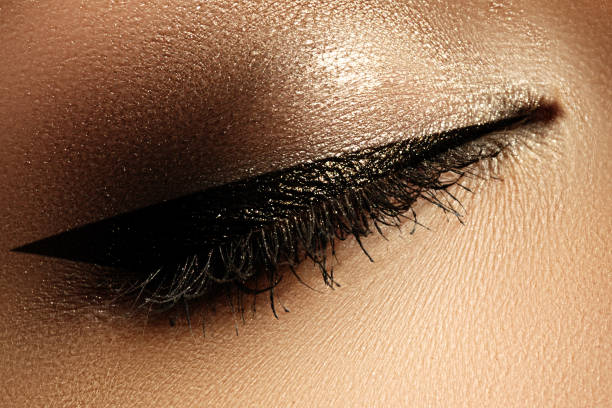
I said it was a long time ago.   (And me without a shred of eye makeup.) She and her colleague thought it was wonderful.  And then I had hardly sat down before the couple opposite commenced urgent consultation until the wife got up and came over.  “Are you “ she asked most politely” Anna Raeburn ?”   I stood up to answer her, she thought I hadn’t heard and repeated the question, while I was simultaneously summoned by a Nigerian nurse called Toby.  “Guilty as charged” I said smiling and excused myself.  When we’d done those tests, I went back via where they were sitting to say thank you.    

In the last clinic before the injection, young eye surgeons check that the preceding injection worked, was comfortable, there were no problems and I drew to the attention of the doctor I was with to the  eye they don’t inject having an itch at 4.00 am.  I promised I never touched it but that when I got up  a couple of hours later, it was caked.   She asked me how I cleaned it – I said warm water and clean cotton wool, carefully.  She had a look at it

and excused herself to consult with a colleague.  When she came back within the promised few minutes, she said they would not be doing the injection, antibiotic drops were prescribed, 4 times a day both eyes for 14 days and then another appointment.  Apparently eye infections travel easily from one eye to the other. 

The pharmacy  was downstairs – Moorfields has lots of volunteers to direct you -and there were maybe a dozen people waiting.  Having handed over my prescription and been given a ticket, I watched the man probably younger than me but in that age group, at the end of the row in front of me.  He was reading.  After several minutes, I put my lips close to his ear.   “The moral superiority of reading in an eye hospital is not lost on me” I said.  He replied at once without missing a beat ” I can’t read.  Just tell me the book’s right way up.” 

And we commenced quiet comfortable joshing for the next several minutes.  He said he was an undertaker and when summoned to collect his prescription, he remarked that there were people dying to meet him … a line I suggested he had used before. Grinning, he said in farewell ”Same time next week ?”   “Sure” I said.  “Bring a book.”   All very good natured, and very good for Valentine’s Day.

Books sent to radio stations used to be piled up and if you’d a fancy for something and its time was past, you put your name in the front so you could claim it.   Which is how I came by a Women’s Institute calendar of feasts

and learned that Valentine’s used to be more generally to do with “Knock and Run” secret gifts – “anyone might benefit, not just lovers.”    I did.  

never goodbye

My parents had been married 48 years

when my father died.   He asked to be buried with his mother, whom my mother loved too.  Years later some brave or foolish person asked my mother, didn’t she return to Kent sometimes to see the grave ?   “No” said my mother memorably.  “That’s not where he is.”   I didn’t have to ask because I understood what she meant.  It was my upbringing.  Memorials come in different forms, they mean different things  to different people and our perception of them, the meaning we attach to them changes over time.  

When I was young I was invested in things lasting.  I loved  books and antiques

and  history because it was all about  the endurance of things.   But when the Ukraine War accelerated, you only had to see one photograph of the front blown off a perfectly ordinary apartment building to know how tenuous what we think of as solid and lasting is.

For the last few days, the battered people of Syria and Turkey have been all over our media,  scrabbling barehanded through the night at piles of what were  homes and houses, weeping beyond tears.  “My  children are under this” indicated a man, “ and nobody comes, no equipment, no one to help us, no food, no water.” 

And it has been cold.   So the chances of saving people have been less.

I know, everybody’s different and long live those differences but though I can understand not wanting your children under a  pile of rubble, I don’t understand wanting to  “see” them again.  They are gone.  Everything that they were has gone from this world into your recall.

For some people, memory is as fragile as the buildings thrown seismically into the air.  For the rest of us, it is the sustaining force of how to live in the world.  And sometimes it seems that what isn’t any more, is even stronger.  You can’t live in memory  but it makes daily life a great deal more bearable.

My father hasn’t been a constant presence as an image.  I have only see him, or bits of him  (the line of his head and shoulders) two or three times in the fifty plus years since he died.  But I hear his voice, I remember him telling stories.   My mother lives in my face, sometimes unsettlingly.   And she loved words, so certain words connect me to her immediately .  The intonations of both parents’ voices come to me at the darndest times, funny or serious, deeply in narration.

Both of them exemplarily explained ideas to me carefully and that’s a whole other set of connections.  This is not because I am necessarily always in agreement with them but that will to reach me, to offer me an interpretation, may be highly intangible but the wish behind it remains.  They are not gone.  I just can’t see them. 

What you believe and how it affects you is a subtle shifting stew of culture,  expectations, personality, family history,  imagination, need and will.    I thought I understood that what I believed in was underpinned by monuments, mostly manmade however long ago, but as I get older, I understand that what enables me to go forward is accounts of other people’s journeys in the world, literally and  imaginatively, the history of the land, what’s left and how it sits now, thousands of years later.    I accepted the law of paradox

ie if it looks like it’s built to last, it probably won’t and if it’s ephemeral, it probably will.   I once described old Mr.Moss  who lived at the top of the road opposite when I was a child, as looking like a dry leaf.   Human life is very small.  What is monstrous is the contempt in which other humans hold it.  

Keira Bell vv The Tavistock

Apparently the President of Turkey  took enormous paybacks from bad builders, who have now fled,  leaving the poor to do what the  poor do – starve and endure, starve and die, mourn and try again.   I hope Erdogan’s name is entered in the Heavenly Accounts on the debit side.

And Syria ?  Held by a blackguard, Syria was Putin’s rehearsal.  We can’t know what is coming.  We can only cleave to our good memories, and know that they are more use than any tombstone.   
really

Headlines in equal parts – dismay

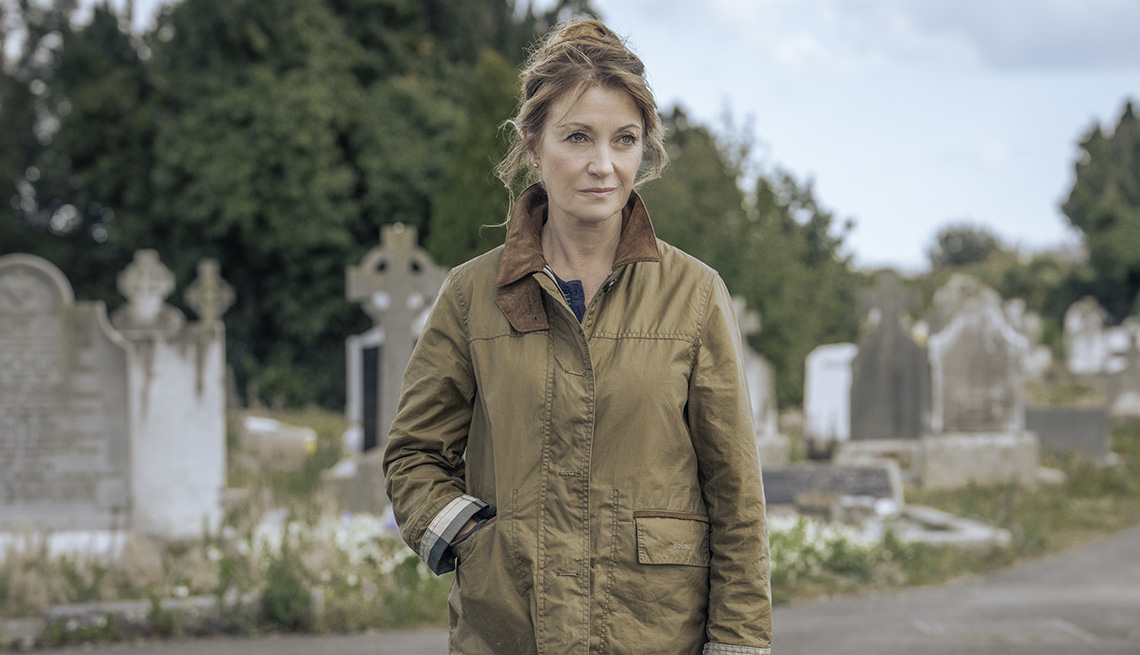
about the dog walker who vanished, and Happy Valley.  Reality and fiction.  What we know of the reality is awkward, unhappy and confused.  And the fiction is terrifically well written, I watched the first two series with bated breath.  Couldn’t hack series three but millions did.  I watched Vera.   And let me say now – I don’t watch anything “obsessively”.   

I began watching Vera

because I had had the great pleasure of interviewing Belinda Blethyn about an agreeable memoir.  Halfway through the interview, in a station  break  (they play ads, you catch your breath) I said “You’re not Welsh at all, you keep talking about  Margate and Ramsgate.”   “Yes, well, “ she said.  “That’s where the family is from.”   So she changed her name?  She nodded, she had.  “What was it ?”   “Bottle.”  

No name for an actress, I could see that, and the Bottles are an old smuggling family. 

“Was there a Tom Bottle in your bit of the family ?”  I asked.  “My uncle Tom” she grinned.  “He was my father’s best friend” I told her.  And we danced up and down with excitement before returning to the business in hand.

My father boxed in the army of WWI, in a detachment now largely forgotten (because of the  obliterating losses in Europe) except for belated tribute to the Sikhs.  And at one stage he boxed with a then famous actor,

Victor McLagen, in a town anglicised into Jubblepore.  As my father came out of his corner, a voice from the crowd shouted “Come on, St. Peters !” (the village where he lived) and the voice was Tom Bottle’s. I grew up with this story.

Years later, when we walked back up the graveyard at St. Peters having buried my father, we came over a slight rise to two rows of elderly men very neat, very erect: what was left of my father’s unit.  My mother and sister passed with other family members and I beamed at the man on my right.  “Know that smile anywhere” he said.  “And you’re Tom Bottle” I said.  And he was.

I began watching Vera  out of curiosity, the tension in the character between her often difficult, even unpleasant manner and her ability which was considerable and generous.  Blethyn is a good actress.  The series was often imaginatively cast.  And the scenery is the scenery of my youth.  

Strange, oddly coloured, often bleak but sometimes unexpectedly beautiful, old, waiting… The north east of England is another country.

I have always thought setting cops and robbers in the countryside changes the story before you start – distances have to be travelled, small communities are often indrawn against strangers (this was before the word police had become almost swearing), the weather has different impact.   The stones and heaths may see but they don’t tell.

My parents did everything they could to make me look around me, to show me that though the town I was born in wasn’t an oil painting, some of the surrounding country was at worst interesting and at best dazzling.  It’s too late to tell them how deeply those lessons have stayed with me, not just that countryside either.   I should add that I am always interested in cinematography

and Vera is often terrifically well shot.

I am not going to tell you I have loved every minute of it – I haven’t. I’ve caught up with an episode I missed and thought “I could have left that.”  But casting absorbed early on the lesson of people just being people instead of black people or disabled people and never lost it.  Occasionally an outstanding script deals with things you and I know happen but we don’t often hear about – two men who loved each other from boyhood but never got further than dumb adoration, a distressed family with a father blamed when it was the wife who was doing the hitting and God knows what the teenage son saw or intuited.   And I think a two hour script in a long running series is much more difficult than an hour and forty/forty five minutes to which such stories more usually incline.
Something on television?  Really.

the other way round

The lovely long curly wavy hair I had as a child may have looked nice but it was hell to keep knot free.   Getting the brush or the comb through other than superficially day to day involved my mother gritting her teeth and me growling and howling and many tears.   The sweetener was chocolate. 

  “It’s a food” opined my mother, breaking off two squares.   “And if it’s good enough for Captain Scott, it’ll do you.”  

I have hardly any sweet tooth but I habitually kept the plain chocolate in a plastic box in the fridge, for occasional use.  Pam the Painter who has a sweet tooth is gratifyingly impressed.   But then one day, when the Italian sweet rusks I bought to eat one of for breakfast became too expensive, I tried a much cheaper product, a similar thing, lighter, made of oats and edged with plain chocolate. And began to eat one with my coffee for breakfast.    The point of this is not to bore you rigid with the chocolate component of my admirably sensible diet but to point out that I stopped buying bars of chocolate.  I bought the chocolate edged biscuits and had one for breakfast, at that end of the day  when I can burn anything, rather than a couple of squares in the evening when I can’t.  

In Saturday’s Times magazine I read the following : “Our ageing population is one of the greatest threats we have ever faced – but what if we worked out how to keep people healthier for longer?

Raghib Ali has the answer.  The former A&E doctor needs just one in ten of us to sign up to one of the biggest medical trials in history.  Prepare to be recruited on your next weekly shop.”

It’s a fascinating piece because, instead of writing yet another lament about strikes and the burden on the NHS, this talks about how research is setting out to accrue data which can be used to employ clever medical insights the other way around, not to keep the elderly from dying, but to prevent them, younger, from getting ill. 

It used to be common to talk about how difficult it was to get men to go the doctor – always supposing you can currently get an appointment.  A chronically ill friend waited 8 weeks to see a GP and left in tears of frustration. So let’s put aside getting to see a doctor and presume you can.  The people who won’t go, won’t go, because they are afraid of what they’d learn, because they might be faced with bad news and worse still, their own responsibility in trying to get better.

Not wanting to hear bad news, being scared, not wanting to have to change but hoping for a magic wand – that’s a personality – whichever sex. 

And I will never forget how taken aback was the young clinical research fellow who tried to brief me when I first went to Moorfield for eye injections.  Between the  complex terminology, her strong accent and a mask, we weren’t getting very far till I heard a word and stopped her.  “Are you asking me to take part in research ?” She agreed, she was.  “Then yes, yes.”  She was astounded and when she explained, so was I. 

People don’t like to take part in research, they fear intrusion, indiscretion, being treated less well than they might otherwise be.  I waved it all away and had the great pleasure of meeting her again two years later, the first four injections in her research project, the rest in Moorfields outpatient clinics. Bless them.

Social transition is almost always slower than we like to think.  People look at a longterm project which might benefit them and delay – till after the holiday, when I’ve done the kitchen.  But the wheels are coming off the cart of  a particular model.

When Snowdrop tells me about his mother  going to yet another appointment, for yet another prescription, but nobody ever sits her down  and tries to make a picture of what’s gone before and build on it, it is a dramatic illustration of our over dependence – unhealthy dependence  – on a particular model eg., go to the doctor and get a prescription. 

I don’t know what is involved in this project,  I am probably too old to be useful but I am – as my father used to say – putting my hand up in church.  If I can be useful, I’m going to be and I am sending the article to the Princess of Wales

who is avowedly interested in benefitting the younger.

To sign up, go to ourfuturehealth.org.uk and investigate biobank.