Monthly Archives: March 2014

“History, herstory”

Apparently history isn’t popular at school.  Is that because of the remoteness of the details of a long ago and very different world, compared to silly selfies?   Do you come to it in age, trying to make sense of the world you live in?

6628320519_15837a5ba0_z

In order to try and understand what is happening in Ukraine today, you’d have to have a look at the area’s history up to WWII.  And it’s complex. Sometimes when you look back, your head swims.
There is a current trend in history writing to look at the minutiae, stories of what this woman said or that man wrote or somebody else did, asides aligned to illuminate the enormous movement of men and munitions, the consequences of apparently simple decisions and the fallout which is almost always uglier than you can imagine.  So thank you (to name but two) Max Hastings for “All Hell Broke Loose” (WWII) and Florian Illies for “1913: the year before the storm”(WWI and he’s German).

WWI broke out 100 years ago this year and it takes anything from 60 to 100 years for humans to begin assess history in context.  My father (born 1896) enlisted just before his 18th birthday and fought in campaigns that faded into forgetting throughout his life because of savage losses in Europe.  His regiment was sent to what we then called the North West Frontier (now Afghanistan) and in Mesopotamia (now Iraq) – which seem to indicate how slowly humans learn anything.  And his dislike of Germans was unreconstructed.
“The only good German, man or dog, is a dead one” he said to a man whose Schnauzer lunged at our English bullterrier.  I was shocked.  My reasonable father, who taught me that there were always several sides to everything!  When I asked him about his remark, he said levelly “Twice.   They came for us twice.”   And I carried that around with me for years until I began to read at roughly the same age as he was then.
2BDE_1ID_WWII_troops_road_marching
I have always read about war, part of a desire to understand something about my father I couldn’t verbalise and he couldn’t tell me.  The war that was current when I was growing up was in South East Asia and it seemed to affect a generation of Americans as the Great War affected my father’s peers.    It was however in historical fiction, set in much earlier times, that I began to see war as a constant, a way of getting territory or holding it, distinguishing yourself, getting enough to eat and having adventures.  The perception of damage – psychological or physical, personal or geographically general – came later.article-0-1497D962000005DC-716_634x472
Although I knew that the trench warfare of the First War caused terrible wounds, I didn’t see it until comparatively recently in an edition of The Culture Show featuring the work of a contemporary artist who made a record of early facial plastic surgery (see also a French film called The Officers’ Ward).  It is humbling.

Of course I could have fallen with equal enthusiasm upon the history of clothes or gardens or agriculture.  I read about war, about its inevitability, that it was a way
of proving yourself a man or a king:  how, no matter how widespread and destructive, war changed so little and (see a poem of Carl Sandburg called “I am the grass”) and how the greatest obliteration was absorbed.

Or read about another kind of war – germ warfare, plague war – in John Kelly’s
“The Great Mortality” about the Black Death and see how the greatest losses the world has ever documented, involving China and Russia as well as the Middle East and Europe up to Iceland and recurring during a hundred years – “rested” the overcrowded cities, allowed wild land time to recover and rehearsed the
desolation of the Holocaust several hundred years before Hitler.
History is less about war and peace than it is about human nature, at it worst and best, its strongest and weakest.  We are rarely nice but we are always interesting and history proves it.

2493112504_84efbcc11b_o

“Mind the Gap”


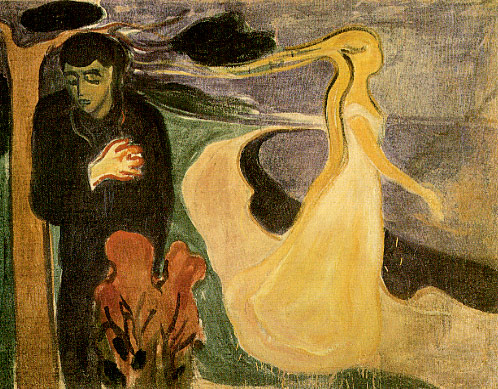
Sometimes you are very aware of what separates you from others.

separation_3
There is a new drama on television about a man who killed the women he was close to, described by the estimable David Chater in The Times as “hideous and detached from any normal human behaviour”.  But somebody thought he was normal |(it’s a dangerous word) and of course we often do, until it is proved otherwise.  There are painful examples of the gap: a woman sent to an experimental school as an orphaned ten year old, discovering 30 years later that both her brothers were abused by it, in the name of liberation: or the man giving evidence of his wife’s mistreatment of their child.
Sometimes the gap is about culture: as a European woman smiling at an Islamic woman and being met by a stony glare.  One is not to know if her shoes hurt or she feels badly about anyone who is not discernibly her own, but we have to start somewhere and the start is almost always personal.
I suppose the gap is really another way of saying how separate we may feel, one from another.   The above are highly coloured examples.  You may just be very different people. And for some reason, the gap is unbridgeable.

I met a woman of my own age through a mutual friend.  She came to supper and then returned the hospitality.  I am fine when I am with her.  Apart from that
I have an overwhelming sense of being marked – as at school –  “ must try harder”.  However the treasured mutual friend (treasured by us both I may say) simply remarked, “ I like strong elderly women but they don’t always like each other.  Indeed sometimes you can just see the “No thank you” ballooning above the head.”   No harm done there then.

If you live alone, closing the gap can be a formality.  You are not looking for (ghastly but expressive phrase) a new best friend.   You just want to speak to somebody, and if Dame Fortune smiles and you are lucky, you can natter about where you got your gloves or what’s in the paper.  The sense of belonging in the world can be reaffirmed without difficulty on either side before you say goodbye and let each other go.

After years and years of getting up and going into a workplace, and living in a family, it is in the mornings sometimes, not always that I long for a human voice.  This is not anything grand or complicated, not incipient depression or a crisis of identity..  I just want somebody to tell me I am still there.

Deeply self-sufficient people never feel like this.  So-called moderns will find an app to meet the need.  Sounds like cold comfort to me. I prefer to take my chances with the postman, somebody in a shop, or I meet in the street. And the meeting can be very brief, as short as almost brushing shoulders with somebody and sharing a grin.  The manners of greeting are dented by being plugged in, tired and often horribly dissociated.  It is noticeable that as technology becomes more and more common, people are not only switched off from other people because they are switched on to some machine, but the sense of space we used to call body territory is being damaged too.  People push past, walk too close, slam into you – ranging from unaware to hostile by virtue of self involvement.

You can be very grateful for a gap.  It can separate you from somebody you really don’t want to be close to.  You may know why, you may have to think about it (or not want to) and an answer isn’t guaranteed.
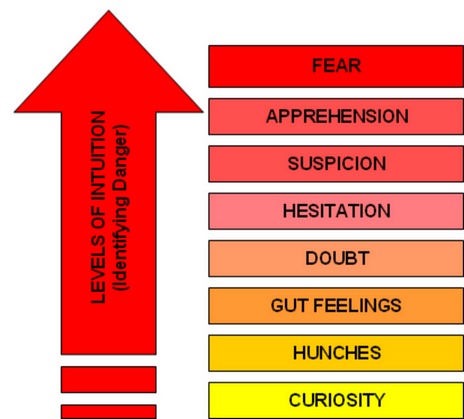
I am eternally grateful to my mother for telling me when I came to London at 17 telling me “Play your hunches, play your hunches, play your hunches.  Work out why you feel what you feel later on if you can but don’t ignore your feelings. “  Years later an American writer called Gavin de Becky wrote a book called The Gift of Fear, on just the same subject.
Levels_of_Intuition_WSDI
I spent years acknowledging there was a gap (school taught me that) and then bridging it.   Invited as a speaker to an association of assertiveness trainers, late in the meeting one of them commented that I was a bridge.  I loved that label then and I love it now.  I loved the idea that people could make use of a voice on the radio to resolve difficulty, face the music and go forward, be happier, do better.  And I speak as a woman who walked beside another much taller younger Brazilian down a dark street in a section of the city I don’t know and we talked, she on her way to a party, me on my way to supper with friends.  In farewell she kissed me goodbye on both cheeks., thus giving me an early birthday present.  She crossed the gap.

s_m05_68954329

“What did you call me?”

We used to laugh when the late great Claire Rayner called someone “lovey”.Perhaps we laughed in sympathy because we feared it put the person to whom it was addressed down, which put her up, so the idea wasn’t thrilling and we were glad it wasn’t us.  I am sure it was supposed to be benign but I wasn’t alone in suspecting it.

mick-jagger-ph

I once listened to Mick Jagger say “Y’know what I mean” in interview 26 times (I counted) and I couldn’t have cared less what he meant, I had earache.  The new verbal culprit is “well” which has been suggested to soften the beginning of a report direct to camera.  It quickly becomes a cliché and when you have heard it repeated throughout every new rejoinder to camera, I want to scream.

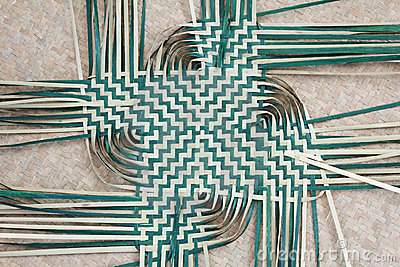
In radio terms, when the clarity and speed of what you broadcast is of the essence, you learn to take the corners of your presentation with the odd endearment – not many, not general, targeted – and the odd word, a bit of old slang, a neat phrase, anything to keep the warp and woof of the woven broadcast changeable, brightly coloured, flexible, moving. basket-weaving-thumb21820625 But you have to watch it with endearments.  They often place you the user more than the person you use them on.  And there are fashions in endearments as there are in swearing or operations.

I don’t call people “darling “ because I am pseudo-grand or assumedly theatrical, although I suffer from both (very effective cover).  It’s what I was called at home by two thoroughly down to earth and unassuming people, “marked” on me at an early age.  Discovering darling was from “dearling” brought me up short – the earlier form has quite a different impact.   Though one woman I know tells me she can never use the word darling.  It is the word her husband used to her throughout a long and cruelly unhappy marriage and she has struck it out of her vocabulary, having heard it used to mean the opposite of what it says one time too many.

Nowadays “sweetheart” is rare, my mother used to say “sweetness” which I have never heard anywhere else.  “Sweetie” is rare and “duckie” or “ducks”, the Victorian embodiment of Cockney sparrowdom, is almost gone.  Many people are sparing in their use of endearments so, when they use such a term or offer a tender nickname – it becomes important, perhaps less to the giver than the receiver.  It seems a marker of special feeling, perhaps intimacy, even if only fleeting.

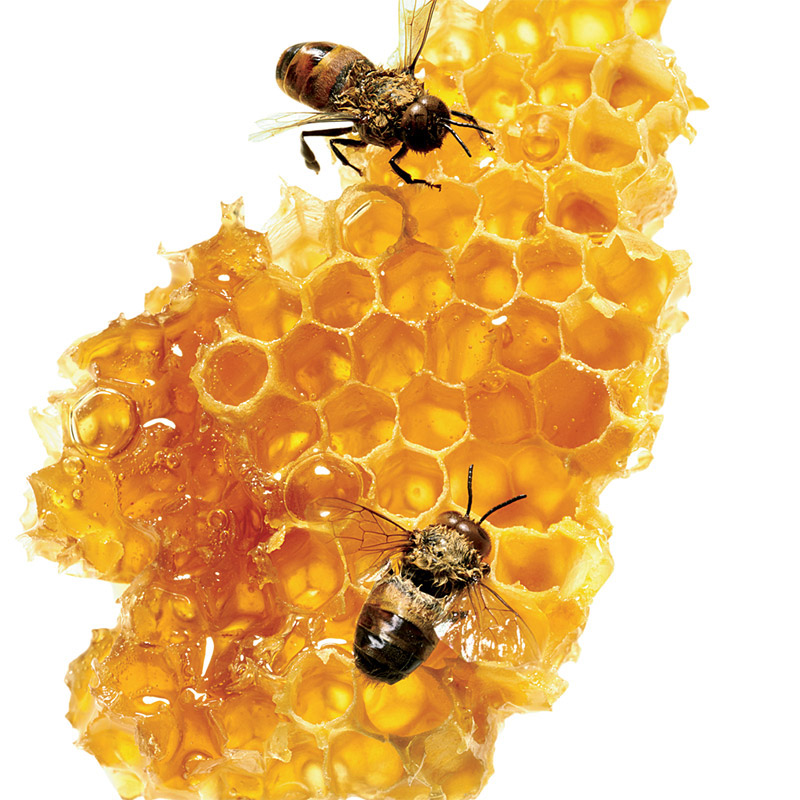
I was in the supermarket where I buy less and less (hooray for street markets, the wonderful local convenience store and the time for opportunistic shopping) and when my favourite assistant said goodbye, she called me “honey”. honeyShe is not given to endearments, isn’t Ann, and as she was clocking off, we walked together through the shop and I told her why that term is special to me.

Opposite my childhood home was Cleveland Avenue and at the top on the left lived Mr. and Mrs. Moss, not just old in the eyes of the child I was then, but very old even then, dry as leaves, she with fluffy white hair under a hat with pearl handled pins and he with a pipe, a flat hat and rheumy eyes, both with sweet smiles.  They were gentle people, rather good with the neighbourhood children to whom they always spoke.  They gave me a book of dog stories and legends called Tails and Tales, which I have just passed on to somebody equally appreciative after a lifetime of cherishing.  And Mr. Moss called me “’unny” (as in honey, no “h”, longish “u”).   Once.  I felt it to be the greatest compliment.  I was under ten, he was an adult.  It’s all in the tone.

We have all heard endearments used to contain or diminish but there are as many rules for as against and at least some of this is to do with personal perception.  One nurse will call you “dear” and make you feel a fool.  Another will do the same thing and you feel absurdly comforted, as if all can be fixed and will be well.  Today, we have the first name used as a comma, every other phrase, or even your title used the same way, in the false intimacy of somebody trying to sell you something you definitely don’t want  – and even if you did want it, you won’t after that patter.
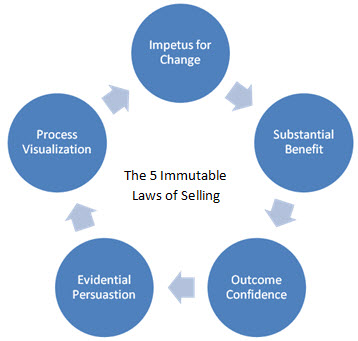
That’s not what the words are for and why selling is still an art, even if you are only selling an idea.      5laws


“I spy”


When I was younger I used to think that the short sight (plus astigmatism) with which I was born was an affliction, a flaw, a curse.   Now I am not so sure.   If you can’t see, you have to look.  You have to focus, screw up your eyes, reach for your glasses or other magnifying instrument and concentrate.   And of course it becomes a habit.  In my case, I notice a lot – colour, gait, hands and feet (shape, disposition, what is on them), hair, complexion – and on and on.   It is a standing joke to those who know me well that the first time my son ducked away from me in a store into the men’s room, I eyeballed everybody who came out till he emerged safely.  I could have done police descriptions.  I am endlessly fascinated by what people notice and perceive  – and of course, what they don’t.

4519179471_76e9c94124_z_large


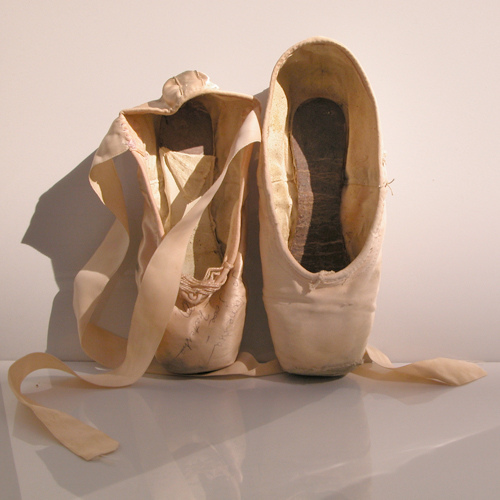
The first time I saw a film about ballet 50 years ago, I noticed all sorts of things but particularly the shoes.  The dancers were from the Bolshoi and it seemed to me that the shoes were a different shape.   The last time I saw a film about ballet was 48 hours ago and I thought all over again how very few dancers move agreeably unless they are dancing.


Watching what I call “Sunday night tripe”, I was fascinated by the change – or lack of it – in outfits.   I am sure that, were I to tackle the costumiers of the second series of Mr. Selfridge, I’d get a wonderful rationalisation.   But while I can accept the floorwalker Agnes Towler daily in the same hat and coat, I don’t think Mrs. Selfridge is sufficiently familiar with any privation in the early stages of the Great War, still less poverty street, to be wearing the same outfit throughout an episode and for the second week running.  Is it presumed we shan’t notice  (though it is quite a noticeable colour) or has the budget run out?


Films and television programmes offer rich pickings for this.  Judging by the
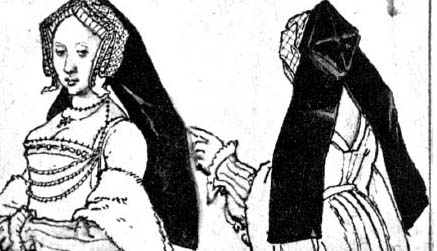
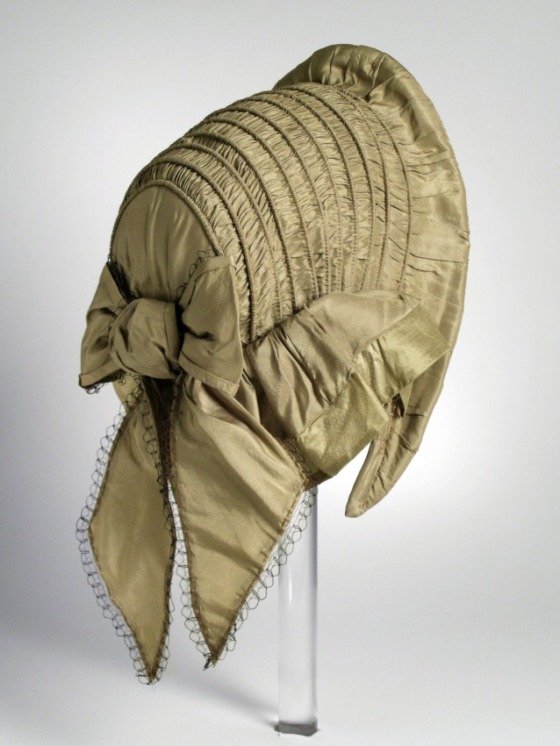
You Say  (radio and TV) column of the Sunday Times Culture section – one of the best reasons to buy the paper – there are men all over Britain just thrilled to be able to tell you that the car or the uniform or the train or the weather was wrong in this episode or that.  I go for broader brushstrokes myself and shall never forget Jeremy Northcote as Thomas More in some unbearable pastiche of Tudor England, lined up with his wife and daughters to receive Henry VIII on the riverbank at Putney, and only the men were wearing hats. backsketchdet  At that period of history no decent woman of any walk of life waking had her head uncovered.  And this persisted for a long time: in an underrated novel of the American Civil Nikon 5400 Digital CaptureWar(1860/5) called Enemy Women, Paulette Jiles (correct spelling) described her heroine escaping from capture, driven to cover her head with something – anything – knowing that a bareheaded woman would be immediately noticeable.  GreenPokeBonnet


Fashions of the past are adhered to, reinvented, hinted at or ignored in productions, depending upon the actor, the costume designer, the producer/director and the sense of the thing. Sometimes the clothes really don’t matter and sometimes the actor is so terrific, you don’t care any way.  You are observing a person and are held and interested by what is going to happen next.


A medical student I knew had a wonderful professor who used to take his students out in the street or into the pub with him and demand that they observe this man or this woman and tell him everything they could see – what sort of work the subject did, the consequences of that work medically, the age of the subject, their social class (and therefore predisposition to certain medical conditions), their general health.  Now that we know TB is not dead but has become more subtle and pernicious, and HIV patients live a long time, I find myself ear wigging coughs and observing serious underweight with a wary eye. I am not obsessed about health and I am not more than averagely wary of ill health but I am interested in people and in what so often goes unnoticed – the repetitious movement of hands indicating (often) distress, the body language that says something quite other than the words offered, in some cases just watching and waiting to see the truth of something you think you perceive emerge.
It’s called people watching.  Those of us who practice it do it with commitment.  Those who don’t care might learn something.

body-language