Category Archives: Uncategorized

patience

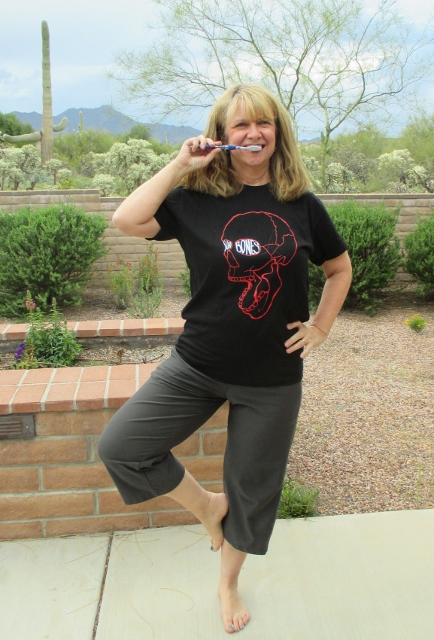
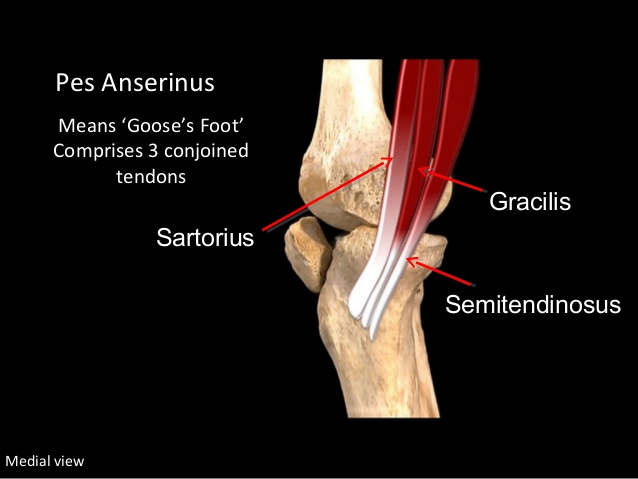
The woman was in her fifties, and her left knee was strapped up so that she had to use a crutch to manoeuvre herself awkwardly into the bus seat.   When I asked her what happened she said that she fell and broke a bone (that’s what she said) in her kneecap.   And I shuddered.   I fell four weeks before, not for the first time, not drunk or incapacitated, just clumsy and unlucky.   And pain lasted and lasted and lasted. But I didn’t break anything , how lucky was I. The helpful physio reassured me “Keep it warm and rest” and gave me an exercise to do – balancing on one leg while cleaning my teeth. Apparently the reverberations felt from the electric toothbrush are enhanced through the system if you stand on your left leg on Monday, your right leg on Tuesday and so on. It is shamingly hard to do and please don’t talk to me about yoga – the secret of yoga lies in the teacher. As in so many other things.
So I have had to be patient and, like lots of us, I am rather better at being patient with somebody else than with myself. What is patience with you feels like skiving in me.   But I didn’t want to go to the doctor: long wait, possibly irrelevant xray and painkillers. I waited three weeks (three weeks !) before I went to a reliably recommended physio. You can’t stop altogether if you live alone (which may be a good thing) so I went out and got the papers and then out to shop for food and then came back, tried to find somewhere comfortable to rest my leg and read. I found bits of tv, domestic things to do (only ever get a C for housekeeping) and I was reminded of the old saw “sometimes I sits and thinks, and sometimes, I just sits.”   Every time I felt my butt spreading under me, I limped through the house, swearing at the pain. (It was remarkable how much less it hurt when I knew what it was.)
Lying on the sofa, I can look out of the upper half of my front windows which recalled a programme we did at LBC about weather. It produced wonderful stories, including that of a bedridden woman whose bed lay under a big sky light, describing how she watched the weather modulate and change, the man who found his dog under the fog and the boy who fell in love in the rain. I like stories better than any other form of writing, stories are unending because they are about people and people are endlessly interesting. Though I have had to be patient with the book I am currently reading, a book which spoken would fascinate but written, requires a high order of concentration and just when I think “no more”, comes up with yet another story. So I persist.*

And when I falter and begin to wonder if – really – I am not trying hard enough – whether with the writing or moving – I go back to the poem entitled Patience by Edith Wharton which my son found and wrote out for me, which lives on the noticeboard.   Because it seems patience isn’t one thing but several.
There is a kind of patience to do with endurance. Previous experience or information suggests you may have to contemplate that the outcome won’t be good but you endure – like the scenic designer married to a successful actor who had already fought three rounds with booze and drugs. They shared a home, had children: he died of an overdose. She endured. She probably still is.  
While another kind of patience is quiet but not passive, where you wait but with attention. Gardening requires this kind of patience. So does growing your hair.   The difference between hearing and listening requires this kind of patience. You can hear all sorts of things but listening is about attention.

There is a patience where you say “I must wait – it is out of my hands”, perhaps in the outcome of a vote, tests or a medical intervention.    And there is an end to patience, where you demand “What is going on ?”   Patience is a matter of degree: some patience is admirable. Too much is for saints.   Not a chance.

*Farewell to the Horse by Ulrich Raulff (Penguin)

this and that

In New York in the sixties, the man who supplied drugs was the candy man. Now, he’s the sugar man: zucker is German for sugar. Was ever Mark Zuckerberg well named ? And who are these two billion people whose life he dominates, not to say controls ?   Two billion sheep, I fear, which is a lot of noise and a lot of sheepshit.

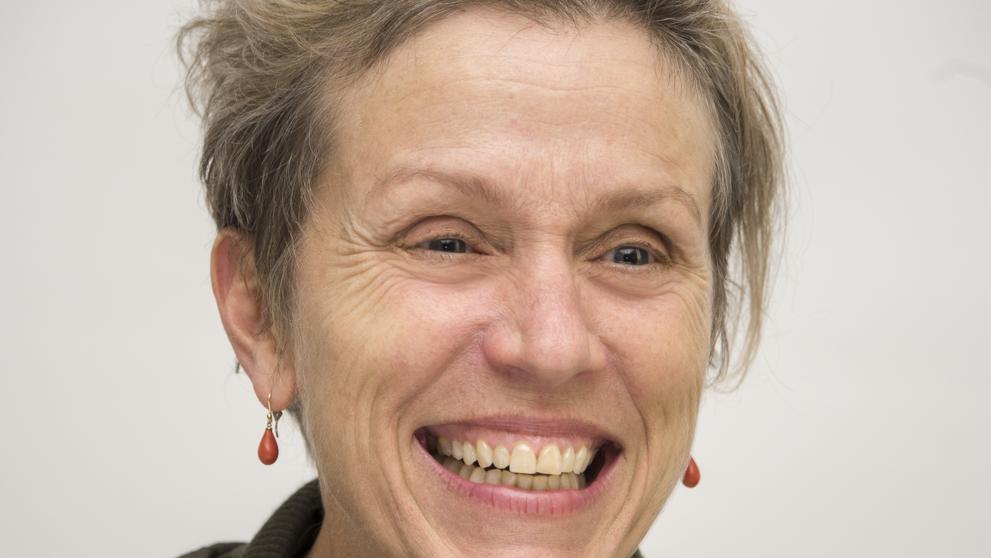
Hooray for Frances Mcdormand who stood up and said “I have a problem with conformity.”   Yes, she has a wonderful voice and the remark back referenced the part for which she won but even so, great to have somebody speak up for individuality. I prefer my society to be a cats’ cradle of well established basic principles admixed with a lot of generosity and some considerable thought.   “Everybody’s doing it” sounds like one short step from totalitarianism. If everybody’s doing it, I don’t want to: blame my parents.

I thought as I watched President Trump’s press secretary Sarah Huckaby Thing that surely somebody could have dressed her better for the image of the US President, which is what she represents. But then, if the deal is that you wear what you wear and force it on the eyeballs of the world, that sounds quite a lot like this President.

Last week could win a prize for sad bad news – the Rohinga, Syria, trade wars, Facebook, housing, the staggering NHS. The weather was the usual spring pick-and-mix, the weather forecasters’ brief now to do with selling hope rather than interpreting meteorology. I have been in the anteroom of a project for so long, I have spiders’ webs all over my feet and I don’t like spiders.   And though I wish them every kind of well, I am tired of hearing about the Windsors before the wedding gets here.   Easter is coming and the only gift we can rely on is endorsed confectionery and jammed traffic.

You know we are in a flat spin because we are writing about sex again, as if we had just discovered it. And on the usual swings and roundabout motif, it is either everything emanating from Hollywood rot and rewards and/or a re- evaluation of how man and women relate, to which let me add this little story. I know there are those who don’t believe in friendship across the genders but I disagree.   People are as they are and getting alongside is always interesting and often moving.

There is a man who lives one street over from me. We’ve seen each other in the street for years and said hello. He has a nice jokey way with him. Occasionally, I saw a woman, clearly not well, getting into or out of a car where he lives. From time to time, we met to walk together a little way, exchanging raillery about the headlines or the state of the streets. One day last summer I met him at the bus stop and, though he was perfectly pleasant, he had, as the Irish say, “drink taken.”   I was very gentle with him.   I could take a guess at some of what was wrong, but I didn’t know and you can’t live people’s lives for them.   And then I didn’t see him.   You can live very close to people and not see them for weeks.

The other day coming back from getting the papers, I met him, walking carefully, swaying, and I waited to say hello.   “I was just thinking about you” he said, the words slurring.   “And what have I done ?”   I asked, smiling.   He smiled back wisely.   “Not a thing,” he said.   “Not a thing.” Pause.   I asked imbuing my voice with every respect and kindness I could think of “And how are you ?” He considered me. “I’m all right” he said and repeated it. I looked him straight in the face. “You’d say that if you were dying” I said. “Ah” he said and crossed the gap between us. “Thank you for that, thank you” and he kissed with infinite care first one of my cheeks, then the other.   There was no smoke and no booze, just the smell of clean clothes and regret.

“Flower xrays by Nick Veasey”

whatsit

The actor’s face came up on the screen and I could remember his first name but his second took about four hours to arrive.   I can’t recall what the prepared aubergine dish I found in the local convenience store was called although I think I’d recognise it. And The Times publishes three old, odd words a day, some of which I cherish enough to put on a list in my notebook – only last week, I got sidetracked and I can only remember of the word I wanted to keep that it was of old French derivation, began with “a” and was something to do with stonemasonry.   I haven’t quite the gall to ring the stonemason’s helpline – yet – but the actor is Timothy Dalton, the smoked aubergine is baba ganoush, and under the rules of yesteryear, I would write to the compiler of the list of old words, secure in the knowledge that she would eventually get my letter.   Sadly, I am no longer sure this applies.

I first saw Judy Parfitt (Sister Monica Jo in Midwives) in Villette (1970), I’d seen her in all sorts of things down the years and I finally met her in the corridor of a now defunct radio station 30 years later. I was in Park Lane when I last saw her aboard a bus. She waved – and called me by name.   I wrote to her care of her agent.   Not even an acknowledgement. I wrote appreciative to the Sunday Times blonde columnist who began with film and went on to tv. Not a word. According to Linkedin, the woman who compiles the lists of old words has 13 jobs, and I don’t want to bother her. But I want that word. If I could work out the right question to ask the search engine, it could help me.   So far I can’t and it can’t.

What the mind mislays and retrieves is fascinating, not just what but why.

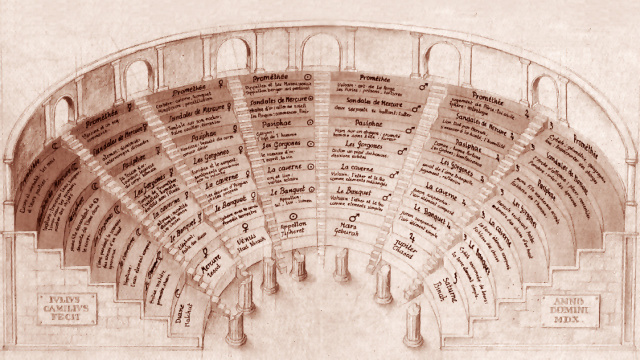
“Guilio Camillo’s Theatre of Memory”

I have today recalled who won the middleweight bout against Sugar Ray Robinson in 1952 (Randolph Turpin) and the name of the Philistine city state that was home to Goliath (Gath): it features in one of my favourite Biblical quotes “Tell it not in Gath, publish it not in Askelon/lest the daughters of the Philistines rejoice/lest the daughters of the uncircumcised triumph.”   It is a very long time since that came to mind.
As you get older, words and names float to the surface of the mind, like aquatic feathers, lovely in themselves but often attached to nothing you can see or hear or – crucially – remember.   And in the interim, as I get older, words in their pure form, of themselves, whether in sentences, as names, in my ear, on the screen, however I find them, matter more and more. We used to swap beads at school but words weigh less. They are like the paving stones on the road of my existence. I keep looking at them, wondering why this one is chipped and that one smaller, why that one is so odd or appealing.   Hence my pleasure in The Times list and in finding some time last week a word I had never heard (insectile) and a word I hadn’t heard for years (raffine with an accent right to left over the e) in a tribute to the late couturier Hubert de Givenchy (I pulled up the writer and wrote appreciatively.)

“an all time great”

Words have associations with the past of course, words and intonation, and they recall situations and stories. I was quite shaken when the fairy godmother (Estelle Winwood, long gone to glory) spoke caressingly and playfully of words in The Glass Slipper (1954) – I thought that was unique to my mother.   But since she took me to the film, we included those favourites in our shared vocabulary.

Only last week when Snowdrop wrote to say (among other things) that his SO (significant other) was working too hard and he hoped he wouldn’t push it to collapse, did I recall Ma pronouncing its “collops” – emphasis on the first syllable – to take the sting out of it. Like dang-eroos for dangerous – so I was warned off, but lightly. Wilful mispronunciation, wonderful words.

never knowingly

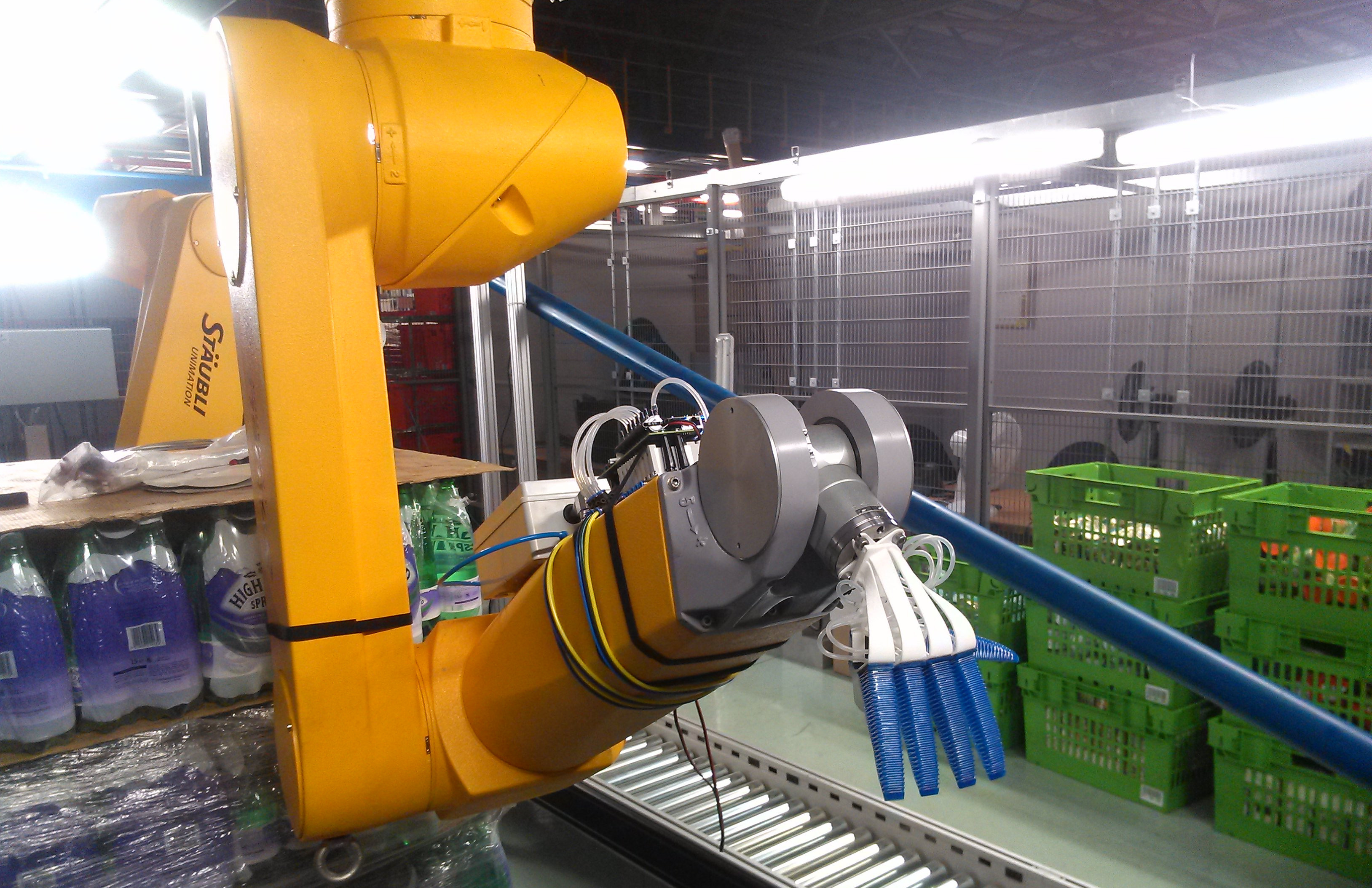
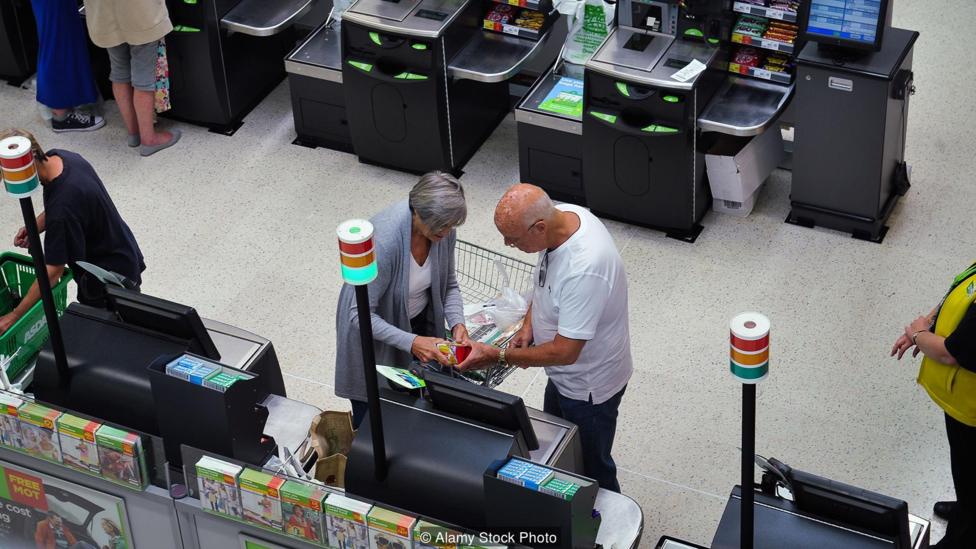
Instead of asking its long serving staff to work at tills alongside the automated version, don’t you think it would be a good idea if Waitrose (the grocery arm of John Lewis) divided its functions so that half its stores were called not Little Waitrose but Waitrose Auto?

Waitrose Auto would have no humans on cash desks, everything automated, a desk for its online shopping outlet, computerised notes on stock running out and complaints, devoting itself to making that run well ?   The other stores could feature humans on the cash desk – every cash desk manned (for the first time in several years), humans to refer to and be called Waitrose Service.   Asking your alleged shareholders – whose bonus was cut for the fifth year in a row – to work in the presence of machines designed to take their jobs – has always seemed insensitive. Little Waitrose sounds twee and counterproductive – if it’s little, it has a small product range and almost certainly won’t have what I want.   I would avoid Waitrose Auto like the plague but it would be much more use to the casual trade, to people rushing in for loo rolls or a packet of digestives, people who like machines. (The staff in my local Sainsburys either babysit me through the robotic till or wave it aside – “It’s always going wrong !”)

I go back 40 years with John Lewis.   I bought my son’s baby gear in a store they then had in North London and though I had a John Lewis card, I didn’t shop much there.     Nowadays I live the other side of town and buy my mascara in Peter Jones.   They’d never get rich on me. But I was taught to shop at Waitrose and they have rarely let me down. And now I can find my way round a couple of branches so shopping there becomes habit, though I actually buy less and less.

One day I was in the dispensary at Boots – another even older brand name with some of the same running problems – and heard a woman talking about shoplifting in Waitrose.   In Waitrose – really ?   “It is epidemic” said my informant. If you’re not a booster, you don’t think about it. But the reason that it goes unchallenged is because management is trying to do everything at the same time. A busy Friday morning will only have 2 tills manned out of 8, we’re all impatient and want to get on, the sandwich trade (otherwise known as the starch sag) is on the go and trying to beat whoever is coming after, there are people flooding in and out of the store, All you have to do is stand quietly and watch … and do you see !   Best place to hid is in plain sight. And I watched a young man steal breakfast out of M&S which was (I hate to say it) a lesson in confidence: target (bread, eggs, milk), bike, gone – security puffing in pursuit.   Do you think the thieves are all social misfits or just fed up with queueing?

You get such mixed messages about shopping – an Ocado handout trumpets “Don’t waste time in the supermarket.”   But the circumstances vary.   If you’re young, working all the hours that God sends, with one or other kind of dependent, trying to run a home, I can see getting the shopping done.   The one thing I have is time. And I need exercise (walking and carrying), a bit of conversational exchange, to venture beyond my four walls.   Not only do I not want to do everything via the screen (I’d rather pick my own lemons thank you), it isn’t in my health interests, physical or social. I prefer old fashioned shops – counters, same faces – it is the continuity that makes me cherish markets.

I know very little about retail.   The nearest I got to the grocery trade was being a secretary to a food pr. And I am sure it has changed like everything else. But how can an enormous concern like John Lewis be millions of pounds adrift?   You can’t blame the Brexit torpor – this has been coming for years .

John Lewis’s slogan: “Never knowingly undersold”

homework

How do I think of what to write?   It varies. Perhaps I see something and respond to it: it hits me, I hit back. Or – I have carried something around in my mind and it comes to the surface. Or somebody says something, or points something out … and the seed sits in my treasured subconscious until thoughts trip out of my fingers on to the screen. And I make sentences. I have learned over time to respect mental processes over which I have no control : just because I appear not to be thinking doesn’t mean I am not, and the forcing house of writing annalog once a week – what I call my homework – has produced its own discipline.

But I have to be careful. The only tabloid editor I ever worked for shouted at me in exasperation “There is a subject in here, if you would just get to it … !”   And I have come to balancing as on a high wire, between following my nose, thinking aloud, and trimming to get to the point. The shouter was the same man who described journalism as a craft, a trade, something you may have had an inkling of but you made into something by doing it again and again, learning the shape of the thing and how to mould it differently.  Sidebar: I have no news background so I think whatever I do is quite different.

In the days when I did daily radio, I was bored to sobs by the endless repetition of the news and I still am.   Rolling news is a killer. It depends for interest on what you the viewer/reader/listener is interested in and whether that is the focus of the news of the day, or on what they call “breaking news” – big stories.   The compulsion to find a big story may lead to misinformation – doesn’t happen often but it is unsettling when it does.   After all, if this organisation which is telling you what is going on in the world gets it wrong, what hope for everybody else? And entirely too much “talking up” – who might get the medal? who might fall off a chair and break his neck? who got the most snow?

I write about the inside, the continuum, what is particular. I write about experiences but I also write about how they feel. I write stories so that you not only hear what happened but think about how that might be lived through.   I told my son’s brother, his best friend, that I had described him as a child of pain. It wasn’t meant to be intrusive, just precisely descriptive.   The only audience I am talking to in all this is myself.   Can I believe what I have written ? Does it speak to me ?

I read all the time and in her broken nights, augmented by the radio on softly, Salad (so called because she is an even worse typist than I) heard an admired writer say that you can’t write if you don’t read.   You read to learn, you read to learn to avoid, you read inescapably, like a kid scratching a healing graze.   Only the graze of writing never heals and you go right on rubbing at it, opening it and re-opening it like Maximus’s scar in Ridley Scott’s Gladiator.   It’s not a new thought, the reading and writing equation, but like Van Gogh spending years learning to draw plaster casts before he drew from life, you have to have that discipline in order to ditch it and through both learning it and putting it aside, go on to something else.

It is not simple when you think of one thing to write about but it is simpler.   Sometimes you get several ideas that come in a crowd and if you’re lucky you can weave them together into a harmonious whole. But that’s rare.   Mostly what happens when you have several ideas is you spend hours trying to get them to interrelate and then more hours choosing which ones to dump.   So you develop ways of following the thought through and watching it peter out … like a disappearing river down a pothole. And then you start again. Neither prayer nor crossed fingers meets the need of a hammered sentence.

“Michael Johnson at The Copper Works, Newlyn”

picture this

Brian (not his real name) who is one of the kindest and most practical men alive arrived to organise my new passport. I admit, I have been putting it off and putting it off but when he asked me why, I told the truth.   “I am afraid of the pictures” I said.   “Oh Anna” he said with that mixture of patience and exasperation denoting affection. I am not proud of it, but it is the truth.   Most of the time I am quite good friends with my face but images of it require process and process frightens me. The first lot were too dark so Brian came back and reshot lots more, one of which was acceptable to the Passport Office.   One or two were even acceptable to me !

Let me be quite clear about this. I do not spend my life being afraid of old age.

“the wonderful Simone Veil in old age”

It comes to us all.   I never knew either one of my parents without wrinkles and they were attractive people.   I do believe that what is inside shows by the time you get to the end days and if you have spent your life in disappointment and displeasure, that’s what shows on your face – never mind clothes, treatments, or any other of the so called aids pushed at us from every direction, men or women. (I promise not to go into one about hair colour but if you want to see panic in the streets, just withdraw the supply of peroxide.)

A couple of years ago, I walked into a woman round the back of Bond Street. I apologised while she said “Oh but you look wonderful – of course you’ve had work done !”   “No” I said.   “This is God.”   I don’t think she’d say it now. I am older, things have happened but it is so difficult to have a candid discussion about this. You can only see what you see and think what you think, and you must know that there are only people who want to know what you think if it agrees with their notion of things or is flattering.

There are people who dread old age, whose lives were so spent as to give them meaning and without the work they loved, they are cut adrift. There are the good looking who don’t care, the good looking who do care and the good looking who are too busy to do more than get on with their lives which is probably a sub division of the first lot.

The camera image complicates all of this. I am sure there are wonderful pictures of anybody you have ever admired for their looks as an older person. Very few become ugly. There are some who were much better looking when they were younger and there are the magic few who, like wine, improve with age.

But the culture admires youth and so many people subscribe to what they see as the image of youth, believing that it must work for them, the snake oil of the present day. And it rarely does. You want to teach classes in colour because bad black is a killer to the youngest and freshest, let alone those who are just copying the same. And there is a lot of it about. Black eats light and nothing could be less becoming.

When I jib at having my photograph taken, it is after many years of bad pictures. Yes, there were some good ones but not many.   Think of it – hours and hours of bad photographs – three hours with a photographer from a national newspaper who, when I asked why it was taking so long, replied “I am trying to make you look feminine !”   How hard I learned that what I wore in life didn’t necessarily work in colour or shape on camera.   I shall never forget myself in a voluminous taupe wool number, floating past a television monitor : I looked like a misplaced dish of coffee ice cream. Thank heaven there was time to change.   In sum you either work with what you used to have or with what you have now and, even if frightens me, I do try to live in the present.

ITYS*

My mother, that’s her, third cloud on the left centre back most days, will have her hands over her ears but really – I Told You So*. It is an insufferable phrase, she taught me, even if it’s true. Much better to draw breath, shut up and smile quietly.   (I wonder if ma knew what Schadenfreude was ?) And most of the time I do. But two things last week were too much to bear in silence – though I am very grateful for the public airing of both of them.

The first was some British scientific research indicating that there may be (quelle delicatesse!) a correlation between the consistent ingestion of over processed food and certain types of cancer.   The combination of this being science, taken out of context into the public domain, and British prohibits saying something simple like “cut down on over processed food”. That would be seen as prejudicial – to the food industries making a fortune, convenience food in general, buying patterns, the pace of modern life, and the poor.
Of course we don’t call them the poor nowadays, we call them poorer (and they are, than anybody) and we’re all confused about how to differentiate between your being unable to earn more than a certain amount of money, the cost of everything going up round you, what you are entitled to (entitlement alone deserves a whole book) and how much is your fault – enter the politically correct thought police.

The second was some American research which indicated that what are described as “ordinary household products” contain micro organisms which are just as likely to compromise your lungs (and the planet) as anything a busy road can serve up, starting with traffic jams, diesel engines, petrol fumes, every kind of dust and waste. I can’t be the only person who quails at the mention of the word “aerosol”. Something has to be added to make whatever it is come out in the form of a spray. Something else has to be added to stabilise that, for shelf life. Both these putative alternations have to be minimised – another additive ? And so we go on. You have never thought about it ? You’re not supposed to. That’s why they call it “sold”.

After the company changed hands, I recall that a favourite facial cleanser was repackaged. “It’s exactly the same” said the salesperson when I hesitated. “I doubt that” I said quietly. She looked at me as though I had bitten her. “But it is” she insisted and when I pointed out that what you scooped out of a jar was not the same texture as what issued flowingly from a tube, and you’d have to change the formula to make it work like that, she stared at me. “Are you in the business ?“ “General Science at 14” I said” thank you” and left.

I look at those ads about “nose blind” which is a very funny idea but spraying your room to make it smell better ? What ever happened to opening a window ? Soap and water ? Sweeping up ? Soaking sweaty exercise clothes before washing them, preferably in a mild solution of bicarbonate of soda and cool water ?   When Celia Cigarette was still smoking, she bought one of those lozenge fitments for the electrics (“just light it and the air is perfumed for up to 24 hours”).   Well something happened to the air all right and Celia’s doctor asked if she were using such a product – not his first prejudicial experience of such a thing among his patients.

I looked through the list of ordinary household products and I use very few.   I looked through the list of overprocessed food and most of it doesn’t even visit my kitchen. It seems that as I live alone, what others consider usual if not essential, just isn’t to me.   And the moral of the story lies in the only time I have been treated with steroids which were to be taken strictly to time, via sort of puffer though you couldn’t see, smell or taste any difference. But something happened and I got better.

ITYS.

floral tributes

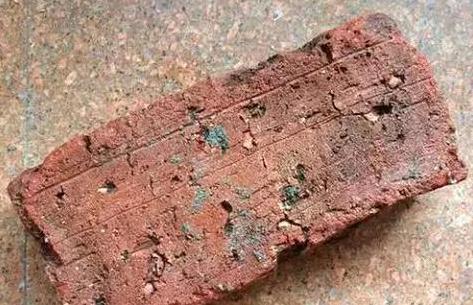
The house on the curve of the street was once owned by a disagreeable dipsomaniac. You never knew which way she was going to jump and she wound up hammering on my locked door with half a brick. In this connection I met the sort of officer who gives me hope for the Met. “Do you “ she asked with admirable calm over the telephone ” want us to send somebody over ?” “No” I said. “But I want a record made and I’d like a copy of it. Once is once. If she does this again, I am coming after her.” The document arrived, I kept it pinned on the notice board till fate intervened and Mrs. Disagreeable moved out.

A bush of glamorous red and yellow roses grew to one side of the house (Mrs. D was a great gardener) and my revenge was to steal one.   I could not often afford flowers and there was nobody to miss one. In the first year after the new family moved in, I asked the lady of the house if I might have one and she said yes. She was gracious and I never asked again and I think of this, when I buy flowers which I mostly do from Son, Dad and Nan* (three generations of flower pitch) who now have a tiny shop tucked under an archway locally.

Like all sorts of cash crops, flowers are often forced so I don’t buy them regularly. Affected by heat and cold and frost and travelling, they don’t last five minutes. But yesterday Dad had white anemones.   Irresistible. Accurately, he had white and blush blooms and when I chose them, instead of just wrapping them up, he selected a mixture, laying them very carefully flat on paper, put in two beautiful long stemmed tawny pink roses, and turned back to me.

“Man I know came in this morning” he said. “His daughter died last week. She was 13, on the Saturday. And he wanted to give everybody roses, sort of a happy memorial to her. So I’m giving them to my regulars … “ I caught my breath. “We hade five women on the forecourt this morning, weeping about it, and that wasn’t what he wanted at all. So I’m giving them to you, to make you happy.” “How lovely” I said”, thinking what do you say ? Dad deprecated: “ ‘s just a coupla roses” he said. It was Chanel who said less is more.

Long ago true love was the name of a song and a boat in the musical High Society and Valentine’s Day beckons, set aside for the worship of one of the world’s oldest miracles, with champagne, chocolates, frillies and red roses.   I confess I shy away from codification by common agreement and the heavy hand of merchandising. ( Can’t drink champagne, pass on frillies, not keen on red roses and like to choose my own chocolate.)   Though I do believe in true love between people, whether of the three wonderful months or thirty years variety. True means real and love is a small word of infinite variety and application. You can truly love all sorts of things in all sorts of ways from loving kindness through mad passion to deeply felt visceral affection, your country, a parent, a partner, your job or your pet.

There is a language to flowers and whether they grow wild in the hedgerow or are cultivated in pots or gardens, over time they came to symbolise different things until superstition darkened them as it darkened which gems decorate what colours we wear.

You love ? You love. Love is personal. Your love isn’t mine. Funnily enough, by using the word more, we have not learnt much more about what it means. So we look for things that symbolise how we feel. What you can afford comes into this, personal taste, fashion and so on but really what you’re looking for is an image of your love.   Flowers come in many shapes and colours, die and come again, smell special– you can see how they fit into the picture. And if (as the song says) only God can make a tree, you can see He had a field day with flowers.     

* not their names

the rules of engagement*

Daisy doesn’t like the telephone. I am not sure if this was always so, whether she associates it only with work or bad news but she prefers the email and she is one of several people whose needs dictated that I learn to use the screen. The rules of engagement – as the degree of involvement – vary.

Avi only uses the screen once a day. She opens it up in the morning, deals with what is there and by midmorning, it is closed down till the following day.   She doesn’t like the electronic presence and prefers the telephone.

Nearly 20 years ago, BBC Radio 4 brought together a man who had written a book about Bette Davis with a woman who had written a monograph on Joan Crawford. Which is how a tall aquiline greying man came to stand over me in the lobby and said “Hello, Joan” to which I replied “Oh hi, Bette” . We did well on air, went out for coffee and stayed friends.   One way and another, I see him every couple of months and we email variously.

Six weeks ago, a man who said he was 33 wrote me a note about my professional presence favourably mentioning my face. (One of my favourite New Yorker cartoons shows two dogs conferring, screen on the desk, one saying to the other “Nobody knows if you’re a dog on the internet!”) I replied to acknowledge his remarks. He emailed occasionally. Mindful of not knowing who he was, I replied carefully until he wrote “Do you have a partner?” to which I replied “Not since the second marriage to someone I loved broke up 18 years ago. Another life.” I have never heard another word.

Daisy is a dear friend and her husband is ill. I’d like to ring but I know that it might easily be as wrong as tugging her sleeve when she is pouring hot coffee ie it might do the opposite of help. The rules of engagement are governed by estimating when to accept and when to push.

When Ginny turned up on my doorstep, laughing and happy with Jo, I thought I was looking at a marriage made in heaven but x years on, it has become denial, disappointment and unacknowledged power games. Emerging from a relationship of investment takes courage and time but once she had broached it, I stood square behind Ginny. All too often, “we’re staying friends with both of them” means we can’t be friends with either of them. And she made the transit out acquiring painful personal knowledge. So it has been wonderful to see her sense of humour flourish, her friends rally and her ability to say “it was a bad day” followed by “but at least I didn’t have to pretend about it!”

Because sometimes you can’t accept.   My first husband was always a man in pain, very bright and insightful about all sorts of things but not himself. In his mind, women fitted in with the stove and the bed. So, when we met again after 30 years and more, and I thought we could be friends, it was not what he had in mind.   I called up my courage and told him “You are one of the people I care for and there isn’t much I wouldn’t do for you but if you think the road from the kitchen leads to the bedroom, forget it.”   To which he tellingly replied “You are a sexual being, you will always be a sexual being. You can’t just switch it off.”   “Ever heard of acts of will ?” I asked.   But he pushed and side swiped until I withdrew completely.   I couldn’t accept his way and he couldn’t accept mine.

Whether we are talking about friendship or its extension, there are places to go and places not to go. The great challenge is judging when to go there. There are places you feel you must go, the relationship can’t go on until this is discussed but the other fellow won’t have it. And there are people for whom the very word “discuss” means hitting the table and shouting, though you planned to be nothing if not reasonable. It is the issue that shouts.

*The rules of engagement are the internal rules or directives among military forces (including individuals) that define the instructions, conditions, degree and manner in which the use of force (or actions which might be construed as provocative) may be applied.

writing in the air (2)

For the first time in his life, a fellow broadcaster whom I shall call by my nickname for him Bunslove (he has a sweet tooth) fought back. Of course he has before but very often he has acquiesced, agonised, sweated blood, made up the difference and all the name of the work he loves, radio. This time the suits mucked him about and he walked away. I am delighted because it represents better care of his admirable self but this morning I was asked why I left radio and I want to stand on a box (or several boxes) and shout – “I didn’t leave it, it left me !” There are other wellknown djs in the same boat. You take what they give you – which isn’t much – or you don’t work.   This is right across the board from music to politics to what we used to call magazine programmes.   All problems are now met by the internet. Really ?

When you hear or read that this concern will run by robots and that by drone, I feel that I am hearing the same arguments of 30 years ago between television and the print. They aren’t the same thing, they are complementary and there is a woeful lack of vision for the future. There are always exceptions but in the main, the last group for whom media is put together is the consumer.   Or the consumer has been so shaped that he or she will take whatever is on offer which has led to a diminution in range and quality.   Sure, the money men are making money.   To quote another friend’s great line “We worked for X when it was a radio station, not a company that owned one.”

Two friends have taken over a year to find a job: another woman of my acquaintance is watching her skilled son in law go through his third experience of “last in, first out”.   Of course things change but the love affair with the machine is not in the interests of the subtlety and individuality of humankind. Not for nothing is this column called annalog ! A machine is a machine, and it takes a human to work one.   The division between those who have a great deal and those who have nothing much is very wide, with less and less between the two.   And all too often those at the poorer end of the spectrum are rendered into human machines, service for have’s.

BBC dominates radio nationally and locally, and independent radio is an amorphous and largely betrayed dream in a country where management skills are notoriously uneven. I worked in independent radio for 40 years plus, used occasionally (sometimes very enjoyably) by the BBC – but then there was also increasing friction, evidence of a changing culture.   If you are the age of most of my radio friends, they are going to go on fighting for bits and pieces for their professional pride as well as their principal earning. Buns has diversified into all sorts of corporate stuff and he is a very handy techy. And I made the decision to stand back – based on a dozen things, not least on my father teaching me when wasn’t my turn: based on a wonderful innings contrasting unfavourably with the lack of courtesy, professionalism and omnipresent haggling.

I have had many better than good experiences, am still called on occasionally but I am older and have decided (again) that one of the few great freedoms in life is when you have nothing: there is nothing to lose. I have wonderful memories of radio and I use the same skills to talk to people on the bus that I used to pour into the microphone. Filling air doesn’t do it for me.   The key word is interesting: surely we should be able to use our voices – we are the only species that has highly codified the voice – to reach across time and space and talk to each other, yes, even disagree and go on talking – though at the moment that sounds like a revolutionary idea. I am of the opinion that when we cease to do that, we shall cease to be human and I am coming back as a Canadian lynx.