Category Archives: Uncategorized

Black and White

The Post Office still puts a note through the door when they can’t deliver, a red and white form telling you where you can collect whatever it is and asking you to bring identification.

So I set off with my son’s driving licence (it was his parcel)  and my passport: best to be prepared.  In similar circumstances I have been asked for one and both and neither.

The man behind the desk recognises me; grinned, got the package and I went out to get a bus because it was too cold to walk if I didn’t have to.u’

So there am I clutching something from New York and my scarf round my throat while standing at the bus stop when a tall young man in front of me half turns and I catch his eye.

“Freezing” I remark.

He looked at me.

“What will happen to the birds?” he asked.

I say the first thing I can think of.   “I know the wrens are at risk, because they are so tiny, the body can’t manage the change in temperature.” (I love wrens, they were the instruments of my return to happiness at a very difficult time – I don’t tell him this).   “But they are great survivors, they come again.”

“How?” he asked.

“I don’t know” I said.  “I belong to the feed them and admire them school, I don’t know much about birds.   Are they your interest?”

He nodded.  “I like the country” he said, shrugging away from the buildings round us.  “I go wherever I can, to walk and watch and listen.  I’ve been to Spain and Romania and Ireland, just to walk and see.”

“If you like birds” I said” you must go to Crete.  It’s a sort of way station for all sorts of birds; the Royal Society for the Protection of Birds recommends it.”

“I don’t know Crete” he murmured.

Oh I do.   “We went for holidays when my son was little.  He fell in love with a book called Birds of Prey of Greece.   He loves raptors.”

“What’s a raptor?”

“Like an eagle, a bird of prey.  I bought it for him, thinking he would like to look at the pictures but he insisted on reading most of it and we’d go out in the car to spot different kinds of birds from the drawings …”

“Like?” he said.

“Brown eagle, probably immature – on the left!”

He laughed.   “That sounds like fun.”

“It was wonderful” I said, remembering the heat across the undulating land, the simplicity of it away from the holiday coastal strip, the weight of it waiting for me.

“You see I had wanted to go there since I was about 14, when I found a book call The Bull of Minos, about the ancient civilizations  …”

“It’s very old?” he asked.

“There is a street of jewelers in Chania, the state capital, which is 8,000 years old.  (I don’t know if this is true but I like the idea.)  And old castles and forts and villas.  And wonderful people, invaded by everybody of course, because they are an island – the Turks and the Venetians and the Germans – but still themselves.”

“I’ll think about that” he said.

The bus approached.

“You’ve made my day” he said.

after you've made my day he said


“Why?”

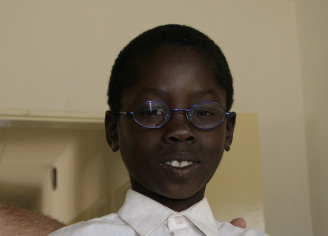
“Well, you’re white and I ‘m black.  And white women don’t speak to black men, not young black men.”

“But this is all there is” I said, gesturing to the space between myself and him, from him to me.   “If we don’t talk, there is nothing.  And this – this exchange – is the most political thing, not party political, political meaning of the people, the most political thing that any of us ever do and when we stop doing this, we’re finished.   It was a pleasure to meet you” and I held out my hand.   “I’m Anna.”

“Hi” he said, beaming.  “Hi, Anna.  I’m Dean.”

before last para (some believe) 

“Some believe that with an estimated 125 billion friend connections (the world population is just over 7 billion) Facebook has become so vast that it is undermining face-to-face interactions and replacing them with online ones” (Sunday Times 13.05.2012)

Not when Anna and Dean met on a cold morning in the Wandsworth Road.


Ch-ch-changes (with thanks to David Bowie)

What is a job for life? I keep reading “no more jobs for life”, usually on the same page as living for longer, saving more, sex at seventy and sentimental claptrap about how many more of us will be living to a hundred, as if that were desirable.

I can’t think of anything worse.

sun masks

Yes, I have the personal acquaintance of two ladies, both over 90, in reasonable fettle, borne up by various kinds of help and family.  And my own mother died at 89 with little marked decline, thank heaven.

s_y17_10118275

But it is a sight too long if you are ill or alone, or can’t-buy-the-basics-without-wincing poor – and increasing numbers of us are going to be all three.

Recently employed by a TV show, I met various well meaning souls who said bracingly “But you’re still working aren’t you?”

There are all sorts of inferences in this.

To which I replied “Only here.  Eight jobs last year, ten this.   I read a lot of books.”

|I don’t enjoy the mixture of shamefaced apology and jollying along that seems to accompany the expectation of endless employment.

Nothing is forever, and certainly not work.

So, the other day walking home, I reflected on the idea of a job for life.

How long is life?

Because – setting aside 10 years as a secretary – I worked more or less continuously for 35 years, with two unplanned breaks of about 8 weeks or so – in regular fulltime employment, regular part time employment, and freelance – in women’s magazines, newspapers, on radio and TV with the odd speaking engagement thrown in, all running at much the same time.  I was married, we had a child, there was help in the house, the shirts went to a service and we took turns at walking the dog.   That was a life and things change.

One of the best things I was ever taught is that change is inevitable – change in working practice, change in one’s field of work, life change, change in expectation and situation.

You can spend a lot of time trying to maintain the status quo and things will still change.  It is revealing that the man who insisted I get to grips with the idea of change hated it when it came to him because it was not under his formidable control!  Change was OK for other people.

We often talk about change resentfully because change for the worse is easier to categorize than change for the better.  So I remember with affectionate respect the old lady whose shopping I carried as we trudged home through the snow, who suddenly said “They weren’t good old days you know, for most of us.  They were bad old days.  Today is better.”   Change, you see.

s_y45_31010706

The actress Cherie Lunghi (whom I have seen close to on a Saturday morning shopping, with a bit of lipstick for makeup, her enviable figure in jeans) is the first “popular” woman to be quoted as saying “Forget the Botox and embrace your bus pass” (Daily Telegraph 07.04.2012, quoted from The Lady) while some Simple Pleasures for the Over 70s made it to the second page of Times 2 (same week) including a break, thank heaven, from all this relentless “keeping busy”.

Of course you don’t have to abdicate everything you used to do but there might be something specific you are longing to stop.  Or take on.   In listening to other people’s problems for years and having given appropriate attention to my own, I contend that people who make themselves artificially busy are usually avoiding something – along the same lines are those endlessly hard workers who retire and are dead in a year to eighteen months.

Change has to be learned.  It is governed by need, health, disposition, income and imagination.

Change makes me revisit books and without exception I get something different out of them, the second time around.  They haven’t changed but I have.

A devotee of the print, I have reduced my newspaper habit to three a day and I have learned to love crosswords.

Change has made me cut back on cheese: the mouth loves it but the stomach doesn’t.

I am not a cat with nine lives.  I am a woman who cherishes tracts of time but who recognizes this is different – a change – to another life.

Screen/Print

The phrase “The People of the Book” (ahl al-kitab) – the connection between the Jews, the Christians and the Muslims – has another resonance for me because I like to think of myself as a child of the book.

Books sustained me through my childhood illnesses, fed me ideas, conceptualized for me, comforted me, made me think, weep and roar with laughter and offered me some subconscious idea of stability.  The motto of Rudyard Kipling’s mongoose Rikki Tikki Tavi is “Run and find out.”

tree

I did much of my running through books.

I do not keep every book that comes into the house.  I sort and recycle regularly.  There are things that pass me by or I can’t read, and others that I just have to have around me for that 2.00 am “I’d like to look at” feeling.

And I become wildly enthusiastic when a book shows me Something Else, Something Other – like Let Our Fame Be Great by Oliver Bullough, about the peoples of the Caucasus.

Because you must know that history has favourites and then it has gaps: history we all know, at least know of, and history that has been forgotten, shelved.

Bullough’s book seized my imagination to the extent that it is the only time I have ever buttonholed a BBC producer whose work I had admired and begged him to read it.

I am not at ease with the computer, with anything about it – the screen, what I can get it to do.  I am scared of it and have to be talked gently through it as befits a Luddite.

But my son taught me that, if you target the question, you can get an answer.

The first time I did this was to find an English academic on the faculty of an Australian university, who had written a book about three of The New Yorker magazine’s most famous cartoonists.

I found him, I emailed, he replied.

Yes!

Recently the mini edition of The New York Times enclosed in The Observer offered pictures of artifacts thousands of years old from the borderlands of Persia, west Afghanistan, north into Kazakhstan – mostly animals, beautifully worked by the largely nomadic peoples of the area.

As is often the way, things you have never thought of shake the eyeballs and the heart.

Years earlier, I fell in love with Inuit art the same way.

I emailed the Institute for the Study of the Ancient World (New York University) saying there must be a catalogue, if I prepaid – would they send it?

Back came the reply saying it’s out from Princeton Press at the end of the month.

Then my delightful Libyan neighbour went to get on his Vespa to go to work as I came through the doorway, clipping in hand, saying “You’re going to think I am mad but you must see these things, they are so beautiful …”

“Oh” he said, taking the cutting, registering “they are lovely” incredulously “they are how old?” while I told him where I found them.

We looked at the details of the exhibit.   “I shall be in New York” he said “I shall go.  How did you know this was one of my great enthusiasms?”   Would I write down the details and put them through his door?  I did.  And then I emailed my son.

“Rude question: have you got my birthday present?  If so, no harm done.  If not, I have found something knockout.”

He rang to ask what and I told him the story.

About half an hour later, he emailed “It’s ordered.  Don’t bother ringing to remonstrate, it’s a busy day.  Talk later.”

The book arrived within a week.   I still don’t know how, he hasn’t explained.

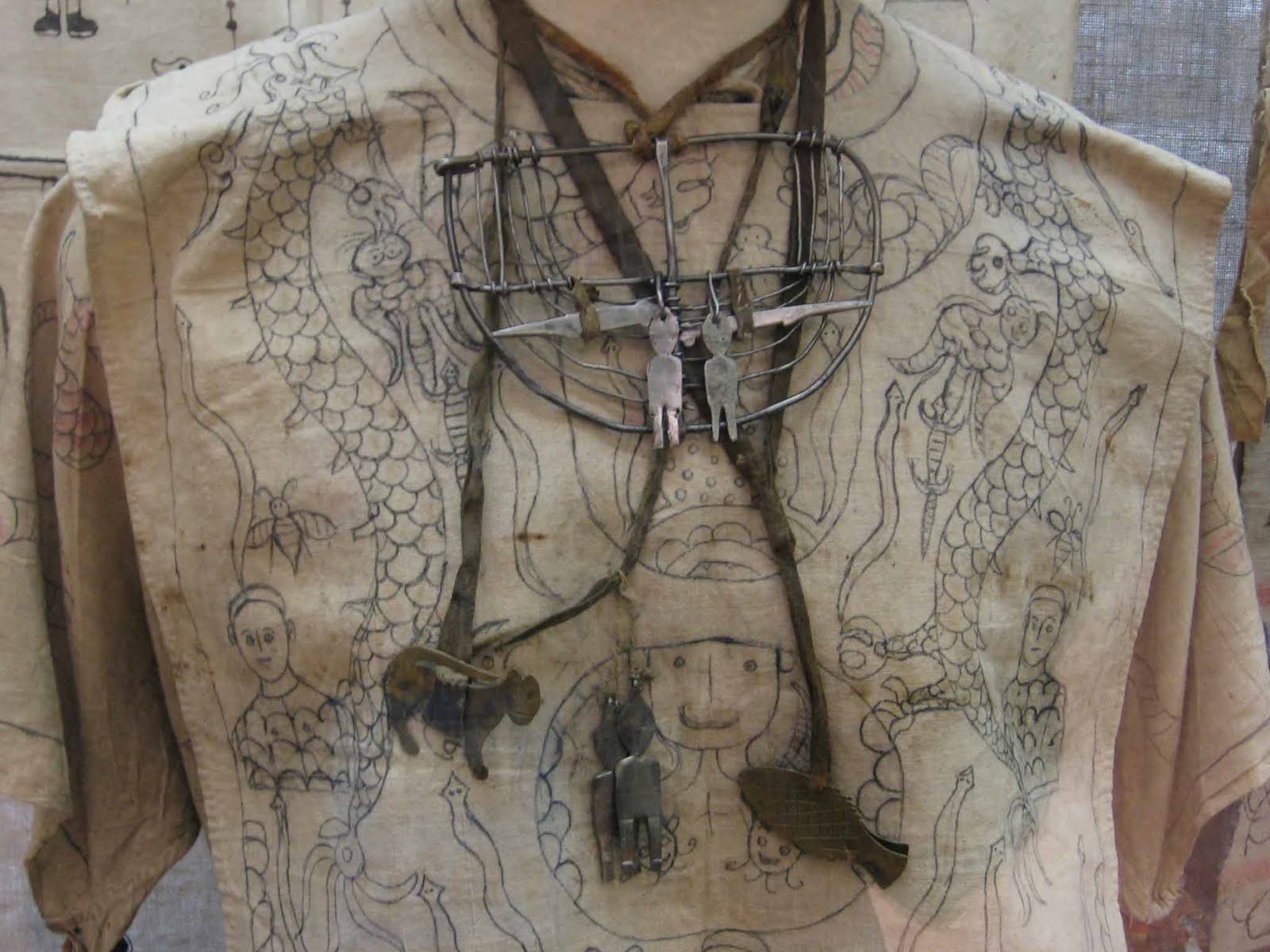
And the images are exhilaratingly strange and wonderful.  there is no written record, very little is known except by deduction but importantly the long held judgment that a society had to be settled to produce to such an artistically high standard has been shot in the foot.

Why did these remnants of turquoise and gold and jade and wood, horse harnesses and votives, jewelry and charms appeal to me so viscerally?

I have no idea.  In the back of the head are “more things in heaven and earth” and I trust my nose.

Run and find out.

And the screen brought me closer to the print.

Almost Cut My Hair …

My first response to a telly appearance has long been “must get my hair cut, must buy a bra”.   You can fake the clothes but not the foundation.

Although having a bra properly fitted is sometimes the subject of an item to promote this label or that endeavor, too many public women think it couldn’t apply to them.(A notable exception is Celia Imrie in The Best Exotic Marigold Hotel, bras nearly as outstanding as the bosom they brace: could we introduce her to the Duchess of Cornwall?)

But I didn’t want to change my life for ten minutes of TV and you don’t have to be famous to change your image.   So, whereas my past was characterized by short dark hair, trousers, flat shoes and no trimmings – I went back to the camera with lengthening hair, a mistletoe green dress, high heels, fishnet tights and jewelry.

Of course you are driven, knowingly or otherwise, by the prevailing “look” and the one that appeals to me is what fashion writers call “channeling the Forties”.  This maneuver involves finding those bits of what is fashionable that you can carry without looking ridiculous – plenty of those around.

And my hair is grey.

Although the hair colour market is booming, you rarely see hair coloured well, naturally or imaginatively, and secondly, maintaining it is an ongoing expense.

I only remember one woman in the public eye with long grey hair, a house model and then directrice of the designer Christian Lacroix.   She was Polish and a one off, delicate and exotic.

Brilliant though he was, Lacroix’s couture house failed to flourish financially and she vanished, I hope to happiness. I have had favorite models since I was about 12, not that I ever looked like any of them.

And grey is one of my favorite colours.

It was Pedro, a small handsome Basque of my own age who, when I was still colouring it, said (heavy Spanish accent) “Darling, we must do something about your hair, it’s too dark, and you look as if you’re peering out of a black bin.” When I asked what to do, he replied “Is a beautiful colour underneath.  Grow it out and then we’ll see.”

In those days my hair grew fast (any growth slows as you get older) and six weeks later, after being cooed over as if I were doing something important, it was grey.

Women have come full circle from 50 years ago when hair dye was the colour of the sexually forward, the film star and the jet set.    Now “everybody” colours their hair (certainly in media) which too often means “if you aren’t with us, you’re against us.”

But I’m not.

Your hair is your hair, mine is mine and I agree with my father that “just because there are more of them doesn’t mean they are right.”

Of course there are days when I look at myself, remember 20 years of that foolproof short cut and think – mad.

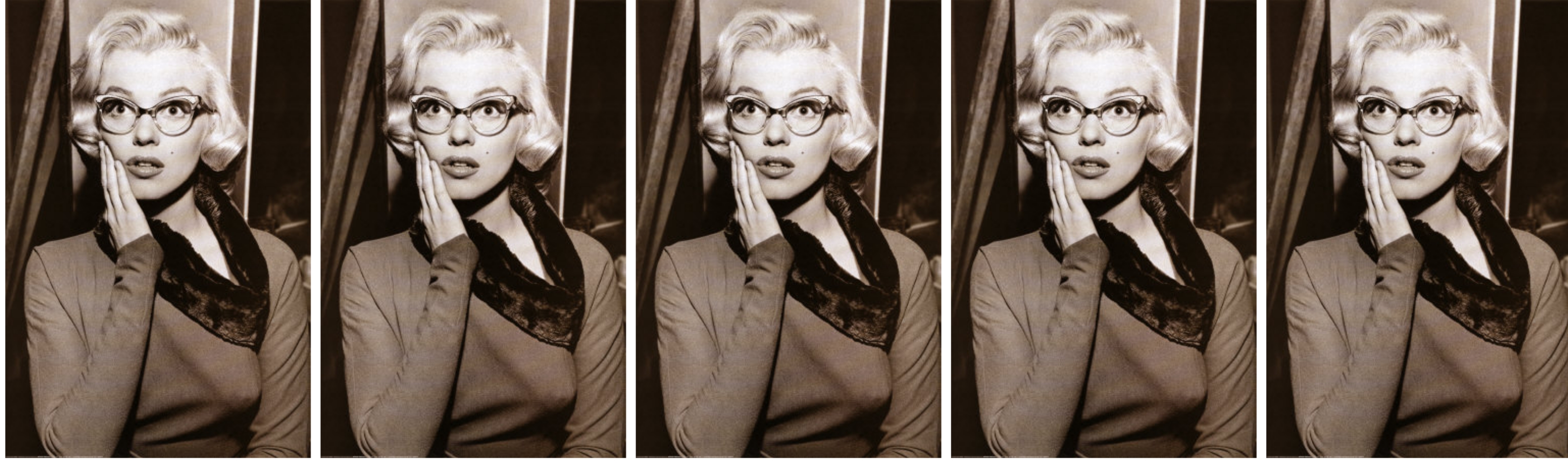
But then I recall that the last twice it was really short, I looked like a suspiciously overfed Buddhist nun or, with the spectacles I have worn forever, an American show business dyke.

I have known both and liked the ones I met; I just don’t want to look like either.

Most reactions have encouraged me – Norman and Nicola in my favorite pharmacy, various friends, a former Vogue editor, a photographer I encountered – but one friend set his face against it and when he had at me for the umpteenth time, David Crosby’s song floated back to me:

“Almost cut my hair

Happened just the other day

It was getting kinda long

Could have got in my way

But I didn’t – here’s the reason why

Feel like

Letting my freak flag fly …”]

It makes me smile to be 68 and think that I might belong to a group labeled as something other than OAP, Silver Surfer or Grey Pound – though I would love to be a cougar, the ghost cat, not the group.

half house