Wwan*

There is a moment in Out of Africa,

African Lions (Panthera Leo) living at Out of Africa Wildlife Park in Camp Verde, Arizona

set in the early 20th century, when the car engine fails and between them Meryl Streep and Robert Redford crank it again and again until (thank heaven) it coughs into go.   We may have more sophisticated machinery nowadays but when it falters, it is hard to restart.

Where we are now* feels like what I have read about the phoney war, the period after the declaration of WWII when the allies lined up their troops, the public was briefed and – nothing happened. Brexit suspended animation has gone on for much longer (a trade war is just as expensive and punitive as a military one) and the clinging to relentless normality – too much of much when there is so little of things we need as opposed to want – superficially reassures us into believing a start has been made, however difficult it was to do. But conditioned by 21st century technology, do we perhaps expect a series of clicks and all to fall into place? Not a hope.   For all sort of reasons – not the least the unpicking of several decades of human history – this is going to take a long time.   And the trouble is that there are various interested parties who would like it to go slower while others would like to speed it up.   Balance and keeping interests on board is difficult.

In the meantime the Tories enjoy their new sport of maykicking. Nothing these guys like better than kicking someone who’s down, especially if it’s a woman. Sexual prejudice is an aspect of racial prejudice because men and women are two different races – a thought leading straight into sixth form psychology about social constructs (I’ve been dying to use that word), hormones and whose parents did what to whom for several generations.

Last week I received a complimentary copy of a new magazine – the usual overstuffed mixture of relentless consumerism and features on what’s “hot” with one exception – a truly terrifying and very informative article about transgender called “When Girls Won’t Be Girls” by Charlie McCann. It was a very long way from Brexit and women in power. But it was to do with a change in perception, that where in the past, time had been taken to do something difficult carefully, now life changing permissions were granted far too fast, in the current belief that slowly and (more) surely would be a problem in itself.

I was interested in this article for several reasons.   One is the small paragraph I had read some months ago about a young man who transgendered into being a woman, wasn’t happy, changed back, and was still unhappy, so he killed himself.   I was interested because the first person I ever went to meet when I worked at the slightly po-faced sex publication where my journalistic life began, was a man in his late forties/early fifties who was contemplating a sex change.   I remember sitting with him in Green Park and being aware of the role depression played in all this.   When Jan (formerly James) Morris wrote the book Conundrum, Germaine Greer raised thoughtful points about gender and took the flak.   Simple it ain’t.

But now speed is God.   Do it fast, it must be right. And the more interests that have to be represented, the harder it is to make a start and continue at a reasonable clip.   Any form of democracy from physician’s office to parliament takes time – time to listen, time to be heard, time to debate and choose and time to decide, the very opposite of a pressed button.

Mrs. Clinton has never met Mrs. May but they have one thing in common: under pressure, they do not speak well in public.   They take refuge in a limiting formality which risks sounding like bright girls wanting to be taken seriously by the all male sixth form. The pressure on the female voice in public life reminds me of the stories about male presenters “fixing” mikes at the BBC so that women sounded shrill and insubstantial, and were thus discredited.   Of course it’s not the whole story but it is some of the story – as are personal likes and dislikes, in or out of Europe and the terms thereof and what makes a woman.   Where we are now* (see title).  

Lists

Sometimes I fall on the keyboard with enthusiasm, thinking oh good, I can write about that for annalog : about the Chilean lady of the new family moved in up the road, a real delight, and meeting the Jungian who helped me face up to my part in the failure of my second marriage on the bus – of course, the bus – would I have a life without a bus ? How the magic of her unthinking perception and Louise Gluck’s wonderful poem Hesitate to Call changed the game. I want to tell about the garden, in that last blush of growth and warmth as autumn is and winter calls, the pleasure of the programme on Auden on BBC2 last night and Anna Jones’s recipes in the Sunday Times colour magazine – the first time I have really wanted to cook something new for ages, no moody stuff with overrated kale, pineapple and some hifalutin’ spice combo you know you’ll never use again. My mind is like a stuffed shop.

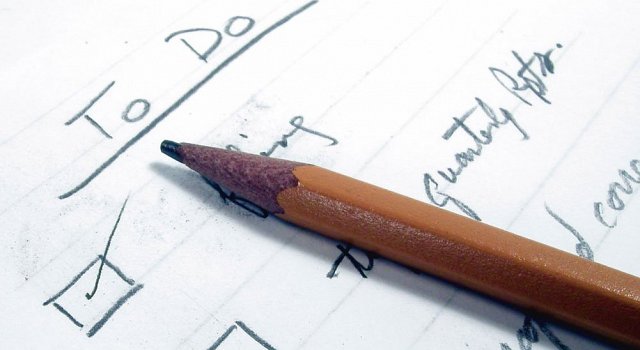
So I make lists. I don’t make them every day and I don’t fixate about them but I do make a note of things. Otherwise I’d just hide in a book. I don’t make New Year’s Resolutions which all too often become a case of ”now I’ve acknowledged it so I don’t have to do it” ie drink less, exercise more, have one night a week with all the communications media switched off, one night a week off (not the same night). Resolutions of that kind are omnipresent chez Raeburn, addressed every other day if not daily. I am a great believer in one day at a time – only do Monday on Monday.

I have a book list in the notebook I am rarely without.   Every so often, I read through and dump things I have tried to remember for too long. Other things stay with me (or have more descriptive titles) and I work my way towards them. I keep notes of films I love or want to see, of artists I admire

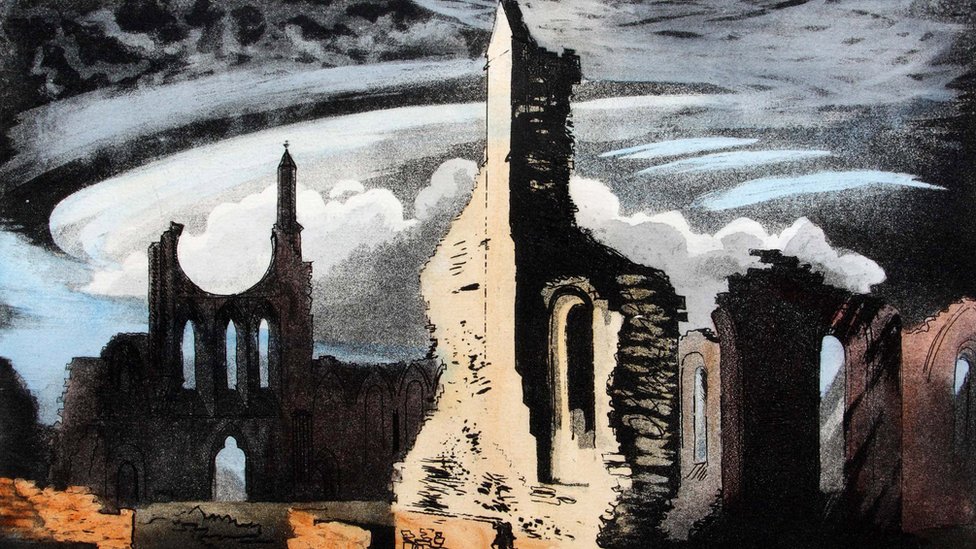
Byland Abbey, Yorkshire by John Piper

and every so often of some cosmetic wonder that is going to work a miracle on my face or my hair – though I should add these get crossed off faster than anything else except shopping items.

I have a Big List – new boiler, ring the gardener, sell Pop’s medals (? son), renew passport.   And a weekly list – call the IFA (not next week, he has exams), book the inhouse soft furnishings cleaners (once a year), dentist (this side of Christmas or yon ?).

I have a daily list – milk, potatoes, salad, rubbish bags, citrus, call the plumber (about the new boiler, a domestic god which murmurs and is every bit as unknown and frightening to me at the stone heads at Easter Island.)   And I do try not to just slide things from one day’s list to another, though the list is not conventual rule and I don’t go anywhere unnecessarily in the rain.

There is a small sense of achievement if I work through several things on a list. At other times I wish I had never started but acknowledge that now, there is only one way – forward – no going back.   Forward is frightening, the boiler again – but I can’t rip the darned thing off the wall and throw it away, however much the idea currently appeals to me. I knew what I was doing when I embarked on it though the midwives of domestic improvement probably lie as much or more than the ones who deliver babies.   “It will be fine” and “Don’t worry” are not phrases that do a lot for me.   It will be fine – for whom, I want to know ?   And as for don’t worry – it is the only thing I do to Olympic standard.

There isn’t a list for everything. Some things you don’t plan to do – you just do – like the amount of effort I have put into my nails this year, having all the strength in my Samson hair and nails like tissue.   There isn’t a list for the woes of the world – it would be too long.   But putting an item on a list acknowledges it and crossing it off says it’s done – or “well begun is half done.”   Thank you, Nanny McPhee.

Eating words

Snowdrop (he loves them) came down to visit last week. He is very good at finding new places while I get thoroughly restive and fear getting it all wrong. The French wine bar had apparently changed hands in six weeks which didn’t seem to me to augur well so I emailed and said I couldn’t think.. and did he mind.. and we’d find somewhere. Snowdrop is a lecturer, esteemed by his students (as a matter of record) as well as me for the same reasons: you can tell him anything. So we ambled off in the late autumn sunshine and found a small long established French restaurant called Mon Plaisir where we had a bottle of rose, the palest pink verging into straw, and heavenly food.   As I came back from the loo, I heard Madame’s voice checking “Had we really enjoyed it ?” and Snowdrop reassuring and as I came up, I asked why, had there been a problem ?   “Oh. You know, TripAdvisor” she said wearily. “We’re too slow, it’s too dark …” Snowdrop and I stared at her and reiterated – the ambiance, the setting and the food had been everything we wanted: if customers wanted hard light, in and out in ten minutes – they should buy fast food. Heaven knows, there are outlets enough.

I have friends who live out of TripAdvisor and make it work for them. It would just never occur to me. For every good turn, I fear there is a bad one and this reminds me that, usually in audiences, there was someone dying to be miserable, who disapproved or just got off on being objectionable. If you were lucky, you could feel them – the atmosphere changed in their corner, and you were wary of them from the time that you began to speak.   But sometimes you’d have to face somebody who truly disliked you. What were they doing there- symbolically slaying me – the enactment of my lifelong nightmare of being stabbed in a crowd? (I wonder, did I “send” that message to them or did they “send” it to me?)

Overall, I relished public speaking because it was a real test – no kindly camera man to light you flatteringly or chose the best angle: no merciful scissors to cut out the bit you wish you hadn’t said: no way of knowing till it was over what clothes or which mannerisms don’t work. Sincerity won’t always carry you through – you need head as well as heart. (See my favourite quote from Hilary Mantel: “You don’t get on by being original. You don’t get on by being bright. You don’t get on by being strong. You get on by being a subtle crook.” This doesn’t mean you lie – it means you choose your words. )   The audience, any audience, is the nearest I get to a big cat.   The colours and shape are beautiful but it is strong enough to obliterate you. With pain and the swipe of a powerful claw.

Being beastly when you can’t be seen or traced plays into the worst of people.   Hence the trolls, but before you get to them, there are lots of people who just love being disagreeable.   God knows, I can complain with the best of them but there is nothing more ageing than a permanently resentful expression.   And if individually prepared French food isn’t for you, go grab your Korean Street food and be fast and trendy. (I may consider Korean cuisine when Donald Trump has been dropped on the President of North Korea, thus dealing with the proverbial two birds with one stone.)

I can’t help thinking that the wish to avoid disappointment only leads deeper into disillusion. Do you think that the people who inveigh against this restaurant and that theatre, this performer and that concert, and who do it over the electronic devices so that they cannot be identified or not without effort – do you think they are equally enthusiastic when they do enjoy their food, their entertainment, their uber driver, their Airbnb? Somehow, I doubt it.   And I wonder too is praise as loud as condemnation?  


Mon Plaisir 19/21 Monmouth Street  London WC2H 9DD

Mr.D*

Sometimes death seems like a very good idea. I am far from fixated and most of the time it doesn’t cross my mind. But the news isn’t good wherever it’s coming from and the idea of any other kind of peace is very relative.

My father who introduced me to death both through what he taught me about it and his own dying was wary of what figures could be made to say: “lies, damn lies and statistics” he’d growl.   But occasionally there’s an article that makes you think, without trying to tell you what conclusion you are obliged to reach (see Nigel Hawkes’ piece in the Sunday Times 17.09.17).   There is a fall in life expectancy throughout Europe and to his credit, the writer ends by commenting that over-interpretation of background and possible relevant data is a risk. In other words, we don’t know why.

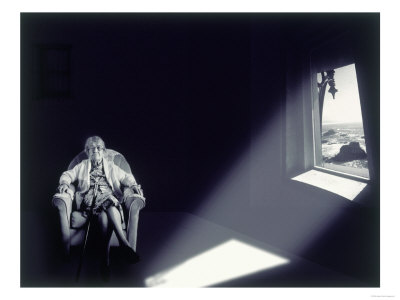
Speaking as someone who is nearer to 90 than 50, I am delighted.   Life is more than the beating of a heart. I have friends who don’t do death.   They think that anything that isn’t the end is good: as long as you have some of your health, you go on holiday or take supplements and everything will be OK.   But I remember the fine looking old woman to whom I spoke who said she was (incredibly) 92. I stared at her, struck. “But I am so tired” she said.   I have friends with parents in the same age group. The longer they live, the longer you hope they’ll live, the more you have misgivings about what can go wrong in the ageing process and the further they often are from what you remember them to be.

You can’t set dates on any of this.   Sometimes the years are hard, sometimes the side effects of your difficulties or somebody else’s knock the stuffing out of you.   And too many people – more or less directly involved – discount the emotional cost of ageing.   (I speak as one whose jawline has just begun to resemble that of a thoughtful tortoise – yes yes I know it’s trivial – that’s the point. It’s only trivial if it doesn’t concern you.)

The Bible offers three score years and ten for a life span.   As nutrition and medicine advanced, this extended.   It is nowadays common to be able to dismiss the idea of death as remote but to find dying a bastard thing.   You risk losing your independence, your freedom of movement, your focus, your intelligence, your energy – all the things that made you feel a person.   If you’re of a certain temperament and lucky, you will find replacement bricks for the house of self.   But you may not.   And not everybody has folk around to see them out.  
Kevin Toolis* thinks that’s what we lack.   We have pushed death away and in doing so, have lost part of our lives. I was taught that death was part of life and that teaching has served me well. Jackie Kennedy stood in the blood of the murdered US President, her husband, for the public to see. I have an acquaintance whose father’s death reprised her mother’s and being covered with her mother’s blood. Her father couldn’t bring himself to touch her.   The finest thing you can do in bereavement is to offer what you can, and be big enough to accept rejection. The offer is an acknowledgement of what is happening. Like most important things in life, death is a highly individualised journey.

On the bus I see the faces of people coming and going grimed with fatigue.   Yesterday I sat next to a Middle European in his fifties who was physically worn out, thickset, strong and eroded by labour. There are articles about the drugs, now epidemic among youth. (Recreational is a word that may make you feel better about it but a drug is a drug and nobody has been able to draw a line between physical and psychological addiction). Look at the number of opioid addictions in the US. Begun through legal prescriptions. And reflect how often US social trends rerun here. Among all the good things, the treasures of every day, this is a tiring time – as they say “Fair wears you out.”

Dancing with Mr. D by Bert Keizer

My Father’s Wake by Kevin Toolis

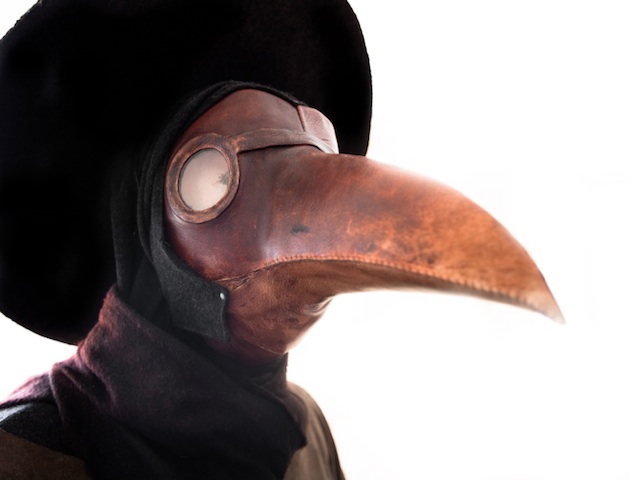
mask

“What’s that on your face ?” the leading man of Wind River asks his griefstricken First Nations friend.   “It’s my death mask”. “Looks odd.” “I know, I made it up. There’s nobody to teach me how to do it.” Wild River is like that, bits are very good and bits are baloney. Worth it for splendour of the land, one golden eagle and two mountain lions.    Taylor Sheridan’s directorial debut: must try harder.

A face like a mask isn’t a compliment.   Masks have all sorts of ceremonial and other uses, varying from a strip of silk across the eyes to a whole other head, but often, a mask is a protection, a kind of rigidity hoped to define you or defend you against something dangerous. The fox’s face is a mask. And once, long ago, I met a girl who made up like a mask. There was a story, of course there was a story, there’s always a story. Hers involved Ireland at the height of the mainland bombings. The brogue wrapped her voice like a bandage and she was deeply removed from us all – she came as a temp and stayed. You could not see her face.   She did her job and went otherwise unnoticed. Until the day my half drunken deputy editor insulted her. She responded viscerally, so that Madam the bottle shut up and we dispersed to our own corners. A little later I took her a cup of tea and she was still shaking.   She had been duped into being a mule or a safe house or something equally convoluted and painful.   We exchanged cards for years.   I’ve never forgotten the paint. I wondered if the need for it predated the admitted horror.

And it is revealing that the present clothes and makeup offered to us as the last word in up-to-date, smack of costume and mask. We have much to try and keep at bay, much to be afraid of – though looking at the occasional colour spread, I find myself laughing : it really is “repel all boarders” !

So when you see a real face, you want to cheer. If I say I saw a truly beautiful young man on the bus, I don’t mean I lusted for his body. (More rust than lust now, another elderly rakish friend and I have founded The Prim Club: what we did we did, we loved it but we are not chasing shadows : my mother always said “Nothing as straightlaced as an old rake “!)   This tall slender thing

“not him but like this…”

got on the bus with his wheelie bag and another full of papers, talking animatedly into a mobile and sat down beside me. I waved my right hand, indicating “Tone it down !” and he did. When he folded up the phone, I asked “What language were you speaking ?”   “Dutch” he said smiling. “My mother said good morning !”  I couldn’t not smile back.   “And did she tell you not to make such a noise ?” I said flicking his knee with a finger. “Have a good day,” he said beaming. “And you take care too” I answered.   No masks anywhere in sight.   As fine as a flower, bless him, long may he bloom.

Sometimes the mask is so much part of a person, you don’t look beyond.   So a second real awakening came in the form of a neighbour I don’t know well, who suddenly emailed and told me that, unable to sell her house, she had let it (within 48 hours) and she was now clearing and storing – would I come over and look at books ? And I thought I must go, if only to be polite, though without much hope.   There were half a dozen books, one thrilling and I thought I could slide out but she sat me down. Oh hell, coffee when I only like my own – but it was fine.   And she unloaded the freezer, gave me all sorts of bits for the kitchen, a jacket and then took me out to the garden.   I came home with six plants !   And when I emailed 24 hours later and thanked her all over again, she electrified me by saying she hoped to invite me to stay, I had really helped her.

Sometimes the mask gets in the way.

gone

I have a wonderful memory of a young Whitney Houston in a black trousers suit and a white shirt, fresh and lovely with a terrific voice, singing “I Wanna Dance with Somebody”.   Last night with nothing to watch to my taste or not being rerun for the 114th time, I watched a documentary on her career and fall, subtitled “Can I be Me ?”   Congratulations to the film maker Nick Broomfield, I haven’t slept a wink.

Though the second time I saw Whitney, she was what I call “gussied up” – dyed hair, tight clothes – I thought – if I thought – that they – the ubiquitous “they” – were trying out different “looks”.   I should only have known.  Why do onlookers so often see meddling hands as benign ?

By the time I first saw her, she had been under contract for a number of years. Weigh those two words – “under contract”. They have the weight of a waterlogged hulk.   Whitney may have looked like a Hollywood princess but she grew up in Newark and Orange, New Jersey where it’s all down town.   Not a boulevard in sight.   So she looked like one thing but was actually quite another.

Her mother, a handsome chilly termagant and the power behind the domestic throne, ruled over one husband and two sons, to whom a pretty girl kid was a pleasant enough addition.   Much “molding” took place. It set the scene for the “molding” to follow.   Mother had a fine African voice and sense of musicality which had never been acknowledged. She watched her daughter succeed, fulfil and exceed her – leaving her mother behind. The trouble with threatening and disapproving as a method of childrearing control is that a personality becomes inured against it.

The pattern for conflict was already established.   Mother was a power in the church, and directed the choir – so the family went to church.   But the brothers did what young men do, snuck drugs home and shared them with Whitney. A terrible lesson was learned before it was formulated: it isn’t what you do that counts, it’s how you are seen to be.

When Arista Records got hold of her, a little further down the list from the Big Names already spoken for, they decided to mold (that word again) her into product for the lucrative white pop market – she would be a black for whites.   The A&R man said “Anything too black was just quietly put aside, they knew what they were doing.” She was booed as not black enough at the Soul Train awards and it hurt her very much.

The relentlessness of such a life was well captured because it is what I call “the dream machine”.   You must always look great, innovative if possible, making unending effort with your hair, eyes, hands, jewellery, shoes, companions, in the maintenance of something that starts out as a mouse you might pet but winds up as a monster that eats you.   Whitney married a younger “naughty boy” who at least came from a background similar to hers but caught in the forgiving trap, she never made sense of either of them in the relationship she clung to. She had a little girl.   Oh how I hate to see people trot their children out on stage !

And where was she in all this ? Working, singing, preparing, touring, exhausted, performing, while the drugs that had been light relief became a secret sustenance for all sorts of reasons, mostly the classic – freedom from pain for a while.   And, bodies everywhere like beetles, the juggernaut of guards and go-fors, back up singers and all sorts of people she knew who now had titles – her father as manager, her old schoolfriend as scenic designer – were all paid by her so she must earn the money. They could only reach her for the moment they did. Nothing lasted.  

I knew why I was watching this film. This is supposed to be “success”, the acme of achievement and the answer to everything – even if the price is life. It was harshly moral, this film.   It said in sum “if you don’t choose, the gods choose for you.”   They chose Whitney, she chose Paradise Road – and it is nothing to do with heaven.

One of the better weekends

Why does everybody want to go away at the same time over the Bank Holiday ?

“how to avoid Bank Holiday crowds”

There are crowds at the airports, crowds on the roads and crowds aided and abetted by every kind of disruption on the railway.   So everyone rushes away into a halt and the only good news is for those of us left behind, who find we can walk in the street, breathe on the bus and put our elbows into neutral in the shops. This isn’t the whole story, you understand, but it is some of it. And all the better for it – until every sixth man discovers he was given a horn for Christmas and starts blowing it for Britain, children become bored and I imagine the sales of aspirin and vodka take a national hike upward.

On Saturday it was warm, the weather that inspires me to do the sort of cleaning you’re supposed to do in the spring. I never want to do it in the spring… you can’t leave open the doors and windows, it is too cold and everyone who comes to visit tramps in mud and dust and damp (not their fault) so that the washing of floors and rugs is pretty much a waste of time.   So apart from a delightful shopping experience with everybody in a good temper – I swept and garnished, dried the washing on the line and decided that, should the weather last, I would wear a dress next day. And I did and earrings and pretty shoes because I was not shopping for heavy things and could prance about. Trousers are very practical but occasionally, some sort of skirt is in order. And an occasional flourish may be vain but it is good for self-respect.

On the bus I met an acquaintance and we sat together at her companionable instigation, getting off at the same stop and walking together. We were stopped by two young Portuguese women who are starting an online fashion magazine called Felix – could they ask us some questions about clothes and fashion and take a picture ?   Diana and I looked at each other and laughed – how flattering – OK, go ahead. I can’t tell you how nicely they did this, they weren’t bored and they were intelligent and D and I who do not know each other well learned a bit more about each other.   As a younger woman Diana rode and she still follows racing so I was able to tell her about the map I had recently seen, which showed who sold Arab horses where in the Middle East, in 188- something. And about Mary Gharagozlou, Mary Khanoum of the Bakhtiari in Persia, who researched the bloodlines of the Arab horses there – until we parted, she went off to look at auctions and I to a farmer’s market.

This weekend has been marked too by successfully combining black pudding and scallops (thank you Jamie Oliver) and no I didn’t follow the recipe. I just cooked the pudding and the scallops in the pan (worth every farthing, no oil or fat needed), threw the contents on top of watercress and lemon juice and hooray. It doesn’t get any quicker or easier than that.

And the purchase (reduced – thank you Waterstones) of Philippa Gregory’s new book on The Last Tudor in which I admired all over again her skill at managing to suggest how long everything took to go wrong while keeping the tension of reading about it tight.   It was what I so admired about The Other Boleyn Girl.   Hard to imagine keeping Henry VIII on a short lease for years.

So the fact that last night there was nothing to watch on television, a sadly familiar state of affairs, didn’t matter because I had the book. And I went to bed and fell asleep and thanked God rejoicing, because these extended weekends while wholly necessary to working people and families (even if I can’t see why they can’t be staggered so that the enjoyment of time off is maximised) are often thin ice on a frozen pool of loneliness when you live alone.   Not this time.

Numbers

There are all sorts of things I hope to be spared and being trampled to death in a crowd is one of them.   I’ve been in big benign crowds but not often and my hackles go up like a threatened dog if the mood changes and I stop feeling safe. Yes, I am paranoid, I do know what it means. And I trust my animal instincts deeply.   I am not claiming that I would know when I was going to be attacked. Nobody knows and in a world which is increasingly complicatedly clever, the most effective advantage is always the simplest: surprise.

But apparently in a crowd, people feel safe – reinforced by the many, the normalcy.   Except it isn’t normal to me. I don’t see crowds, I see a lot of individuals – which I prefer. At some profound level crowds frighten me. I’ve never understood why you would want to celebrate a wedding with thousands of people. I can see the regulated attendance to a lying-in-state or a funeral but not the crowds.   I am not saying that the flocking to disaster and laying of flowers and other tributes is insincere. On the contrary, it is probably very sincere but I don’t share the belief.   Masses don’t make me feel secure.   They can turn on you, they can – and do – lose sense , they can be manipulated into a big powerful thing with no head. Watching some of the thoughtful coverage of the anniversary of the partition between India and Pakistan – about which I know shamingly little, shamingly because if you want to do business with people and live peacefully alongside them, you must try to understand something of their history – I was appalled by the numbers displaced: millions of people walking away from everything they had known. Those laden trains, staggering carts, crowds and crowds of people.

Every year, people go to festivals – music festivals, literary festivals – and the press riffs on what they wear and who’ll be there. I went once for fun, once to work. You can keep it.   Every year the hype around sports grows, making people more conscious of their physical fitness and making money. Not for me.   Yet I love a market, I go to one every Saturday. There’s one I go to on Sundays too.   And the markets in Rhodes and Crete, the old souk in Port Said remain on the back of my eyelids as places I was interested and safe and happy – what you might call a natural crowd, with a purpose (food shopping) and the crowd gathers, moves through the area and disperses again.   Large number of bodies for the sake of it don’t make me feel safe.

As you get older your notions of permanence may change.  The roof can blow off, the plane can fall from the sky.   These things don’t happen very often but they can happen. Like somebody dying of an unsuspected complication.   You see that, however many bodies there are in a crowd, they are breakable, fragile, and as my favourite fictional private eye says, nobody carries a gun to scare you.   A gun is to kill you.   Of course I have sat in the cinema and laughed or been thrilled as the car cuts a swathe through the crowd or leaps over the gap between two buildings.   That’s fiction. Not any more.   The line between fiction and fact is blurred.   The latest weapon is not a sophisticated explosive device. It is a truck driven by a misguided operator.   It kills a lot of people and it stampedes a lot more and this device will be used wherever there are big unsuspecting crowds.

There aren’t a lot of options.   You either avoid crowded places or you get on and live your life and hope.   I listened to people in Spain, nationals and visitors, saying they won’t give up and they won’t give in.

I have given in. Some of it is to do with age, some of it is to do with taste.   The crowds that cover the pavements in the centre of my city do not inspire me. I’d rather go early, do what I have to do and leave, than linger.  Safety in numbers is a myth.    

“Middle”

What happened to the amber light ? The crossing near me has become a much less organised affair with red for longer, green for longer and open to the interpretation of the wheelwackos, who target anything in their way “because I am riding a bicycle” – ie flavour of the clean air month, no registration or licensing system and cannot be held accountable: file under “can’t catch me !”   Transport for London recently asked for feedback on a cycle super highway : it’s a waste of public money. Large numbers of cyclists only ride to dodge in and out of the traffic.   They don’t want a special highway. They want to dice with death, trespass into the bus lane and demonstrate their personality defects masquerading as psychic musculature.

The amber light did not deter them, they rode through it to green – but then they ride through red too.

The amber light was a combination of warning and getting ready. Do we no longer need to be warned ? Visitors from places where jay walking is more stringently forbidden freeze.   I watch people, hesitating, obviously confused or nervous, simply unable to interpret the signals as to whether to run across (some lights display a ten second countdown) or delay. Why is it presumed that everybody with a vehicle is in a hurry while everybody on foot can just wait ?

Ours is not an amber light culture.   Pause, thought and action is an unfashionable sequence.   We do go/go/go or stop/stop/stop or “I know it says stop but go anyway”.   Is this latter the amber light de nos jours ?

As politics has moved increasingly towards a glutinous mass in the middle with extremes at either end, in daily life any kind of middle has been increasingly eroded.   There used to be cheap shoes, expensive shoes and shoes for what was called a reasonable price. (The fishermen who evolved espadrilles would have hysterics if they saw the price of the fashionable edition.)   Clothes prices were cheap, dear or bearable – this last obviously varies widely.   Books seem to be relatively sorted out (you can either afford hardback or you can’t) but any toiletry or cosmetic epitomises “how much can we get away with ?” For example, shampoo ranges from £3 to £35 a bottle.  As men have become users of carefully marketed preparations above and beyond soap and a reliable deodorant, the market has widened and the prices have gone up again because men have more disposable income.

The recent price hike by British Gas is best described by a friend who said:” It’s disgraceful but where I live, it’s a fight to find a reliable plumber so if I change my utilities supplier,

what is the service guarantee ?”   (Which is why I still have a BT landline. It isn’t that their engineers are wonderful, it’s that others are worse.   In an attack of good citizenship I once wrote to Virgin to let them know about a vandalised terminal: all replies came from a computer with late stage alcoholic confusion. “Oh yes” said the BT engineer “they’re the worst, we’re always being called out to them.”   I mentioned it to a friend who knows Richard Branson.   “Hmm” he said. “Afraid the company’s got too big.”)

And there is no amber light anywhere in sight in the purchase of food or anything for the home (paper products, laundry requisites etc.)   It’s one thing if there is one or two of you to provide for but people with families are really feeling the pinch.   I know people who have gone from everything at Waitrose and M&S, to embarking on their very own product-to-basket research into Asda, Aldi, Lidl, old Uncle Tom Cobley and all. The grocery version of the car boot sale is upon us.

I suppose the idea of an acceptable middle ground is a remnant of the rise and rise of the Victorian middle class, a notion of acceptable aspirational fulfilment, what you could afford that would make you feel better about where you’d got to in your life. In the present economic climate, it’s about something much more prosaic: making ends meet and not getting knocked over by a cyclist.


nasty

I am not very good at the nasties by which I mean – I see them, I acknowledge them, in my limited way, I understand where they occur but I do not seek them out. I do not want to sit and watch how horrible people can be, even if it is only a re-enactment. And I remember interviewing a fine writer after he had just spent a couple of years in daily research into the story and ramifications of a serial killer. He was emotionally exhausted and, after an hour with him, I was too.   What can you do ?

You can be a witness. This is quite different from being an ambulance driver or a specialist in mental health, a police officer or a prison visitor.   To be a witness is to be willing to see what is there and sometimes hearing is as shocking as seeing. A police officer who was present at the beginning of the Moors Murders hearings said “People threw up”.   We all interpret differently, we have different machinery to bring to bear, different life experience, different understanding, different vocabulary.   And it causes us discomfort not to say pain that however we may feel, we can’t do much.

Of course there is an immediate recoil in the form of “Thank goodness I don’t have to deal with that!” which runs parallel with the car crash life often is. Some of us have an even more violent reaction, almost a primitive fear that trouble is catching.

Very often, when I was looking at what a caller or correspondent thought was the problem, we’d have to go back into the history of a family or a relationship. Sometime this was relatively straight forward.   Because I had positive experiences with my own psychotherapy, I know you work with the person in front of you, their parents and their parents again.   Familial history and influence are fascinating. Though often there is something small and painful, ready to wrench your psychological ankle on the tortuous footpath out of the dilemma. And sometimes your caller or your correspondent just doesn’t want to go there.   And you, the adviser, can’t make them.

Then there is the very primitive and powerful business of denial. People think that if they shut the horrors out, that will be it.   In my experience, bad stuff often slides under the door you have just so firmly slammed like the plagues of Egypt in Dreamworks’ 1998 story of Moses (The Prince of Egypt) – like smoke, an intangible miasma of misery, tainting everything.

People think if they work hard enough, save enough, have enough fun, do enough good, they will outstrip the hound of heaven.   Believe me, it’s a pious hope. Sooner or later, that dog wins. He carries the bone of your problem in his teeth.

It’s never been necessary for me to look for problems.   They came to me. I had my own and I was interested in other people’s.   I saw how people handled them, obviously very differently, one person from another.   I met people who had worked them through or put them in a particular place in their lives so they could go on.   I met people who kept them central in their lives because they couldn’t think what else to do and didn’t understand either, that this was the rock on which other things foundered.

I have just read The Adversary by Emmanuel Carrere – the title is an old name for Satan – and I found it difficult because it is a printed nasty.   But it taught me something and my father long ago instilled into me that nothing was wasted if you learned by it.   It is remarkable for its lack of psychological jargon. The book isn’t new and even 20 years ago, you might have expected certain kinds of explanation but they just aren’t there. What is there is a picture of the duality of religious belief – and this is pretty current as the world is full of all kinds of violence in the name of somebody’s God.  What I am left with – and it unsettled me – is the idea that without certain kinds of psychic manure, faith wouldn’t flourish.