Fowl Play

Once upon a time, we might have chicken for Christmas.

A generous bird with lovely browned skin, fragrant flesh, all the trimmings and my mother’s unrepeatable gravy, the benchmark of when memory is just that and not a cure for reinvention.

Now, I think if you suggested chicken for Christmas, people might think you were “poor” and prevailing social opinion suggests that, while heaven forbid you should be poor, if you are – don’t admit it.

Contributing to a Radio Four programme on attitudes to money (some time ago, I paraphrase) the presenter told me “You are very conscious about money” to which I replied that she asked the questions: I answered.

Poor is a four letter word, meaning different things to different people.


Back to the chicken.

2085951153_42dfcf6b07

I was perhaps 8 when we tried one of the new battery birds and it was the only time in my home that I ever saw food thrown away.  My parents came through both World Wars and, as recent historical evaluation makes clear, alongside tons of destructive weaponry, Europe’s greatest problem was lack of food.

So taking food off family plates, wrapping up and disposing of quite a lot of chicken, was a big deal.  So was the expression on my mother’s face.

“Disgusting” she said.  “Tasted of fish.”


Nowadays chicken is cheap.   Well, some chicken is cheap and as red meat represents a mortgage acquisition or dietary restriction, fish is mostly just as pricey and we are rightly being urged to eat more vegetables, chicken is cheap(er).


A friend told me the other day how she stood in one of the more expensive supermarkets behind a designer draped couple, he with the stonking great watch and she with the stonking great shoes (visible signs of disposable income) while he said to her “I just can’t see paying £10 for an effing chicken”.

Just as well I wasn’t there.

Because I am a chicken hunter.


Where I used to live, we had a good butcher and chickens perfectly acceptable in price and flavour.

An organic butcher with great chickens came and went.

In those days Nigella Lawson wrote for a magazine I still gave houseroom so on her recommendation, I trekked over to Holland Park and bought a peerless bird.   Occasionally.

images

I was introduced to Borough Market.   Good chicken.

I went to Jago in Elystan Street – good chicken…  To The Ginger Pig – good chicken.

Tried every stall in my local farmers’ market where chicken was OK but not distinguished (NB I changed ovens so some of this may be my fault).

Mr. Waitrose – usually acceptable.

The best of all meat including chicken came from Jon and Louise at Peradon Organic Farm.

My son once remarked that Mum would go 15 miles for a good chicken.

Obsessed, me?


Of course all this is to do with personal taste but living alone on a budget, a good chicken is an investment.

The first time I found a boiling fowl (£5) and came home to make chicken soup (o joy, o triumph, o thank you heaven – I lived on it for a week), those to whom I told the story couldn’t see the achievement.

“You’re Jewish; of course you know how to make chicken soup.”

I am at best half a Jew – I’d be the first to say, better than none – but it’s on my father’s side and I had never made chicken soup, though I love to cook.

A good enough chicken means hot meals, cold meals and stock.

A not good enough chicken means “Oh …”

And as the taxi driver said “What’s all this about cheap food?   Very little food worthy of the name is cheap.   I want the best I can get for as little as I can spend.”

Hence the chicken hunt.

canstock8122820


A couple of years after the dreadful battery bird, with which this obsession began, we had an enormous delicious Argentine turkey.

One of nature’s pickers, I kept going out to the kitchen and taking a bit, and then another, and so on.  There was a great deal left and it kept well but my father told me how when early settlers went to the Americas, they found wild turkey so plentiful that they ate only the breast and discarded the rest.

Even then I found this story disturbing.

Don’t take a good bird for granted.  It’s harder to raise than you think.


PS  The Poultry Council did not pay for this writing.
Update:  www.fossemeadows.co.uk , discovered through Juliet at the Farmers Market – gold star!


Food for thought

Unusually today, I had lunch at a pavement cafe, alone, and enjoyed every mouthful.

The food was splendid, reasonably priced and I was so busy enjoying it that it wasn’t until near the end of the meal that I realised I had.

Over the years, I have learned to do all sorts of things alone.   I don’t have any difficulty entering a room alone, appearing in public alone, though I am ambivalent about being ill alone.  You may want to be left alone but you want to know somebody cares.

But with regard to the lunch – I have never been any good at eating alone in public.

images


When I came to London from Middlesbrough on my 17th birthday, opportunities for eating out had comprised fish and chips with my parents in the car at Stokesley and probably three Chinese meals, two with my mother.  I could just about handle coffee or a drink, but I was evasive about eating out with anybody.  The group of friends I made drank in the pub and in those far off days of luncheon vouchers, four or five of us saved them all week and then met for a blowout lunch at The Stockpot.  All women, I could manage that.


I was so terrified by the first meal in a French restaurant that I forgot all my French, ate soup and an omelette, and threw the whole experience away.  I couldn’t look at the waiter; I hoped devoutly he wasn’t looking at me.  It was so embarrassing that I felt as if I had blinkers on and could only see what was directly in front of me.  I remember everything about it and it was agony, to be avoided.  I used to meet for  what we called “late dates” i.e. eat first and drink later, or simply lie and say, I had already eaten thank you.   I don’t know where this came from.

528875_630263116055_1576169783_n

Always perfectly happy to eat a home, in friends’ homes or on picnics, I have never had anything resembling an eating disorder as I understand it but sitting down in any kind of eating establishment produced a lock across the back of my throat reinforced by another lower down, across the stomach.


I was saved from much difficulty in my early relationships because none of us had any money to spend on eating out and then along came a job that required me to take clients to lunch.   I had to do it to keep the job I loved.   So I did.  I honestly believe this helped.  In the beginning I pushed my food round the plate to the manner born but in time, I ate a bit.  And then you have more or less beaten the fear into submission – you eat a bit more every time.  Until I had to eat with someone I was keen on, when the whole thing reprised and I went back to playing at “not very hungry”.   This continued until I was in my early thirties when I beat it by marrying a man I loved who liked to eat out.  So for twenty years, we ate in a variety of restaurants large and small, glamorous and otherwise, and I assumed that “that was then and this is now”.


When the marriage ended, I thought I was older and wiser and it would be fine.  And in many ways, I was.  But it wasn’t fine.


Eating out alone makes me feel conspicuous.  Even in the quietest corner and masked by a book, I feel I am disturbing the harmony of the place, that there is something discordant in me that means that I am not whatever it is that would make me acceptable.  I don’t eat out alone much but I do when I can because I feel that the ills of 50 years ago have no business in my life.  Part of the problem is that I am naturally gregarious so I long to share the experience but I am working my way past that whenever I can.

20281-otkrytki-russkoe-zastole

Last year, I swept into a place, tempted by feta and honey on hazelnut bread and my first ever glass of Temperanillo rose, which made me so happy I could have skated round the restaurant.  A spendthrift as soon as I am remotely intoxicated, I promptly bought a book I didn’t need.


So today was not an exam.   More like course work and presume it will stay part of course work until I can say “Eat out alone? Of course.”


I Saw

I have never been a fan surrounded by the chosen image embellished on record sleeves and teacloth seeing film or performance over and again, shouting at the match, going weak at the knees in the street.

Quite early on I began to separate people whose physical impact I responded to from people whose achievement I admired, though I also came to understand that intelligence rendered much beautiful to me that wasn’t appealing to other people.


And I am an enthusiast.

Once asked what kept me young (apart from flattery!) I answered “rage”.
Did that mean I was always angry with people?


No.  It’s closer to the French sense of the word which means, among other things, passion.  Long ago. a very important man in my life with a temperament very similar to mine, remarked “People like us should be paid for living.”


At the time, I thought it was the height of conceit but I have come to see what he meant.

I like life.  The Jewish toast “L’chaim !”  (“To life !”) says it all.  I like some bits better than others, of course I do, but I never forget Auntie Mame (film, 1958) abjuring “Life is a banquet and most poor suckers are starving.”


Life is a series of doors opening on to vistas which shock and amuse, horrify and teach – and I want to be moved, churned up, made to think and choose and be rendered speechless.
Which is what happened when I saw a film called The Gatekeepers.

It is a documentary.  I am pretty guarded about documentary which has been eroded by the merchandising of the corporate brand, the rise of infomercial and reality tv.  

tumblr_m9zwuwROhr1r43b3vo1_1280

Throwing everything up in the air, avowing that “anything goes” results too often in less – less thought, less imagination, less impact.

But the Channel 4 series Unreported World shows that other people’s lives are quite different, often stranger than fiction, and that the difference is 
interesting..

Other people make choices we don’t even dream of defining.

The Gatekeepers is about the Israeli internal security operation Shin Bet.

The film is short, subtitled and it goes on a small list of documentaries that – apart from newsreels – affected my adult life.


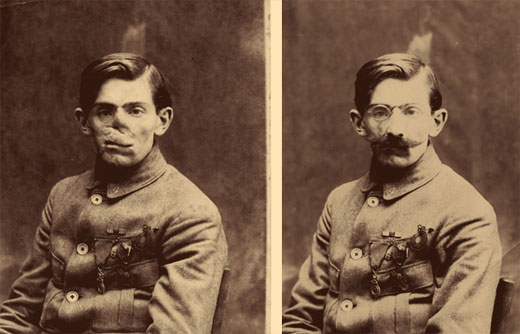
These include a film about World War 2 pilot Richard Hillary, one of Sir Archibald McIndoe’s plastic surgery “guinea pigs”, one about the jaguar in Brazil, one about the black rhino in SA’s oldest game reserve (in both cases for what they taught me about the humans involved, as much as the animals) 
and The Fog of War, about former Defence Secretary Robert McNamara under whose aegis the US burned and was burned in the wars of SE Asia. (By no means a complete list, there are lots of other influences but a psychologist would make hay with the importance of threat in my cherished perceptions.) 


The Gatekeepers is an exercise in how exhausting decision making is.

Think what you like about Israel, here is a film, the length most films used to be and for my money more effective for its brevity, featuring as talking heads the men who have been charged with policing a small nation in a particularly vexed geo-political situation for 40 years.


You are invited to contemplate candour about pragmatism to such a degree as to render much of current British politics the consistency of cream crackers – familiar, useful, a bit bland, a bit brittle, forgettable.

Six men – intelligent, frightening, weary – not pretty, not actors or pinups – thoughtful, troubled, adult.

It was outstanding.

george-christakis01

One definition of documentary is an assemblage of facts – what people do, what people say they do, which may deliberately or inadvertently tell
us the watchers something of what those people think.

How you put the facts together is immediately open to differing interpretation.

In a film, you can make things happen in an order or a way they did not, for greater impact.


You can argue that all the elements were true, you just arranged them.
Is that still documentary?

We used to say bitterly to one another, me and my film loving friends, that acted film was often more truthful than documentary but sometimes – in the exception that proves the rule – the structure and design, the setting of a documentary tells us something we did not expect learn.

It is not to do with my advancing age that I am aware of weariness.
I see what I see and you either grasp the emotional costs of a series of actions and responses, or you don’t.

I sat through three hours of Wyatt Earp (1994) to learn how tiring is the procurement of death in the pursuance of order, because however you choose to get there, the end is the same: too many die.

The Gatekeepers taught me much more in 95 minutes.

Bad Habits

We cannot see ourselves.  Even the mirror only shows a reflection, you could say a perception, and that quote from the Scottish poet Robert Burns

“O wad some Power the giftie gie us

To see oursels as ithers see us”

is thoughtful enough to get over the clunk of the way it’s written.

Bad-habits-illustration-001

When I was younger I was punishingly self conscious and I wouldn’t wish that on anyone, but I wonder what people would say or feel if they could see what they do unthinkingly, to which the rest of us are helpless witness.  At worst, it’s a kind of psychological dumping.


Small children suck their thumbs or pick their noses and this is usually amended by a handy adult.

Nail biting is harder to correct for the biter and the guardian but we can assume it’s not desirable.  I have never heard of it being encouraged.

In the past, a bad habit was controlled where it might be seen.  All of us have bad habits – no moral high ground here.  There was however tacit agreement that what you did in private was not what you did in public.

But – just as it is no longer unusual to see people go up the road in their nightwear – nightwear that has ceased to be advertised for sleeping but has become what you wear “at home” and may go to bed in – and as millions of us have been busy watching people exhibit themselves warts and all – or maybe just warts – for every kind of camera, there is a gruesome obviousness in flaunting what was once deplored.

nail-biting

A young woman sat grooming herself for the 20 minutes we shared a bus.  Simian, she ran her fingers through her hair over and over, shook it out, pushed it back, twisted it round, shook it out again and repeated the process.  Like a tic with a pattern incorporating a pause, the routine ran, over and over.

And you know that if by some clever scientific wheeze, you could tint the air so that she could see the dead skin and bacteria she was shedding all over, her mouth would pull into that familiar pout of distaste which people employ when they don’t like what they see but they can’t associate it with themselves.   A new take on denial?

I’d like the same idea applied to public transport when people sneeze and cough, not using tissues or handkerchiefs, and are so darned generous with their germs.

But this is passing irritation.


There are more serious forms of personal malpractice, laden with anger turned in or pushed out; perhaps depending upon gender though I suspect it has more to do with individual personalities.

ht

In my casual observation, nail biters are 50/50 male and female but nose pickers are mostly male.

Like the young man who got into a crowded train on a cold day, medium height, attractive, well-cut dark overcoat and sat next to me whereupon for the ten minutes it took to travel two stops, he methodically picked his nose and wiped his fingers on his coat.


Recently in a well known West end store, I went to a saleswoman and asked if I could pay her for something not on her pitch, fished out my wallet and said quietly “I don’t want to buy anything from somebody who is so busy self-cannibalizing.”

Her male colleague’s eyebrows shot up and he went round the corner to look.  I explained quietly that the assistant to whom I should logically have gone was busy eating her nails up to the wrist.  The man came back shaken to remark “That’s not on, is it?”   But it is increasingly common.   And if the nose picking is distasteful, the violence of the nail biting is unsettling.  So what is this all about?


Are we in the process of losing any notion of personal privacy?

Is this behavior on the spectrum with lab rodents pumped with a stimulant that may attack each other and/or themselves?

Is it about longing to feel relevant and recognised but only feeling insecure, so that you attack yourself – like pinching yourself to make sure you are awake?


In the spirit of morbid curiosity, you may want to see television films about people with all sorts of psychological difficulties, distortions and disabilities.   But that’s the box.   You can switch it off.

This is life I am looking at and it is harder to get away from.


Waterworks

We didn’t have floods in London, but we did have a great deal of rain.

Day after day, mostly chilly, showers, heavy showers, the odd thunderstorm, a bit of hail and lots of steady downpour.

It is of course bad news for the retail trade dependent on seasonal selling; Pale thin linen isn’t high on the wardrobe list when the sky is battleship grey.   Picnic equipment isn’t needed.  There isn’t (yet) a waterproof barbecue.  And sales of gumboots have improbably overtaken sales of sandals, espadrilles and other footwear for warmer weather.

As the temperature swung between medium low and a bit higher, we all sneezed, complained and muttered to each other that we were tired of the rain.


And yet – the meteorological gurus say that we are short of water after two dry winters and recently severely depleted rainfall.

It would be best – you can hear them rolling this round their collective mouths – if this sort of weather continued for the rest of the year.

dew

Weather is one of the few things you can’t lay at the door of politicians.

Weather systems have causes, or are at the least subject to influence, but most of us don’t care how we got here.

We are only know that we are in the umpteenth week of unseasonable downpour and mightily sick of umbrellas and raincoats, damp shoes and sniffles.


But the Olympics were estimated to be pulling in an extra one million people, further straining the bulging seams of the capital, people who need to wash, eat, drink and void themselves, all of which takes a lot of water – more in this country than in many because our systems use a lot.  We have always had water.   A shortage of it is a new idea to us.


Years ago I wash washing my hands under a flow when my hostess reached over and turned off the tap.

“We don’t do that in Africa” she said.   “Water is scarce.  We save it.”

Where they were then, we are now.

And like every other major concern, response to saving water is personal.

Fig-127-Range-of-Siphonic-Latrines

Our last dray summer got me to use the shower more than the bath because received wisdom said showers used less water.

I have long conserved rainwater for the garden.

Though I wish someone would explain why running the tap, whether for teeth cleaning or washing up, seems to engender a sort of pleasure.   I do try to turn the tap off but I am aware that I prefer it running.

What I don’t know is why.


But when we start to consider a major influx of humans into an already crowded city, you know that water will be needed for all sorts of thing, in quantity, and that getting athletes, the entourages and the crowds to queue at standpipes isn’t viable.


And where are they are going to relieve themselves?

A friend came back from Istanbul saying there were lavatories (both hole in the ground and pedestal variety) all over the place, and directions to find them.

Rain-on-window---shannonkringen-via-flickr

We are mean in the provision of water closets: public lavatories were closed down, centers for the homeless, the erotic, the drug taker and the most appalling excretal behavior.  So now we have the old/new experience of increasing numbers relieving themselves in the street – I’ve just seen my first woman and my third man, this year.   All in areas far from run down.


The big stores provide facilities (only Harrods charges) but in far too many restaurants and bars, the facilities are poor or none.  And sadly the exclusivity of a place doesn’t mean that its toilet facilities match – oh, I could tell you stories.


In Florence (personal experience again though I know there is no relation between the size of the city and the size of London), the smallest cheapest bar has some kind of lavatory (sorry I hate the word toilet), somewhere to wash your hands, loo paper (not always soft) and a towel or hand drier.  The astounding figures for reduction of infection in hospital highlight that washing your hands afterwards isn’t a nicety, it’s essential.  No wash?  No pee.


I wonder if that statue is still on the books which provide that a person may go to the door of any dwelling in the land and ask to use the privy.  I’ve always thought that was useful, with or without the Olympics


Age Rage and Other Distractions

I try not to rant.   It’s very aging.  We all have things we take for granted of which we say “It’s just common sense.”   But the dereliction of common sense promotes a rant – for example in the matter of getting rid of household rubbish.

Apparently we lag behind many other countries in this.  Our landfill is overflowing and heaven knows what we do for an encore.

Landfill-site-in-Mucking--001

In the meantime, large numbers of people just dump rubbish without a thought about wrapping, recycling, discarded food, aesthetics, vermin or health hazard.

I live on a street of mixed properties; council and privately owned. Some houses, some flats, owner occupier and tenants.

Some of the flats have gardens, some tiny terraces.  The upper ones keep their rubbish out the back, those lower down put it out the front.  The local authority collects for recycling and landfill, regularly sends round little wagons with circular brushes and large men with flat brooms.  In the matter of waste disposal, the householders are well served by the local authority.

But the more it does for us, the less many of my neighbours do for themselves.

In the matter of the bin lid: if rainwater gets into a bin full of rubbish, it causes the contents to rot and stink.

The road is full of uncovered bins.

And when was the black bag converted by marketing from “bin liner” to “rubbish bag”?  A bin liner has to go inside a bin.  Apparently a rubbish bag is an alternative to a bin.

When I suggested to one of my neighbours that she might invest in a bin (even in these straightened times, not an item of major expenditure) she asked “Why?”

So she and her flat mates continued merrily to put their rubbish out the night before collection in the cheapest black bags which spilled and split and the foxes had a field day.

Black_bags

The next morning there would be much pouting and tutting, fingers arched away from any contact with the mess, but not a lot of clearing up.  No, that was for the waste operatives – what we used to call the dustbin men.

Reasonably, they have neither time nor inclination to pick up after us, so the eggshells and the bits of half eaten food, the bacon rinds and the wadded tissues and teabags would be left all over the pavement.

Until I went out and picked up.

Another neighbour observing me commented in his best disapproving voice “Bin men don’t do a very good job.”

I straightened up, Queen of the Marigolds; to say crisply “The garbage men do a fine job.  Most people don’t know how to wrap rubbish.”

It wasn’t what he wanted to hear.

Why don’t you think that dumping a rolled up carpet in front of your flat may have solved a problem in the short term when the weather was dry but once it has been raining for some weeks, the carpet is beginning to rot.  And it smells.

Why don’t you understand that a paper carrier breaks down in the rain and disperses the contents everywhere?

How can you not know that foxes and rats are attracted to every kind of meat scrap and that if you don’t wrap remains and put them in a place safe from claws and teeth and a sense of smell far more acute than a human one, they are going to be slavered over., defecated on and are thus a source of horrible odour and putative infection?

Capture

If you can’t afford a bin (£25 between two or more of you), what about stronger bags and not putting them out till the morning of the collection – rather than the night before when the critters roam?

I continue to write to the waste disposal department to point out when bags aren’t collected, when fly tipping (the logical extension of the above) occurs, to thank them when they clear stuff away, to wrap and rewrap, frequently swearing under my breath, always with a sense of incredulity.

Because if it is all a matter of common sense, then clearly common sense is as rare as hen’s teeth.


Time to Talk

A fashion article recently claimed that ballerina pumps (i.e. dead flat shoes) had stopped being anything to do with fashion now that they had become a wardrobe staple selling x hundred thousand pairs every day.

By a similar token, you know there is a communication problem when newspapers start writing about it.

Why don’t we speak?

“Oh” I hear people say “it’s the pressure of modern life.”

Well then don’t be a victim of it.  Change it.

1

It is rarely quiet or pleasant on the bus nowadays.  The ride is usually dominated by one person speaking loudly into a mobile telephone, or worse still, two people speaking loudly in different languages on their mobiles.  Curiously, people think that they can’t be understood or gainsaid, so they speak ever louder.

A woman turned to a man mouthing off in Spanish and asked him to lower his voice.  She was polite.  He stared at her cold-eyed and spoke again into his mobile.

“I know what you are saying” she said blushing.  “I speak Spanish and that’s very rude.  I was quite courteous to you.  Couldn’t you speak more quietly?”

I immediately wanted to give her three different kinds of awards – for wearing her ordinary face, for refusing to be intimidated by him as lord of creation and for keeping her cool even as the blood vessels in her face dilated.

For I discovered xenophobia when I spent 20 minutes behind a Russian very nearly shouting into a mobile.

A more sociological experience involved a man with a plum in his throat who was challenged by two enterprising women in their thirties on a packed bus coming home through the rain.  He was conducting a conversation of mind-numbing triviality at the top of lungs clearly trained for field sports.  Challenged, he made the mistake of playing “poor me, it’s all about women nowadays” so that feeling against him from both sexes ballooned on all sides, till it was almost tangible and rain or not, he felt he should take his leave.

“That’ll teach him” remarked the woman beside me as he got off.  I said I doubted it, that personality is always right.

When the work I do slid away from me under the door marked “change”, I reverted to an earlier me.  I always spoke to people but it is easier with a degree of elective anonymity.  I have the security of knowing who I was which allows me to be who I am.

Aztec Rock Medicine

Aztec Rock Medicine

I try to be tactful, not everyone wants to speak.  I am willing to leave it.  I expect nothing.  I am unlikely to meet my new best friend, that horrid phrase which has inbuilt several kinds of expectation.

But most of the time casual exchange does what it always did.

It passes time agreeably.  It often begins with a chance remark about the weather.

But sometimes, it doesn’t.

I sat behind a boy of five or six making speech-like noises.  His mother talked to him, fed him slices of pear.  He interacted non-verbally with her.

When the passenger beside me got off, he knelt up in the seat to face me and indicated very clearly by these noises something on the river.

I said gently but clearly that it was a boat.  He beamed at me.  We commenced exchange – I talked and he responded.  He seemed to understand me but there were no recognisable words.

01-novice-shaman-mongolia-670

I took a deep breath, leaned forward ready for anything, and said into his mother’s ear “Please excuse me – this child needs his hearing tested.”

She turned to me.  “I was going to start with a speech therapist.”

“OK” I said, overcome with relief. “But his hearing needs assessing.  If he can’t hear, he can’t speak.  Speech is imitative.  My son was the same (conversational précis).”

The boy was beaming on us.

“Do you think it’s anything else?” she asked.   This is when you pray.

I said I doubted it, I am not trained but his eye contact is good, he interacts and he is clearly bright.

There was more, but she left me in no doubt that I had done the right thing.

It won’t always be as uplifting as that but we won’t know if we don’t speak.

Bad Day

There are days when you feel some latent anger leaching out into the street, it pulls stickily at your shoes, makes the air smell of soiled plastic bags: when whoever brushes against you feel unfriendly, or worse.
Days when there is metal in the coffee and your teeth don’t feel clean.
Days when you don’t know what to eat and whatever it is doesn’t taste right.
Days when, if there is a theme to your nightmares, it sits on the back of your eyelids waiting for you to sleep and then letting you know that, if you try, you’ll get the frighteners.
Oh, the voice of the cool telling you you’re “a little bit paranoid.”
Darned right and do you know – just because you think they are after you, doesn’t mean they are not.
tumblr_mk60ytOBex1rwik2do1_500
Truman Capote’s most evocative phrase is “the mean reds”, Holly Golightly’s blues-plus from the book (not the film) of Breakfast at Tiffany’s, when the sky sits like a pot lid just above your head, your eyes ache, your hair shivers with a mixture of electricity and anxiety.
And dark days lead into white nights, when your eyes don’t close and your worries magnify in the silence.
They are not generous, these worries.  They are not about the dangers to the planet, the end of species, the unraveling of the economy.
It’ s the small stuff, the personal, the difficulties you have to negotiate your way through, because you can’t go round.
And whatever your take on things during the day isn’t relevant.  How things feel at night is coloured by the dark.
aral-sea4
Years ago the American writer |James Baldwin compiled a series of pieces into a book illustrated by the photographer Richard Avedon.  It was called Nothing Personal and it cost 12 guineas.  As they are now both dead, it’s worth a great deal more but I lent my copy and it never came back.
That was the week somebody made me a chocolate cake and I ate it every morning to save for the book.  I had to have that book.
I admired Baldwin as a writer and speaker but mostly I just rated him for being himself and finding a way to himself, the thing I most longed for.
And Avedon ?   Gosh, Avedon – black and white and wonderful.
In Nothing Personal Baldwin writes that half past three, four in the morning is the loneliest time in the world.
And peace to the clubbers, busy driving down the demons with the foetal throb of the bassline and enough alcohol to strip a liner, and the night workers who have accepted another reality to survive –
it is still so.
At that time, you don’t call, not even your friends.  What would you tell them ?
Nobody died.  You aren’t even afraid of dying.
You’re just afraid.
The first time a mouse crossed the bedroom floor, I lay in the night of my bad day and thought “I must have come a long way.  Shouldn’t I be scared ?”   And in the back of my mind echoed my father’s most irritating comment “You’re much bigger than it, it’s much more scared of you.”
So over time I set traps, I put down poison (I still want to know how to pronounce it because, if it’s Rodeen, do the mice squeak poshly?) , I confronted the very idea of mice.
But spiders I cannot deal with.
lonely+image
I know they are not interested in me.  I know they keep the flies down.  I made myself watch Charlotte’s Web and I know (thank you Father Freud) why the movement horrifies me but if I fixate on spiders at 4.00 in the morning, I begin to sweat.   And worst, I cannot close my eyes because if I do, that is all I will see, leading into a log of horrors my brain has saved for what we used to call “a real downer.”
Why did I want to write about this ?  Did I hope that writing it down would banish the nasties ?  I am not so hopeful.
Did I want to examine what my family called my over-sensitivity in a more positive light ?  I doubt it.  I spent years in psychotherapy, coming to terms with myself.
But I think of the horrors of the world, the noise and the destruction and man’s inhumanity to man, from the smallest unkindness to the greatest cruelty and remind myself – don’t we all ? – that this too shall pass.
And, boy, am I glad when it does.

Images

First, there were photographs.   I remember appreciatively the last editions of the magazines that featured photographs – for example LIFE, Look, Realities – and fanzines, pictures of movie people.  There was no process I recall in being drawn to black and white pictures.  I just was.

I have had the oldest book in a collection, which a friend calls “photographic porn”, for 38 years, a book I had seen extracted in Rolling Stone and I found it in a bookshop on my first visit to South Africa.  From then on, I bought books of pictures or asked for them or was given them.  I have never got over books being given to me.

after photographic porn

I don’t trust myself with a camera.  I am myopic and ham-fisted but I have a good eye and faith in my own taste.

“Nothing is meaningless” says Gertrude Stein “if one likes to do it.”

About five years later, I began to look at painted pictures.   There were two links to this: the first was cinema and second was cards.


When I arrived, the much younger of two children, my parents were both in their forties and loved the cinema.   So I saw musicals, one-offs, comedies and social drama with my mother: westerns, military and political stories and adventures with my father.  I didn’t miss much and I would still rather see a film than a play.


The spread of commercial cards has developed throughout my life, from cards for Christmas and birthday to cards for any occasion, cards showing reproductions of cartoons, paintings, film stills and original representations.   I began to understand that I might know nothing about the continuum or development of art but I recognised an image I admired when I saw it.


I keep a reserve of cards and postcards, some because I had to have them, some to be sent to other people.  Eventually cards led me to art books, particular artists, and the history of art.  Just as scanning widely through newspapers, magazines and periodicals, I began to keep a modest archive – there were things I wanted to keep – and a lot of them were images.

hokusai-katsushika-old-tiger-in-the-snow

In my first magazine job, as problem page editor for Woman magazine, I inherited a big notice board from my predecessor Peggy Makins.  Eventually it began to look a bit tired and when somebody from household asked me if I would like another one, I said yes please.  I have it yet.  I change it around with newly discovered quotes and pictures and images, retaining one or two you might call the permanent exhibit.

I have a box file labeled “stickboard” that I go through from time to time and weed out the ones I can let go, either because the eye has moved on or because the thing no longer means what it did – but again, particularly pictorially, if it works for me, it works for me and I have cuttings and cards I can’t part with.


There are rhino and elephant, wolves and bears, the dancers Karsavina and Fonteyn (before the nose job), ancient cattle and Hokusai’s tiger in the snow: there are shapes and shadows and bottles, untypical of one painter and early of another, cards from friends and two or three things from friends I have never met, the legacy of radio that makes you feel you know somebody, even when you don’t.  There are slogans and cartoons, Dietrich’s legs, a 1913 Lipton’s Tea competition entry form, an advertisement for The Economist, and a poem by Edith Wharton copied out in black ink on stiff white card by my son when he couldn’t find me a black and white card.

18948337_f2a54f9f03

I sometimes wonder how it feels to be bored.  It doesn’t really happen to me very often because these fragile images, much of which is ephemera, send me off to read, or think or find out, comfort my unsettledness, and make me reflect all over again on the man who told me a long time ago that love is recognition, not discovery.

That seemed entirely right to me for – in looking at my pictures – I feel not taken out of myself but rather confirmed in myself and it is for that that I cherish them.


What you spend your money on

I just bought a pair of tights, dark brown fishnet; the best there is, reflecting all over again that there are only two kinds of women when it comes to tights, tights as distinct from stockings – another discussion: I digress.

There are women who find the cheapest they can get away with, use, abuse and discard them.

And then there are women who know what they want in terms of colour, fit and texture, and are prepared to pay for it because (barring accidents) those hose will be around for a long time.

I am in the second group.  Some of my tights are up for endurance awards.  And yes, I am a card carrying snob about quality most of the time.  Discard fashion does not do it for me.  Environmentally it makes me sick.

If I can find something cheaply (three cheers for Muji), I am very happy to do so but I don’t expect to and I would rather do without than compromise.

“It’ll do” isn’t my favorite phrase.  If a thing doesn’t work from the off, it never will.  I grew up immediately post WW2 when there wasn’t much of anything.  My mother remarked more than once that her definition of luxury was buying something and then not having to wear or use it.  So I am her luxuriously uncompromising daughter.

images_q=tbn_ANd9GcT3uIrUwXc8n644-sDwWa4ICzilbr-h0BQNXdZ--ioClQgeaGjz

Once upon a time we might claim “You get what you pay for” but sadly this mantra is no longer as reliably true as it once was.

Rows and rows and racks and racks of garments and accessories are all made in the same factories, whether for H&M or Harrods.  The Financial Times fashion writer Vanessa Friedman has described this process and with it, the narrowing of the range of colours.

There is great price snobbery.  The luxury brands have survived the present financial turmoil by being what they are and implying through their powerfully suggestive promotion, that if you can afford them, you too can be bulletproof.  But I have watched ranges climb from pricey to impossible and quality declined exponentially.

However, at the other end of the scale, I also bought a tube of hand cream for £1.42 which price suggests to me that it is unlikely that I shall ever see it again.  It is probably the end of an in-house range that didn’t sell well because it didn’t trade on current emphases like “organic” and “herbal” was not celebrity endorsed or merchandised competitively.

The tube is monochrome, the emollient is described as “conditioning”: like the old barrier creams, you can use it to cleanse after chores (celebrities don’t do those) and rinse off, or you can use it to protect.  I am three days in and I am delighted.  Though, heaven knows, if anybody had suggested I went looking for the cheapest hand cream, I would probably have laughed derisorily because I have too often bought cheap and thrown away – hand and body creams that didn’t absorb, mascara that clotted, soap that smelt disagreeable when wet, tights that sagged, a t-shirt that didn’t wash – so sometimes cheap isn’t saving.  On the contrary, it’s a false economy, dead money.  And I have long come up against the same thing in commercial chemistry as I have in medicines.

What works for the majority is sold heavily – by which I mean, sold to us and bought by us.

Just your hard luck if these things don’t work for you.

we-can-sell-brands-shoes-jeans-clothes-bags

Earlier this year, my trusted and true proprietary brand headache/flu remedy was suddenly no longer available except in “super” form – that’s another of those buzz words.

But I don’t want or need extra caffeine and I have tried the suped up edition which is not as digestible (my original reason for using the brand) as the straight forward version.  I sought out the sales assistant.  The product has been superseded, it was being withdrawn.

The best facial cleanser I ever had was Boots own.  Gone, gone, and never said goodbye.

More and more units, less and less choice.

I feel the victim of petty planned obsolescence and I am not alone.

But there aren’t enough of us to do anything but shop around and share our triumphs with our friends, who do the same thing in return.

And it isn’t new.

000ad59e_medium

At the beginning of modern mass marketing my mother said “As soon as you get used to something really good, to eat or wear or use, some so-and-so takes it away from you.”

The consumer society is nibbling at our toes.