today’s great thought…

This is what my father used to say when he was trying to remember something. Today, it is linked to self motivation and similar oft-repeated phrases in a pretentious political correctness which gives me the pip. The whole point was, that it wasn’t a great thought – it was what he had to remember…

I write things down, as much to remember the act of writing as to remember whether it is in the desk diary or the notebook – definitely not loose pieces of paper – they get lost – but this has been a week of thoughts.

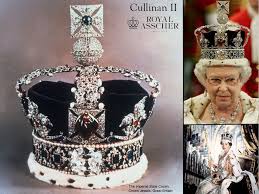
While Harry and Meghan Sussex are issuing writs and making speeches about what a beastly time they are having (goes with the job), I am rather more concerned about Elizabeth Windsor, now in advanced age, in possession of her considerable faculties while watching her husband fade, her favourite son behave like a berk and being manipulated by The Blond. I would like to see her flanked by her grandsons, in support of her age, her commitment to us and the times we live in. I am pretty sure this has been mooted by the Press Office as a picture opportunity and has been rejected by Her Majesty as unnecessary but that’s the image I want to see. Meghan is learning as she goes, as did Kate Cambridge, Sarah Ferguson and Diana Spenser.   That’s the trouble with new blood – how often it ends up all over the carpet.

This week the post office let me down. I have never not paid towards my Barclaycard on time but this time the mail lost the cheque and I suddenly woke up without the security of the card.   I went that day to a branch of Barclays where I was rescued by a tall handsome black woman who helped me to pay in monies directly, handed me the receipt and kindly brushed aside my heartfelt thanks. Five days later I got a sawney marketing email from Barclaycard which is really a push to get me to go on line. Computers not so fast or so efficient then ?

This week I disobeyed The All Powerful Designer and bought two handsomely reduced bins as planters for the winter broom and the honeysuckle which respectively flank ends of the small area too small to call a garden at the front of the flat (thank you Robert Dyas).   And I took a cab home with a tall man with long light eyes like a wolf (I like wolves) who used every short cut and as we arrived home, after protracted exchange throughout the journey about manners, conversation, his wife (married for 42 years) and his grandchildren, gave me a long explanation about why he couldn’t charge me what was on the clock – “and don’t argue.”   I looked at the amended meter, he put the bins outside the house and I offered him a £20 note. “I’ll get you change – “ he said. “I don’t want change” I said “ – and don’t argue. What’s your name ? “ “ Brian” he held out his hand. “Thank you Brian” I said “ and tell Shirley I think she should keep you.”

The clock in the living room fell off its shelf and stopped so I rushed out to buy a new battery which didn’t help but then the alarm jammed on and I had to take the battery out anyway.  Wal recommended me to the Clock Clinic – its founder Alistair Chandler is a regular on Antiques Road Show and if I had known that, I probably never would have gone. Not the cheapest repair but certainly the surest and only marginally dearer than a new clock from Mr. Bezos.   And I would rather not bother. Every time I read about how Amazon runs, I shrink from recourse to a commercial version of totalitarianism.

You could say “What about the B word ?” and I’d counter “Well, what about it ?”   What about plastic in the water table ? Some fancily named activists taking up unconscionable amounts of police time and money ?   At the moment, this is how my world turns: today’s great thought.

“And The World Keeps Turning by Jon Eiseman”

recognition

Years ago, a woman on the plane asked my son then about 8

“Do you know your mother’s famous ?”   I’m happy to tell you this meant nothing till he was a teenager and his mother was known for talking about sex, by which time he was very much a person in his own right (indeed, he always has been). I remarked to my fellow passenger that I was not Michael Jackson, for which I was very grateful for all sorts of reasons, we smiled and chatted a bit and left it there.

I have had a really good time with my small fame. It has crossed boundaries for me, eased first meetings, provided something to start talking about (I am very interested in the nature of fame) which could be put painlessly aside as other more interesting things occurred.

I went through a brief stage of never putting out the rubbish without full makeup on and got over it. This is life, not a performance. Big fame is a lot more limiting (see page 520 of American Wife by Curtis Sittenfeld). And this is all long before the days of “a million likes on Facebook” which makes my blood run cold.

Thirty years ago, I was asked about some sort of title or medal and the caller got my then husband who said that he very rarely spoke for me (true) and he was pretty sure that the answer would be no. It was.

There was a stage when people suggested “I’m a Celebrity …” or “Strictly” and I said sweet of you to think of me but no thank you.   As I got older I got used to being examined “to see if I had had work done.”   I can assure you that if I had, it would be so good you wouldn’t see it – but I haven’t.   There was a man on a train who remarked “You’d look quite pretty if you coloured your hair.” Sticking to my smile, I replied that my friends thought I looked all right the way I was.   (He was directly counteracted by the Frenchman and his wife in Florence who said “I love your ‘air – you ‘ave a good coiffeur !”   I nodded, smiling and said “God.” I bless heaven for the way it went agreeably grey.)

It must be plain to anybody who reads annalog that there are things that worry, concern and outrage me but that I like my life.

“Look – bloodhound puppies!”

It engages me, I am still enthusiastic about it a lot of the time (you have to allow some slowing over the years– it is neither failure nor affectation – you slow at the wheel of the car or the wheel of life.)

The great British public has been gracious to me. And I pass it on. As I grew older and our world changed, it seemed to be more important than ever to recognise effort, to acknowledge and say hello or thank you, and not because of what would come back.   It’s an investment.   My father used to say “If you don’t put in, you can’t take out” and social responsibility is not like accounting – you don’t put in this to get out that and hope to balance the books. You invest.   You speak agreeably to people because if they stay as nice in their transactions with the rest of the world as they were with you – as they must have been, for you to notice them (always providing you weren’t on the screen at the time) – the world is a better place. This not me playing Lady Bountiful:

“The Lady Bountiful by John Atkinson Grimshaw”

this is how I was brought up. I have carried recognition lightly, used it to “put in” and what comes back is past my wildest imaginings.

Every so often I look at the birthdays in the two papers I have taken for years and I occasionally wonder how I’d feel if I were there – grateful ? intruded upon ?   Don’t know.   And yesterday I sat with a very welcome cup of coffee after a sleepless night, face the colour of mushroom soup (oh hell, that beige…) and looked at the crossword where I found a clue which read “Agony aunt Anna …….. worked for LBC and Cosmopolitan”.   My favourite neighbours rang, tickled and my son took a picture of it.

for my parents with love

“what I meant…”

Bunslove used to work in radio. (His name is because of his sweet tooth – you can, he says, buy him for buns and tea.) Our tastes may differ but there is also an area where we cross over, a good cross over ie to things we can enthuse about and share, and a bad cross over where we share our deep dislike of (usually) sound or style. And Bunslove make phrases.   “Oh” he exclaimed the other day (he’s gay) “ save me from men who haven’t the balls or the vocabulary to make themselves clear !”   And when I had finished laughing, I thought we could probably extend the phrase to most of us.

You may call Facebook, WhatsApp, Instagram, Twitter and so on, social media and I know it has positive applications.   But social media reminds me of something much darker.   My past covers a lot of public speaking and there was nearly always somebody who wasn’t content to disagree or dislike but actively dispelled cold hate.   You could often locate them and nearly always feel the chill in the general atmosphere. You learned to stand up and be counted and exchange comments, fortunately never for too long because there were lots of other people wanting to put in their two cents’ worth. And leave quickly. I have had enough anonymous mail and phone calls (up to and including death threat) not to want any closer association with trolls. I never did like the sound of trolls even when they were under bridges in Scandinavian stories.

As soon as you say what you mean, you are in very finely balanced territory.   And the screen is oddly inflexible. The seduction is to write as you speak but the screen cannot reproduce the cadences of your voice and the music of your speech and, without them, what is written may sound quite different.

Most of us like to think we can communicate clearly but the tag is that we don’t want to be called to account for what we have omitted or for the negative we have communicated by mistake. This is not about never making a mistake: that is not a human option. It is about accepting that most of us find communication only acceptable when it tells us what we want to hear.   Communication is all very well but we don’t want it to reflect badly on the communicator, especially if that’s us.   So I “like” being called wise but I find being called “nosy” less flattering. But the cap fits and I deeply believe that if you dish it out, you must be able to take it.
I have several good gay friends, shining delight to my life. Yet once when I said this on air, my first off air call was a sneer “Fag hag !”   They are not in a separate category, these people, they’re friends: gay is something about them, not something about my choosing them. And in spite of the increasing sectionalisation of the way we live, I still prefer to look for what binds us together as humans, rather than what separates us.   So, at the risk of feminist disapproval, I can call to mind women who (colloquially) don’t have the balls or the vocabulary either.

Because it takes courage to even try and communicate.   Because as Abraham Lincoln said, ”You can’t please all of the people all of the time” and I would add “only a darned fool would try.”   But while you may get a blast of adrenalin for delivering the bad news, you don’t want to be seen as a bad person. And the balancing act between what you say and how it makes you sound takes us back to the Bunslove exclamation.

If you are still interested in life, your life, after various shades of politicians , national, international and global, have compromised it – then you still want to learn.   Wanting to learn is every bit as brave and dangerous as space travel and a good deal cheaper. Like Buns, I remain fascinated by people who are all sorts of intelligent but cannot use that intelligence on themselves. 

under the skin

Every time I think I can’t go on,

(this is on my fire shelf)

I meet somebody who makes things better. People make it possible. Oh they drive me crazy – bad manners, bad clothes, rubbish in the street – but they make the heart sing too.   And I love what the Gaels call the craic – the exchange – I doubt if there is a street word for it, it is as under threat as the polar bear. I sat next to a smashing 19 year old Scot on the bus and she told me if she greets them, her colleagues simply don’t respond – “what’s that about ?” Putting aside bad breath, envy and insecurity, I said “they fear to be seen to be weak.” In many minds unnecessary exchange equals submission posture.

It was one of those days when I went out to put something into recycling and down the road came a man, white haired, bespectacled and skinny in a black leather jacket. I said “It’s cold, winter is coming …”   He said “This is winter.” “It’s autumn” I said.   “We must agree to disagree” he said. “Lord, there’s a thought. Tells you how old I am.” “How old are you ?” I asked. We had closed the distance between us. “I’m not going to tell you” he said “because I can’t ask how old you are.” “I’m 75 “ I said. “Are you “?” he said. “You look good on it, give us a hug. I’m 72. “ “See ?” I said. “You’re a baby …” “ I wish” he said. “Take care now” “You too” I said as I closed the door.

My much younger colleagues were appalled and fascinated by my ability to make casual conversation.   Heaven knows why, I was using the same skill every day on the radio. Perhaps – they were all men – they thought I was behaving unsuitably, too forward or something, though at least half of those I spoke to were women.

I come from a time when you spoke to people, you were brought up to, about the day or the weather or just to say good morning.   And you spoke to people at night too, to say “Safe home” or if it was very late, something agreeable like “You’ll be tired in the morning !”   It was not exceptional and it was rare that such remarks were not returned in kind. It came under the heading of being polite. And why wouldn’t you want to be ?   I have heard people say that that’s all very well in a smaller community but as in the final analysis, we all live in smaller communities ie the bits that are local to us, that argument falls flat.

No, I don’t speak to everybody, of course I don’t.   I am less Pollyanna than I have ever been, I don’t expect people to be nice. Actually, I try very hard not to expect but rather to encounter and deal with what I get or not as the case may be.

And if I get it wrong, read the signs amiss or the conversation simply isn’t what I hoped, I am not afraid to extricate myself, get off the bus, develop a forgotten errand or a non existent friend I just must see. If you believe in opening doors, you must take equal responsibility for shutting them on anything displeasing or threatening.

The experiences of my life and the development of my personality over time have freed me to take advantage of old age and say what I mean, as I did to a charming woman from Delhi who was simply beautiful but who looked at me in a way I have learned to recognise.   “You’re going to claim me !” I said, laughing. She said “I’m sorry to stare, but across the eyes, you’re just like my mother.” I told her it was the second time in my whole life that such a thing had been said to me, and I counted it a very great compliment.

When I was younger I minded that I reminded people of others but now if it crosses the gap between us for a bit, I‘m happy. In a world of new and less agreeable manners, less time, more insecurity and misgiving, I greeted with joy a recent article suggesting that casual everyday interactions may (I quote) “hold the key to happiness” – there is of course doctoral work being done on it in California.

the wait

I am not good at queuing.   As a schoolchild, I came home for lunch so I didn’t take my turn for school dinners. My mother wasn’t keen on shopping and got me to do it from early on – I liked the responsibility, it made me feel like a big girl. You might have to wait your turn in any of the individual places I had to go to – grocer, butcher, greengrocer, baker – but as this rarely involved more than three or four people, hardly a queue.   Schoolfriends queued for the Saturday matinees (both parents took me to the cinema), there were not many people in the doctors’ office and (dear dead days beyond recall) there was no queue in the post office.

Once I was working, I was impressed by how easily colleagues managed the canteens – I am not handy with a tray.

“not me”

“Well, if you didn’t get it at school, you did at college” laughed one friend. My eyes opened rather wide – go to a fee paying school and queue for food ? And as for college – one more reason I was rather glad I didn’t go to university.

It’s my mother’s fault. She was, she said, “not disposed to hang about.” Not a queuer.   If she couldn’t get something without a queue, she would either go elsewhere or do without.   Briskly. Without apology.   She must have queued during the war because everybody did and God knows, we queued through ration books and coupons and shortages for much of the fifties.   But somewhere in there, she decided she was not going to queue if she didn’t absolutely have to and she passed that on to me.

Lining up to wait for a handbag or a pop star has never occurred to me. I queued for Breakfast at Tiffanys with Audrey Hepburn but outside the cinema, briefly in conversation with a lovely elderly couple (I was 17), they swept me in as with them – you can see, I have never forgotten them.   (Long ago a journalist interviewing me said that she thought I remembered every kind thing and good turn that had ever been done to me – certainly, many of them.)

I remember newsreels and documentaries of people queuing under sovietism for shops in which the shelves were routinely bare but there might be a consignment of canned shark or some other delicacy.   It came to me that you could grow all sorts of things but if you couldn’t find a way to distribute them, the great mass of people were in want – and queued for what they could get.

Of course people wait in markets

Shoppers at a bustling farmers’ market in Toronto, selecting local, organic produce from Ontario organic farmer Ted Thorpe.

– but not for long because markets are organised to move – amass produce, bring it to the selling point, sell it and survive.   I remember people briefly at standpipes, queuing for water, which left me ever afterward respectful of water as a resource. Friends in Africa restricted water and Jane Harper* inverts the model of extreme cold into extreme heat as the enemy in her thrillers – the Australian drought – and it’s frightening.

Nowadays we wait in the post office, the only happy progress being that now more and more outlets sell books of stamps so if you aren’t posting something, you can get round that. And we wait in supermarkets which are busily pushing us away from the casual human contact science has just discovered is valuable, towards machines that don’t always work but are cheaper. People like me queue in the supermarket from choice – we’d rather deal with a human.

But waiting wears you down.   Last week I woke up with a knot in the middle of my stomach. The first day, I thought it might be indigestion – but when it persisted and I went bed with it and woke up with it, I recognised it for what it was.   Anxiety.

Ginny came for supper and her mother is of an age with me. There was news to catch up on, some of it not very good, and then we couldn’t help but talk about the transitional trap in which we have been caught for the last three years.   She said she was struck by how anxious it was making her mother and I sympathise.   The wait is wearing.

*The Lost Man and The Dry by Jane Harper (Abacus)

skews

I wonder who first used the phrase “fake news”. Was it the Great Faker ?   Or some hard pressed hack on one of the US’s remaining great newspapers ?   Anyway, it was vivid enough to catch on and is now a staple of today’s vocabulary.

In my mind, I keep hearing the voices of my youth muttering about “ you can’t believe everything you read in the newspapers” to which several and various voices would be raised in disagreement if not dispute , claiming degrees of reliability and commitment in the newspaper they took.   This is all very dated.   Even newspapers that still sell aren’t selling as they used to and the pressure to find something to shift one edition after another must be considerable. Very little is done for the good of our health, political, psychological or physical. It has to show value and value means it has to sell.

Yesterday I watched a long time BBC presenter and a political correspondent only a bit younger head up a newcast by debating what the Prime Minister had or had not said to his Chancellor – something they couldn’t have known. When opinion becomes a staple of national news, you may not have fake news but you do have skews – skewed news, very often stewed news (endlessly repeated till the flavour has gone out of it) and certainly stewed in another way, made up of bits and pieces which might be intellectually nourishing – if not exactly good for you.   Skewed news in plain language means bent. Most of it is and we are encouraged to think that if it is, it is benignly so.

The hallmark of a good journalist is how he or she gives you a combination of information and word picture.   That this is open to abuse explains why announcing you are a journalist to certain people makes you far from popular.   Long ago we used to say “Just give me the facts !” but nowadays you’d be pressed to find them. Journalism is a weird hybrid, involving all sorts of skills dictated by different contexts, skills and instructions. It shocked me to discover that the people who wrote the best tripe were often the best educated. You need to be clever to be a fool.

And you can get very hung up on the truth: what truth ? whose truth ? how much truth ?   Very little truth is absolute outside certain scientific disciplines and like beauty, it is framed in the eye of the beholder.

“Ballooning costs and delays to the HS2 rail link are expected to be confirmed by transport secretary Grant Shapps.”   That’s what we can safely say – coloured by knowledge that the line is in chronic overspend, was the vanity project to end them all and will be communicated by a man with a charm bypass, a little short himself on the public credit side.

“Boris Johnson has ordered a review of Europe’s biggest infrastructure project, which could lead to its top speed being cut or the plan being scrapped altogether.”   The Blond has been in spending mood, well again – the appearance of spending mood. Probably his father told him, this is how you get the public on your side. So we’re due for something cancelled and HS2 has cost shameful amounts of public money. We’ll see.

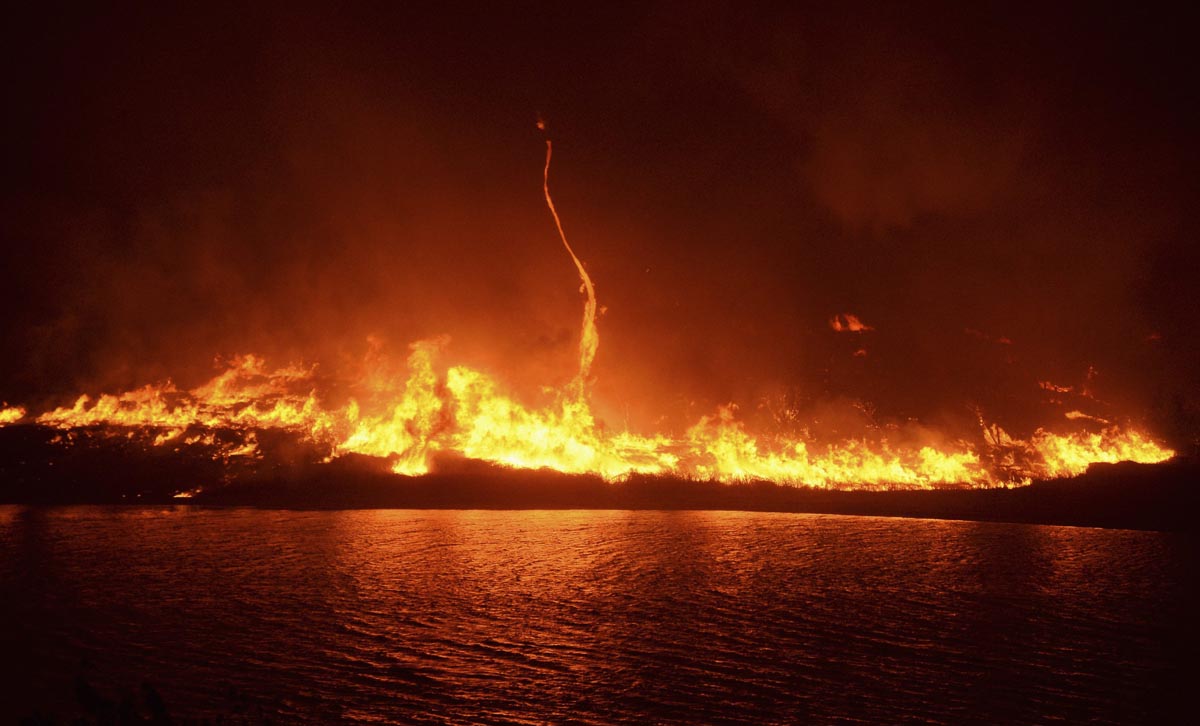
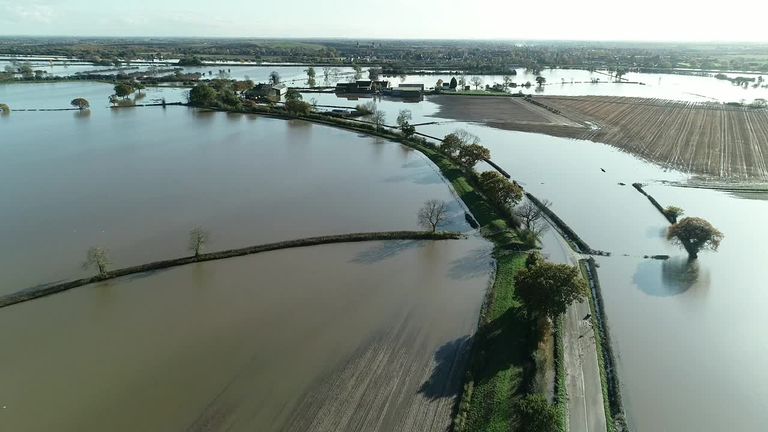
This is all about degree – the degree of the truth, the degree of expediency, the degree of what the public want to hear – and crucially, how it is packaged. Virtual reality has entered every kind of food chain. It is rare to want to know how bad it is, so that you can prepare yourself.   Most of us want a couple of sunbeams in amongst the grey. Which is why you so often wind up with good natured idiocy, appealing kids or furry animals as the last item on the news – perfect example of skews.   This bomb, that war, this shooting, another rise in addictive death, schools falling down and roads with potholes, likelihood of flood, fire and civil unrest: don’t worry !   Here’s a kitten ….

in touch

Yesterday morning I had coffee with Kay (not her name).   I so rarely have coffee in the middle of the morning , you could claim never. I have coffee for breakfast, two cups of black, percolated and that’s usually that. I remember the caller who said he drank more than 12 cups a day, wondering why his stomach was in uproar. But Kay is the living breathing example of the time it takes to get to know people (long version).

I have her acquaintance for about 10 years. She is as thin as a lath, with quite a deep voice, and she tells good stories. One of my favourite French words is “histoire (f)” and there is history to Kay. I may never know it but if I listen, I may get bits of it.

So we sat in the sun – never done this before – and talked. And when we said goodbye, I became aware of a fine tremor in her, and the warmth and sincerity of her “see you” double kiss.

I don’t know Carol Vorderman but we briefly shared the same working space. What I remember is that, when I went to say goodbye, she unexpectedly hugged me warmly.

Touch is a hard sense to quantify in the sense that it is very personal. You get messages, as in – years ago I had a close friend whom you couldn’t touch.   Well, you might, but she froze. I come from a fairly demonstrative family so I had to make an effort not put my hand on her arm, or hug her when we met because she clearly didn’t want me to. And one day, unbidden, she began to tell me about her father’s abuse and her mother’s alcoholism.

One person may take your arm and it’s “giving.” Another will only take. All the massage techniques hinge on your finding a practitioner whose pressure suits you. What is uplifting with one person can be frankly uncomfortable with another. While if you can’t feel that the pressure is committed to you, that’s another kind of irritation.

Neck Massage Techniques to Relieve Neck Pain

You can shake hands with one person and it’s fine while I met a world famous clairvoyant and got the nastiest vibe through that hand.

The world is full of air kissers and schmoozers but somebody like the two women described above kiss your cheek and it means something entirely else.   The place of the kiss in history is as fascinating as it is among people. There are touchers and non touchers and the reasons for their touch or the lack of it will be different – personal, cultural, social – and the rest. And I do believe that sometimes emotions are too deep for any demonstration (part of the appeal of the film Twilight).

All gestures of touch are open to interpretation.   Scientific observers assure us that non verbal communication is most of our exchange and goes on all the time. It may be misconstrued, but not often. “I just didn’t like her” we say.   Or “not sure about him.” My mother told me over and over again to trust my hunches. “If you think it is, it probably is” she said. It was a big gift for a little girl, to teach to trust her judgement and to regard the odd failure or shortfall as humanly inevitable.

Wanting someone to trust you doesn’t mean that they will or that they will not use the “key” of your touch against you.   You spend a lifetime learning and you don’t always get it right.   Like most human journeys, touch is two steps forward, one to the side, two missed – and try again.

Sometimes though, you get a real present like coffee with Kay or the total stranger who began a conversation with me over a corner bed of community planting, just up the road. And within three sentences, he had gone on into Brexit, about which he was most interesting. I was fascinated.

Three or four weeks later, on a very hot day, he came up to me in the market and reintroduced himself. “I remember you “ I said. “What I forgot to say” he said “is that you were the ikon of my youth. I never thought I would meet you, so I never thought I would say it.” And forget all that smart stuff about ikons hanging on the wall, and sweating like a small horse, I met his gaze and said “Thank you.” We kissed each other’s cheeks, he went off to have coffee with his wife and I went happily home.

“Arne Jacobson door handles (handles as icons – discuss!)”


the lions mouth

A friend wrote “I have a great sense of what on earth is happening ?”   She is a former listener, who found me through annalog. She has health problems that make you feel very humble, even as your hair stands on end.   She is trying to work out – after a lifetime of taking care of other people – what she can reasonably have for herself. Time has passed, things are even less good than they were. And because she – like so many of us – has been brought up to think of others first, this is particularly difficult.

As we age, it is presumed that you will not want to make ends. Particularly with people.   You must hang on to them lest you should be (sharp intake of breath) alone.   But many of us who loved and lost, perhaps not had the breaks we thought we might get, borne down by age and health even as we fight back and assiduously smell the roses, face letting go rather than put our collective heads in the lion’s mouth once more.

Putting your head in the lion’s mouth may be an act of faith (God will provide), or an act of courage (as in “I just knew … “), it may be plain stupid or it may be our old friend – try again – and see if it plays differently.

The truly frightening thing about friendship is you can only see it from your own side. And it is my life’s experience that while men and women can be highly intelligent, it doesn’t follow that they learn much or that they introspect about what they learn.

“hard to learn”

Introspection is a very loaded dice.   My mother used to tell me I thought too much and I hate to tell you, I think she was right.   The phrase we used at home was “chewing” about something and I chewed a lot. To cud.   But introspection didn’t necessarily change what I was going to have to do.   So you’ve introspected and you still have to choose.

Then we come up against our old friend “the right decision”. Very few of those are right as they issue from your brain and your mouth. The right decision is what we perceive afterwards – “I wish I had” is just as heartfelt in some cases as “Thank heaven I did”.

But the lion’s mouth provokes an image to me. You see, it has to close.   Poor beast can’t stand there with his mouth open all day. And if your head is there, your interests are under threat, the lion’s mouth will close on you.

You cannot live without risk. (Risk is one of those big little words I cherish deeply).   You can minimise risk by learning but learning is painful and takes time. And it is human to wish that if you play the same set of circumstances over with the same participants, maybe – just maybe – this time the outcome will be different.

Then it gets literal.   I am pretty sure that the lion’s mouth stinks – meat eaters, no toothbrush – so it is reasonable to suggest that if you are going to take this risk (again), it would be sensible to learn from the clues that are on offer, few though they may be.   But short of an announcement in The Times, lots of us may drive fast but we think slow.   We want it to be better and harshly I must tell you wishing don’t make it happen.   I sometimes think that people treat their lives like jigsaws but instead of trying to fit the pieces together, they throw them up in the air in the hope they come down somewhere different and more sought after. There is a lack of will in that which is also an avoidance of responsibility.

The friend with whom I began is trying to balance between the deterioration of her health and the demands of relative social normalcy.   I am watching another friend go through a dance which has gone on for five years, she dances away, she dances back, she tempts the lion with considerable charm and morsels. I long for her to dance away from the lion because I cannot estimate how much his mouth closing will hurt her.

Peace is…”*

A long time ago a friend described being chased by a rhino pup through her family’s East African bungalow while it uttered at intervals the squeak that seems so incongruous emerging from an armoured body. Oh, and he didn’t want to hurt her, she assured me, he wanted to play.

Last week the first AID youngster made his debut, part of an exhausting programme to save the southern white rhino, an on the edge of extinction sub-species.

And there is a stunning documentary – mercifully before the current craze for admixing music and cutery – about a safe haven for some black rhino in which all the men involved are grown up heavy set Africa hands, vets, rangers, helicopter pilots and all, which made the courage and determination, the pervading sense of duty in their project, all the more moving.   The geographical location is not revealed and when I saw the first rhino lifted in a net to be flown to safety, I didn’t breathe. I will not forget the Zulu ranger who is their “whisperer” as he speaks softly, as he has the many years of his working life, reassuring, coaxing the great animal with its fine of sense of smell and weak eyes, into trust.

There was a female panda in the news this week because she had given birth to twins, horrid little pink things a thousand times smaller than her, but twins are rare, zoo born even rarer. And I wanted desperately to banish the cameras and leave her (like every other new mother) in peace.

And then there is the story of the hen harrier chicks who have died unexpectedly, followed by the suggestion that the parent birds might have been “spooked” because of the invigilation of the nest, too many cameras, too much presence … We theorise but we don’t know. The ornithologists know that in the next generation, the birds may tolerate humans better – but in the minimum. And not the general media looking for a story.

In the various and several forms of captivity we have for the most part agreed upon, animals may eventually come to put up with us.   In the wild, they mostly shun us. It is we who panic at their presence. In the semi-wild, they treat us with indifference.   I have nothing but the greatest respect for people who spend their lives trying to spare the pangolin, for example – bearing always in mind that the overproduction of humans and the erosion of territory isn’t a great place to start. I don’t know much about birds of prey but I imagine their difficulties come under the same heading – too many humans, not enough safe peace.

You read wonderful accounts of efforts to save this or that, using every kind of human help from the commitment of hours and a notebook to the most complicated scientific knowledge and equipment, and you know that every one of those involved must believe at some level of intelligence that they are doing the right thing, that if it fails in the short term, they must try again.   And again.   And again.   Because they are fresh out of alternatives. This – whatever it is – is what can be done.   The refined knowledge, experience and skill of other people often brings you up with a jerk. Well, it does me. In an old episode of M.A.S.H., the medics talk the padre through an emergency tracheotomy.   I leave you to imagine what can go wrong with that. Best intentions not working out seems intrinsically part of conservation, great and small.

Human beings often discuss peace, the idea of repose, time out – but we can’t discuss it with an animal.   Safer then to suppose that, before mankind spread in every direction like dubious icing on the cake of progress every-bloody-where, animals had a chance to withdraw, to see only species in the numbers of which they could make sense.   I am not much given to anthropomorphising. A beast is a beast and another thing, not secondary in any way. I accept that – rather like therapy – the key words are watching and waiting – but that there won’t be anything much to watch or wait for if we don’t invoke a more protective overview and the experts don’t insist that we commit to it.

“watching and waiting by Ben Prepelka”


*“..liberty in tranquillity.” (Cicero)

minddoor

There are things I don’t want to do or be, even at my age. I don’t want to assess strangers on the basis of money spent, except for curiosity.   Like the woman in her 30s and some of the most expensive and unbecoming clothes, coming past a bus stand where I was waiting in the company of an attractive man not more than a few years her senior. As she went past, he caught my eye and, plainly puzzled, asked “What’s that about ?”   I told him “Money. She is wearing several thousand pounds’ worth of clothes – never mind they do nothing for her – in order to tell you you’d better have commensurate income, if you aspire to her.” Bless him, he burst out laughing, took his bus and waved goodbye.

Three times now, Wal has rung me in sartorial pain over a well remunerated female presenter’s dress on television. It’s wildly funny – the sepulchral voice asking distressfully “what IS she wearing?” But it is also deadly serious. So many have a disconnection between what they want to see and what is there, to levels of distorted vision common in body dysmorphia.

“Men suffer from it too”

That and pursuing symbolic youth as if it were the stolen keys to your house.

There is a woman of my own age I meet on the bus, slight as a whippet with grey hair becomingly cut in a bob, and after we had spoken several times, I asked if we might meet, perhaps for tea or coffee. “I never give my telephone number to anyone” she said. “If I did, I would have to answer it …” We continue to speak when we meet but I am wary in a way I never was before. She was my first experience of the drawbridge being well and truly up, of regarding all strangers with equal misgiving.   It gave me a whole new insight into preferring your own company.

Wary grows like a weed as you get older.   God knows, I am not growing more attractive day by day but looks play less of role in assault than availability and I don’t feel comfortable having a man in the house I am not sure of.   I like to think I can take care of myself, but I am not about to put myself in harm’s way to find out.

And then I look at people who handed over their entire savings to a scammer, and I pause, not to judge them as foolish – but to wonder the how and why. I remember telling a man making a financial presentation I’d like him to leave, low voice, implacably polite.   And never let him in again.

I told a friend a story about jury service (I am so glad I took part), how one of my colleagues on the jury saw a discrepancy between the use of languages in the courtroom (in this case, Gujerati, Hindi and Tamil), that where he hesitated , afraid of making a fuss, I put up my hand instantly, and was responded to with equal speed by a court official. “How brave !” remarked my friend and I was struck all over again by how many people are intimidated by any process with which they are not familiar. You can get it wrong, make a fool of yourself but embarrassment doesn’t kill you.

“how to cool your face – thank you Michael Berg”

It’s not that I am brave (in many ways a distinction in wuss) but it is so easy to retreat, to only eat and watch and do what you know – sometimes for reasons of comfort, sometimes for reasons of fear. There is no point if you live alone in watching something terrifying and then spending the rest of the night behind the sofa with a torch and a poker. But I can’t see going through life not thinking, because not thinking leads to not learning and not learning is a frightful waste of time.

I think of Kipling’s Elephant’s Child and his insatiable curiosity.   I am frequently madder than fire about the “half a story” that passes for news, and the “puff” and the opinion. But I admit there are things I don’[t want to know more about, because they induce anxiety which has increased over time. Still and all, on a scale of one to five, the door is three parts open.

“thanks to Marcel Duchamp”