“Sorry no blog this week”

broken_laptop1I’d like to apologise but the blog won’t be posted this week due to technical difficulties.  Please come back and visit me next week.  Feel free to send me your own personal stories on your ‘frustration with technology’!

“Let’s hear it for the uglies!”

May be this is a reaction to a week of mankind behaving more buffoonishly than usual from maritime disasters (Malaysia and South Korea) to the unremitting Windsor charm offensive in Australasia (yes, The Cambridge’s are doing fabulously well and baby George is a sweetie – now, give it a break).
We just don’t notice the uglies, even when they’re working for us.king-vulture_595_600x450
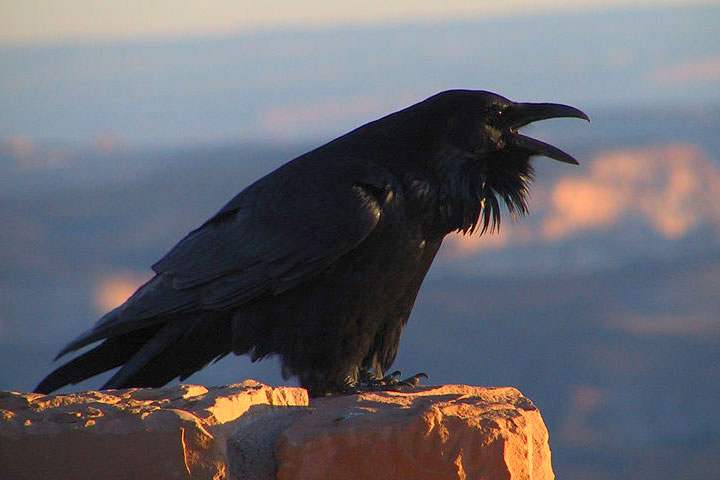
If you say “vultures” to most people, they shudder or mention birds wheeling in the sky as a person or an animal struggles to live. I think the only time they registered with me was the three chirpy ones in Walt Disney’s delightful edition of “The Jungle Book” but as this was “entertainment”, we didn’t see them do what they do best: scavenge.  They are not beautiful, they arrive where there is rotten meat and as a combination of dustbin and vacuum cleaner, their digestive systems do an efficient job of clearing away.   Too many people think that vultures live only in Africa but they are widespread over the world and there is a sizeable population in Spain and France where they do the same job.Indian-vultures-with-white-backed-vultures-around-cow-carcass

In India, old ways that work are left alone and vultures clear away rotting carcases – but by the middle of the 1990s, 95 per cent of the birds were dead. That’s not a figure you can ignore.  As rotting animals were not disposed of, feral dogs increased and so did rabies – which, in case you didn’t know, can kill humans.
India is (with China) one of the world’s most populous countries and it has cost their booming modern economy billions to clear up the mess, inoculate humans, destroy the rabid dogs and re-establish the birds.
Why did the birds die?

A powerful anti inflammatory drug called Diclophenac was prescribed for various mammals and as is often the way, if it worked with cattle and sheep and goats, it was presumed it would be fine across the board with all other animals.  You get the same perception with humans.  If a drug scores well in research and the majority of GPs are happy with the results, it will be widely prescribed.  Just your hard luck if you are one of the minority it doesn’t suit.  I’m with the vultures.  Anti-inflammatory drugs don’t suit me.

Diclophenac didn’t suit the vultures: it killed them.  If they ate the carcasses of animals, which had been treated with the drug, they died.
Diclophenac has just been licensed in Spain.   If a drug is permitted in one country, it is a matter of time before it is copied, bootlegged or becomes otherwise available in the countries next door.  Vultures dispose of cadavers. If there are no vultures, the countries will have to pay for dead animals to be collected and burnt.  All of this takes time, to grasp that the birds aren’t doing the job, to bring pressure to bear to get alternative arrangements in place.  It costs more inevitably, and while that clock is ticking, birds die, the drug goes on being dispersed and the problem intensifies.

More worrying still, it is feared that other species may find the drug toxic.  We have no vultures in the United Kingdom but what if it adversely affects other prey birds, after all the effort and investment that has gone into stabilising kites, harriers, eagles, osprey, owls and the rest?

The Vulture Conservation Foundation, based in Switzerland, is worried enough to lobby the European Commission, while in Britain a Conservative MP and birdwatcher Sir John Ridley has promised to press the government for a Europe wide ban.

Besides clapping your hand to your head and swearing, you wonder why apparently intelligent people have ditched any concept of joined up thinking. The destruction of vultures was big enough to be an international news story, not one I read about in the local press of the subcontinent or by being an online tree hugger.   \It was covered in the better newspapers, on television in a documentary.  There must be facts and figures and memoranda internationally available.  Not in Spain apparently, a country as far as I am recently aware, without the kind of resource to rectify the anticipated fallout.
Sign on and save the vultures.

earth-day-1

“Hope”

Hope is one of those little often-used four letter words which encompasses a working example of ambivalence.

image And when I first registered that latter word, which refers to feeling two opposing things at the same time, it seemed you had to choose.  That was what grown ups did.  Then, as I grew older, I learned that there were other grownups, those who felt two things at the same time (love and hate, desire for two people, opposing points of view, wanting to make a change but holding fast to where you were) and tried to balance between the two.  It’s pretty uncomfortable but most of us do it somewhere along the line.
Back to hope.

Old sayings like ”hope springs eternal” or “while there’s life, there’s hope” are what I call sayings “in the light”,image[1] how you think and feel when you have just heard from someone by letter or however else, when your hard-to-reach child touches you or his/her voice does, when there are a few pounds more than you thought there was, a stain comes out of your favourite sweater,  … or it’s the first day you feel good after a long illness or the disintegration of a relationship.

And there is false hope – like wanting to be rescued from whatever life into something easier, finer, more secure.  Like hoping the enemy won’t come, nor will the rain … false hope that if you behave differently, you will have another chance, that the next man will be better with money or the next woman will be better at sex.  (It’s worth remembering that on both sides of the Atlantic, the most usual reasons for breakup are sex and money, or money and sex.) image[2]Most of us balance in the middle of this too.  Sometimes we hope and sometimes we don’t.

Or we think – “it’s my turn” – like my father filling in the Pools for years and talking about what he’d do when the ship came in.  But there was no ship.   He had his “flutter”, all he could afford, and he had his hope.  Love him as I do, every time I find myself dreaming like that, I deliberately puncture the shining balloon.  It’s tougher, I know, but I prefer my mother’s version: “expect nothing and have a nice surprise”.  Hope is emotionally expensive and most of the time I can’t afford it.

When the great love of my life proved how disappointing he could be, I had a friend who talked about how she was sure (another four letter word) there would be somebody else.  Everybody is entitled to their own opinion but over time, I became very unhappy about her “hope”.  As it remained unfulfilled, I began to feel that I had failed at something, maybe a whole series of things, but I was damned if I knew what.
This was alongside acknowledging that it takes two to make a mess as well as a success.

Last night I watched a movie in which Meryl Streep and Alec Baldwin play a divorced couple, he remarried to less than perfect happiness. They meet, have a wonderful evening and begin an affair. Like many movies, it was too long, and 45 minutes before the end, I switched off, fatigued by the character’s perennial girlishness. It’s as if silly is youthful and the currency of youth is hope, so that in spite of ten years’ painful learning, she failed to recognise the unchanging nature of this leopard’s spots.   He thought of himself first, last and always.  And perceived Hollywood wisdom has it that you must have a man (especially if you’re a leading lady). So (thanks to MovieSpoiler) I know that she traded the old one in for a new one, having put herself through the wringer and treated her loving and quite grown up enough to understand children as though they were thick, a triumph of hope over experience.

A much smaller TV movie based on an Ophra Winfrey endorsed bestseller with a cast led by Sissy Spacek and Beau Bridges featured a divorced woman who fell in love with a con artist and who eventually, not withstanding loneliness and financial exposure, and the fact that they all wanted to love him, opted for her own and her children’s integrity.  That’s a triumph of a different kind of hope, a more realistic kind that says you can be your own person and still have joy, living in the moment that laughter and tears are close, instead of in a future that may never arrive.  image[3]

“Birthday”


“It will be just like all the others “ said my son cheerily “ won’t it ?  I mean, the figure doesn’t change anything ? “  “Yes” I agreed “ all just figures except for 40.  At 40  I loved your father, I had you, a dog and work I loved, bien dans la peau: 40 was my 21st.”

Although habits exist principally to be broken, I like order in the morning so I get up, drink two big glasses of water, pull on old soft clothes, spray my face with mineral water and walk up the road for two papers.  Then home to fruit, yogurt and coffee.  Unplanned habit: I have three lumps of sugar a day – two in the first cup of coffee and one in the second.  No more sugar, no more coffee.  I do the simplest crosswords, and sometimes read the obituaries but often the birthdays and today I did because it was mine.

Sharing a birthday with Marlon Brando got me through being teased about my nose .6321099_1_lAnd Doris Day is now 92.  I hope she has friends and someone to talk to.  I watched an 87 year old on the news recently saying she has family and visitors  but she still gets lonely.  Loneliness is as unmentionable as cancer once was but negotiating with it must come down to inner resource.  As long as my eyes are spared and I can read, I shall never be lonely.  I have books.   Waiting for the world to happen to you is a waste of time . Better to weed or deadhead the garden, take up embroidery, fretwork, sculpture – anything. When time hangs heavy, we all want to be rescued and we rarely are. We have to rescue ourselves.

This year I noticed that I shared a birthday with bellicose Alec Baldwin, a good actor inclined to embonpoint. article-0-0F152C9F00000578-921_306x423 I wonder if the two are related – that he gets more furious as he gets fatter ?  Quite simply, if he were an actress looking as if he were a sausage about to pop, he wouldn’t work.  (Oh dear, I sound like the woman I knew  who suffered with the menopause and made us all suffer with her, who used to sigh “Who’d be a woman ?” reducing my son and I to rude giggles.  After all, who’d be a man ? )  But I do wonder about the double standard when I see male presenters with hair like boot polish why nobody suggests that, on that salary, tactful and becoming hair colour is not only more becoming, it’s an investment ? You’re worth it.

The person I am proudest to share a birthday with is Jane Goodall whose research into chimpanzees (Gombe Wildlife Research Institute, Tanzania), and from wanting to protect them into a life’s work of better relationships for all of us, is truly awe inspiring – like the colours of the sun on the water or certain pieces of music.  I only ever saw her once and made a gesture towards her which she emphatically cancelled so she is either very private and shy or one of the people who can’t stand me.  It is good to face up to the existence of the latter.  It keeps you, as they say, grounded.

Michael Burleigh is a historian I haven’t read but he’s on my booklist and maybe I’ll get to him this year. It has taken me so long to get to The Second World War and that I am doing it in the year we mark the centenary of the First has a fearsome symmetry about it.

It’s singer Tony Orlando’s birthday, he of “Tie a Yellow Ribbon” fame.  I lived briefly with his manager and once at some do, I sat down smack in a perfect pratfall.  When it was inferred that I was drunk, I got up and did it again.  I t can’t have helped my back.
article-1294296-001F4F5100000258-953_233x367
I’d rather remember Sally Thomsett for The Railway Children rather than anything else, just as I prefer Eddie Murphy as the donkey in Shrek – he’s very clever, I just don’t want to have to see him.
62773d1345264460-stoner-sprays-rossi-shrek_donkey
Wherever Tony Benn is now, I bet he’s as thoughtful and forthright as he was in life – the only major political figure who didn’t hesitate to admit to getting things wrong (and explain why).

I know very little about astrology except that it isn’t just a matter of being born under a sign – the rising sign and the sign your moon is in must also be taken into consideration.  This is very important to me because I have just learned that I am sharing a birthday with Nigel Farage and I can assure you, that’s all we share !

“Print and Pictures”

How’s this for a double standard?
The Times carried a piece about “a lesson in love” (their headline) that the famously priapic film star Warren Beatty taught Rob Lowe (recently 50 pin up, best known for The West Wing) when the latter was at the gate of his career breakthrough.  Warren Beattyx-large
It involves (more names from the past – I chose the prettiest for the picture) Natalie Wood and Frank Sinatra, and “f***ing”, that preferred pastime that gives you such pretty colour for dinner (to quote Dominic Dunne).

wood03
So, when was “f***ing” anything to do with love?
I quite see that the four characters of “love” fit better into the headline than the three letters of “sex” but really, this is a new depth for coy.  You can tell us what really went down (to coin a phrase) but you must sugar the pill in the headline.  Nothing against “f***ing” or love.  Just wary when the press confuses them and resorts to the asterisk.

Elsewhere in the same newspaper the UKIP leader N. Farage tells us that V.Putin is the leader he most admires, “not personally, politically”, a separation Mr. Farage may be able to make but I’m not sure about Mr. Putin.  Heaven forbid this admiration leads to emulation. Because the idea of Mr. Farage stripped to the waist in combat gear, with or without horse and gun, is regrettable.  And I hope he won’t copy the Putin walk, a lethal mixture of self-consciousness, power and apparently painful verrucas, a power mince.   And don’t tell me he just walks this way, it’s his natural walk.  Not true.
Cornel_Large Camera
I went to the last day of the Cornel Lucas photographs at the National Theatre so that, while the embankment swarmed with people in the sun, inside all was calm and cool and the pictures (see online) impressive.  I am always interested in portraits, particularly photographic ones and found something new in several cases – either images of people who have faded from memory (like a very young Petula Clark), the well known reimagined (David Niven, a breathtaking Leslie Caron) or the unexpected (Bill Brandt, himself a noted photographer).   There was also a fabulous picture of Virginia McKenna as a young woman.

McKenna has been distinguished by involvement with wildlife conservation for so long that we forget how good an actress she could be (see A Town Like Alice, British black and white film making at its best) and because she looked great in a tweed skirt and no makeup, who thought any further?  So here she is in Lucas’s portrait, ravishingly good looking, standing against a stairwell with something draped round her (either an unexpected dress or a lump of textile with a rib in it – still pictures being a working example of “what the eye don’t see, the heart don’t grieve over”) and a pair of shining earrings.

I was with Jo (not her real name) who has spent her life organising photographs and we went back to look at this image several times because it was so unexpected.  We both know that interesting looking women are often reduced by such pictures, rather than enhanced, and we discussed why the image worked.
“There’s just one thing” said Jo.   “The way whatever it is draped and caught under her left arm, it’s driving me mad – it should be …” and she gestured to make it symmetrical.  “But” I expostulated” that would change the whole sense of the picture.   As it is, the picture says – even with imperfection, this woman looks wonderful- and anyway, that couple of inches of the line of the underarm is unexpected and so deeply erotic.”
Jo didn’t agree.

But Emma Watson might.

Emma-Watson-Dresses-Over-Pants

Emma-Watson-Dresses-Over-Pants


The former star of Harry Potter took some time to find her feet after the gravy train of the brand concluded (good for her). She tried to stay away from films, did a stint of modelling (sleight of hand again – she is tiny), attended university and eventually found her feet with deserved success against type in The Bling Ring directed by Sofia Coppola.  Watson has said before that there is unhealthy pressure of young women to look perfect and she now says she is looking forward to age which you can afford to do, when it is remote.  But the point she makes is fair.

When did we stop focussing on doing our best – any best, best exams, best ponytail, best press call – to start focussing on the impossibility of being perfect?
When did perfection stop being an inspirational goal and become a social ball and chain?
Look at any of the world’s many layers – the natural world, the manufactured world, the design world, the world of images and advertising – and perfection is only ever a discipline of trying – what is important is the journey, not the goal.
You don’t need age to recognise that, Emma.  You need intelligence, the most underestimated quality there is.

“History, herstory”

Apparently history isn’t popular at school.  Is that because of the remoteness of the details of a long ago and very different world, compared to silly selfies?   Do you come to it in age, trying to make sense of the world you live in?

6628320519_15837a5ba0_z

In order to try and understand what is happening in Ukraine today, you’d have to have a look at the area’s history up to WWII.  And it’s complex. Sometimes when you look back, your head swims.
There is a current trend in history writing to look at the minutiae, stories of what this woman said or that man wrote or somebody else did, asides aligned to illuminate the enormous movement of men and munitions, the consequences of apparently simple decisions and the fallout which is almost always uglier than you can imagine.  So thank you (to name but two) Max Hastings for “All Hell Broke Loose” (WWII) and Florian Illies for “1913: the year before the storm”(WWI and he’s German).

WWI broke out 100 years ago this year and it takes anything from 60 to 100 years for humans to begin assess history in context.  My father (born 1896) enlisted just before his 18th birthday and fought in campaigns that faded into forgetting throughout his life because of savage losses in Europe.  His regiment was sent to what we then called the North West Frontier (now Afghanistan) and in Mesopotamia (now Iraq) – which seem to indicate how slowly humans learn anything.  And his dislike of Germans was unreconstructed.
“The only good German, man or dog, is a dead one” he said to a man whose Schnauzer lunged at our English bullterrier.  I was shocked.  My reasonable father, who taught me that there were always several sides to everything!  When I asked him about his remark, he said levelly “Twice.   They came for us twice.”   And I carried that around with me for years until I began to read at roughly the same age as he was then.
2BDE_1ID_WWII_troops_road_marching
I have always read about war, part of a desire to understand something about my father I couldn’t verbalise and he couldn’t tell me.  The war that was current when I was growing up was in South East Asia and it seemed to affect a generation of Americans as the Great War affected my father’s peers.    It was however in historical fiction, set in much earlier times, that I began to see war as a constant, a way of getting territory or holding it, distinguishing yourself, getting enough to eat and having adventures.  The perception of damage – psychological or physical, personal or geographically general – came later.article-0-1497D962000005DC-716_634x472
Although I knew that the trench warfare of the First War caused terrible wounds, I didn’t see it until comparatively recently in an edition of The Culture Show featuring the work of a contemporary artist who made a record of early facial plastic surgery (see also a French film called The Officers’ Ward).  It is humbling.

Of course I could have fallen with equal enthusiasm upon the history of clothes or gardens or agriculture.  I read about war, about its inevitability, that it was a way
of proving yourself a man or a king:  how, no matter how widespread and destructive, war changed so little and (see a poem of Carl Sandburg called “I am the grass”) and how the greatest obliteration was absorbed.

Or read about another kind of war – germ warfare, plague war – in John Kelly’s
“The Great Mortality” about the Black Death and see how the greatest losses the world has ever documented, involving China and Russia as well as the Middle East and Europe up to Iceland and recurring during a hundred years – “rested” the overcrowded cities, allowed wild land time to recover and rehearsed the
desolation of the Holocaust several hundred years before Hitler.
History is less about war and peace than it is about human nature, at it worst and best, its strongest and weakest.  We are rarely nice but we are always interesting and history proves it.

2493112504_84efbcc11b_o

“Mind the Gap”


Sometimes you are very aware of what separates you from others.

separation_3
There is a new drama on television about a man who killed the women he was close to, described by the estimable David Chater in The Times as “hideous and detached from any normal human behaviour”.  But somebody thought he was normal |(it’s a dangerous word) and of course we often do, until it is proved otherwise.  There are painful examples of the gap: a woman sent to an experimental school as an orphaned ten year old, discovering 30 years later that both her brothers were abused by it, in the name of liberation: or the man giving evidence of his wife’s mistreatment of their child.
Sometimes the gap is about culture: as a European woman smiling at an Islamic woman and being met by a stony glare.  One is not to know if her shoes hurt or she feels badly about anyone who is not discernibly her own, but we have to start somewhere and the start is almost always personal.
I suppose the gap is really another way of saying how separate we may feel, one from another.   The above are highly coloured examples.  You may just be very different people. And for some reason, the gap is unbridgeable.

I met a woman of my own age through a mutual friend.  She came to supper and then returned the hospitality.  I am fine when I am with her.  Apart from that
I have an overwhelming sense of being marked – as at school –  “ must try harder”.  However the treasured mutual friend (treasured by us both I may say) simply remarked, “ I like strong elderly women but they don’t always like each other.  Indeed sometimes you can just see the “No thank you” ballooning above the head.”   No harm done there then.

If you live alone, closing the gap can be a formality.  You are not looking for (ghastly but expressive phrase) a new best friend.   You just want to speak to somebody, and if Dame Fortune smiles and you are lucky, you can natter about where you got your gloves or what’s in the paper.  The sense of belonging in the world can be reaffirmed without difficulty on either side before you say goodbye and let each other go.

After years and years of getting up and going into a workplace, and living in a family, it is in the mornings sometimes, not always that I long for a human voice.  This is not anything grand or complicated, not incipient depression or a crisis of identity..  I just want somebody to tell me I am still there.

Deeply self-sufficient people never feel like this.  So-called moderns will find an app to meet the need.  Sounds like cold comfort to me. I prefer to take my chances with the postman, somebody in a shop, or I meet in the street. And the meeting can be very brief, as short as almost brushing shoulders with somebody and sharing a grin.  The manners of greeting are dented by being plugged in, tired and often horribly dissociated.  It is noticeable that as technology becomes more and more common, people are not only switched off from other people because they are switched on to some machine, but the sense of space we used to call body territory is being damaged too.  People push past, walk too close, slam into you – ranging from unaware to hostile by virtue of self involvement.

You can be very grateful for a gap.  It can separate you from somebody you really don’t want to be close to.  You may know why, you may have to think about it (or not want to) and an answer isn’t guaranteed.
I am eternally grateful to my mother for telling me when I came to London at 17 telling me “Play your hunches, play your hunches, play your hunches.  Work out why you feel what you feel later on if you can but don’t ignore your feelings. “  Years later an American writer called Gavin de Becky wrote a book called The Gift of Fear, on just the same subject.
Levels_of_Intuition_WSDI
I spent years acknowledging there was a gap (school taught me that) and then bridging it.   Invited as a speaker to an association of assertiveness trainers, late in the meeting one of them commented that I was a bridge.  I loved that label then and I love it now.  I loved the idea that people could make use of a voice on the radio to resolve difficulty, face the music and go forward, be happier, do better.  And I speak as a woman who walked beside another much taller younger Brazilian down a dark street in a section of the city I don’t know and we talked, she on her way to a party, me on my way to supper with friends.  In farewell she kissed me goodbye on both cheeks., thus giving me an early birthday present.  She crossed the gap.

s_m05_68954329

“What did you call me?”

We used to laugh when the late great Claire Rayner called someone “lovey”.Perhaps we laughed in sympathy because we feared it put the person to whom it was addressed down, which put her up, so the idea wasn’t thrilling and we were glad it wasn’t us.  I am sure it was supposed to be benign but I wasn’t alone in suspecting it.

mick-jagger-ph

I once listened to Mick Jagger say “Y’know what I mean” in interview 26 times (I counted) and I couldn’t have cared less what he meant, I had earache.  The new verbal culprit is “well” which has been suggested to soften the beginning of a report direct to camera.  It quickly becomes a cliché and when you have heard it repeated throughout every new rejoinder to camera, I want to scream.

In radio terms, when the clarity and speed of what you broadcast is of the essence, you learn to take the corners of your presentation with the odd endearment – not many, not general, targeted – and the odd word, a bit of old slang, a neat phrase, anything to keep the warp and woof of the woven broadcast changeable, brightly coloured, flexible, moving. basket-weaving-thumb21820625 But you have to watch it with endearments.  They often place you the user more than the person you use them on.  And there are fashions in endearments as there are in swearing or operations.

I don’t call people “darling “ because I am pseudo-grand or assumedly theatrical, although I suffer from both (very effective cover).  It’s what I was called at home by two thoroughly down to earth and unassuming people, “marked” on me at an early age.  Discovering darling was from “dearling” brought me up short – the earlier form has quite a different impact.   Though one woman I know tells me she can never use the word darling.  It is the word her husband used to her throughout a long and cruelly unhappy marriage and she has struck it out of her vocabulary, having heard it used to mean the opposite of what it says one time too many.

Nowadays “sweetheart” is rare, my mother used to say “sweetness” which I have never heard anywhere else.  “Sweetie” is rare and “duckie” or “ducks”, the Victorian embodiment of Cockney sparrowdom, is almost gone.  Many people are sparing in their use of endearments so, when they use such a term or offer a tender nickname – it becomes important, perhaps less to the giver than the receiver.  It seems a marker of special feeling, perhaps intimacy, even if only fleeting.

I was in the supermarket where I buy less and less (hooray for street markets, the wonderful local convenience store and the time for opportunistic shopping) and when my favourite assistant said goodbye, she called me “honey”. honeyShe is not given to endearments, isn’t Ann, and as she was clocking off, we walked together through the shop and I told her why that term is special to me.

Opposite my childhood home was Cleveland Avenue and at the top on the left lived Mr. and Mrs. Moss, not just old in the eyes of the child I was then, but very old even then, dry as leaves, she with fluffy white hair under a hat with pearl handled pins and he with a pipe, a flat hat and rheumy eyes, both with sweet smiles.  They were gentle people, rather good with the neighbourhood children to whom they always spoke.  They gave me a book of dog stories and legends called Tails and Tales, which I have just passed on to somebody equally appreciative after a lifetime of cherishing.  And Mr. Moss called me “’unny” (as in honey, no “h”, longish “u”).   Once.  I felt it to be the greatest compliment.  I was under ten, he was an adult.  It’s all in the tone.

We have all heard endearments used to contain or diminish but there are as many rules for as against and at least some of this is to do with personal perception.  One nurse will call you “dear” and make you feel a fool.  Another will do the same thing and you feel absurdly comforted, as if all can be fixed and will be well.  Today, we have the first name used as a comma, every other phrase, or even your title used the same way, in the false intimacy of somebody trying to sell you something you definitely don’t want  – and even if you did want it, you won’t after that patter.
That’s not what the words are for and why selling is still an art, even if you are only selling an idea.      5laws


“I spy”


When I was younger I used to think that the short sight (plus astigmatism) with which I was born was an affliction, a flaw, a curse.   Now I am not so sure.   If you can’t see, you have to look.  You have to focus, screw up your eyes, reach for your glasses or other magnifying instrument and concentrate.   And of course it becomes a habit.  In my case, I notice a lot – colour, gait, hands and feet (shape, disposition, what is on them), hair, complexion – and on and on.   It is a standing joke to those who know me well that the first time my son ducked away from me in a store into the men’s room, I eyeballed everybody who came out till he emerged safely.  I could have done police descriptions.  I am endlessly fascinated by what people notice and perceive  – and of course, what they don’t.

4519179471_76e9c94124_z_large


The first time I saw a film about ballet 50 years ago, I noticed all sorts of things but particularly the shoes.  The dancers were from the Bolshoi and it seemed to me that the shoes were a different shape.   The last time I saw a film about ballet was 48 hours ago and I thought all over again how very few dancers move agreeably unless they are dancing.


Watching what I call “Sunday night tripe”, I was fascinated by the change – or lack of it – in outfits.   I am sure that, were I to tackle the costumiers of the second series of Mr. Selfridge, I’d get a wonderful rationalisation.   But while I can accept the floorwalker Agnes Towler daily in the same hat and coat, I don’t think Mrs. Selfridge is sufficiently familiar with any privation in the early stages of the Great War, still less poverty street, to be wearing the same outfit throughout an episode and for the second week running.  Is it presumed we shan’t notice  (though it is quite a noticeable colour) or has the budget run out?


Films and television programmes offer rich pickings for this.  Judging by the
You Say  (radio and TV) column of the Sunday Times Culture section – one of the best reasons to buy the paper – there are men all over Britain just thrilled to be able to tell you that the car or the uniform or the train or the weather was wrong in this episode or that.  I go for broader brushstrokes myself and shall never forget Jeremy Northcote as Thomas More in some unbearable pastiche of Tudor England, lined up with his wife and daughters to receive Henry VIII on the riverbank at Putney, and only the men were wearing hats. backsketchdet  At that period of history no decent woman of any walk of life waking had her head uncovered.  And this persisted for a long time: in an underrated novel of the American Civil Nikon 5400 Digital CaptureWar(1860/5) called Enemy Women, Paulette Jiles (correct spelling) described her heroine escaping from capture, driven to cover her head with something – anything – knowing that a bareheaded woman would be immediately noticeable.  GreenPokeBonnet


Fashions of the past are adhered to, reinvented, hinted at or ignored in productions, depending upon the actor, the costume designer, the producer/director and the sense of the thing. Sometimes the clothes really don’t matter and sometimes the actor is so terrific, you don’t care any way.  You are observing a person and are held and interested by what is going to happen next.


A medical student I knew had a wonderful professor who used to take his students out in the street or into the pub with him and demand that they observe this man or this woman and tell him everything they could see – what sort of work the subject did, the consequences of that work medically, the age of the subject, their social class (and therefore predisposition to certain medical conditions), their general health.  Now that we know TB is not dead but has become more subtle and pernicious, and HIV patients live a long time, I find myself ear wigging coughs and observing serious underweight with a wary eye. I am not obsessed about health and I am not more than averagely wary of ill health but I am interested in people and in what so often goes unnoticed – the repetitious movement of hands indicating (often) distress, the body language that says something quite other than the words offered, in some cases just watching and waiting to see the truth of something you think you perceive emerge.
It’s called people watching.  Those of us who practice it do it with commitment.  Those who don’t care might learn something.

body-language


“Lucille’s lesson”


When “everybody” tells me that I must see this film/play/exhibit, I run the other way, react against the prevailing opinion. I’m not proud of this but I acknowledge it.

People don’t push music at you so much because musical taste is very personal.  But film, the most expensive medium, is shoved at you, through a mixture of hype and consensus.

The only actor I knew thought Steve McQueen’s first film “Hunger” was wonderful.  I found it had some nice shots, one fine sequence (in which political prisoners go to a permitted church service to exchange information) and for me, starving yourself isn’t acting.  I don’t like to see actors acting.  I want to believe in the spell they weave, even if only for the duration of the piece.   It didn’t happen.
Currently “12 Years a Slave” is hailed all over the press and I have only heard one dissenting voice.

I once extolled the painting of Jean Francois Millet to a bright man. “Pretty pictures of ugly things” he said drily.

‘Boys netting songbirds for food’
image

That haunted me. For ugliness is not necessarily reduced by the exercise of another’s art.  So what is the role of art?  I think it is to help us understand the outmoded, the distasteful, the incomprehensible – understand better, maybe in a different way.

In 2012 a former agent and video king John Brewer (affectionately known as Mr. Rock ‘n Roll) made a film about bluesman BB King, christened Riley B King.  Launched to praise, the film didn’t hang around in cinemas (though you can buy it) and it certainly wasn’t up there with the big cinematic boys.  Although blues is the underpinning of all modern beat music, those who love it are used to its lack of drumroll.  Blues just is, like the sea or the sky.  The rest takes its turn at party piece popularity.

I saw Life of Riley on BBC4 (22.02.2014).  Apart from the music, there were all sorts of vignettes of the great and famous endorsing Mr. King and his guitar Lucille, but it was the opening featuring rural life in Mississippi in the 1920s (BB was born in 1925) and the facts of his early life that hit me at half past two in the morning.bb_king_epiphone_lucille_black_and_white

His parents were in there 20s when they had him, their union did not last.  His father left, his mother who loved him died of diabetes when he was very young.  There was a school but kids were not encouraged to education when they might be chopping cotton: he started when he was seven.  He said he was always staying with somebody, he conveyed desolation.  He spent time briefly with his father before coming back to where he began, to live alone at 15, driving the plough and lifting cotton sacks on a farm.  The white owner was a fair man and he bought BB his first guitar.  He began to lay and sing whenever he could and after WWII, he became a dj in Memphis, the party town of his youth.

An early wife said gently no marriage could survive a man touring 360 days a year.
A later wife said equally quietly that, 20 years later, he was still touring 300 days a year.  When you listen to the roll call of acts and producers with whom he put together packages of recordings and performances or both, you began to realise he worked as he had always worked  – unceasingly.   With great dignity and without a whimper he told the camera:   “When you kill a mule, buy another.  sum10_34_mule-mowerWhen you kill a hand, hire another.”  BB is 85; his present manager says they are currently working three weeks on, three weeks off.  |Post slavery, life is still a long sentence so music and those other good things just take your mind off the unendingness for a while.

As a schoolgirl, I was shown drawings of how the bodies of people were packed into slavery ships, chained there in their own and everybody else’s filth, to survive if they could.  I understood that slavery meant the end of everything.  It’s very easy to be sentimental about the value of life but what kind of a life with no choice, no independence, and no breath uncounted?

When I saw Life of Riley I saw how the long fingers of pain and loneliness and want found gifted expression through the strings of throat and guitar to become beautiful – if only in passing – and only if reinvented again and again and again,
lack made into celebration through unending toil.
A heart in love with beauty never grows old.