titfer*

Disher came to supper, a vision in a guava coloured tailored shirt. I had a top that didn’t work for me, in which I suspected she would look wonderful. She handed me the shirt. “Try this on” she said.   But it’s new, I protested. “I am not wedded to it” she growled. I did as I was told (you do with Disher). “Wow !” she said. “Swap !” I put the shirt in the wash and a button came off (are you listening, Conran?) and of course I hadn’t got the right colour cotton. I remembered a fabric shop up the road where they might …. On the way I went past Edwina the milliner, the nicest woman, and I saw her at the door. “ By any chance, do you have … ?” I asked, showing her the button. “Of course, come in” she said and swept me through the little shop into the workroom where I stopped, struck, hand to mouth.

Though a gynaecologist once told me that men’s spatial concept is far better than that of women, I’d guess this a floor space no more than ten feet square and nearly twice as high, piled with buckram, feathers, flowers,

“flower making tools.”

ribbons of silk and velvet and veiling, hat blocks, needles, pins, threads, pieces of fabric every colour and shade, order books, binders, references, notes, bits and pieces, petersham, bindings, hats begun, imagined and reformed – it was a little girl’s real life magic workroom.

I love hats. Just before I ceased to be able to wear black (kills me where I stand and not being able to wear it taught me a lot about colour) I bought a small close fitting number with exquisitely imagined black felt roses which had to go to Daisy who can wear hats and can wear black. Dammit.   A couple of years ago, I went in to try on one of Edwina’s hats which made me so happy, I almost bought it – though I was deep in survival mode and you can’t eat hats , can you ?

The hats I have collected are deeply personal and they don’t date: a structured beret in leopard (I love leopards and that cat was long dead before I got to it): a re-imagined 1940’s cocktail special by Jane Taylor: an Isabel Marant knitted number which only works because there is enough of it to drape a bit, kinder to the face: a feathered beauty by Nerida Freiman which took me from bat mitzvah to Buckingham Palace with several years in between: an Armani turban in natural linen, plain and perfectly cut: and a fisherman’s straw (£5) from the days when such things came from the country of origin and not China.   In the winter, I wear hats.   I am still adjusting ageing thermometer to summer, the quality of the heat having changed to something much less benign than it used to be. (Did we ever think what would happen to climate when millions of people all had freezers and fridges, power showers and dishwashers on top of electric light and stoves ?)
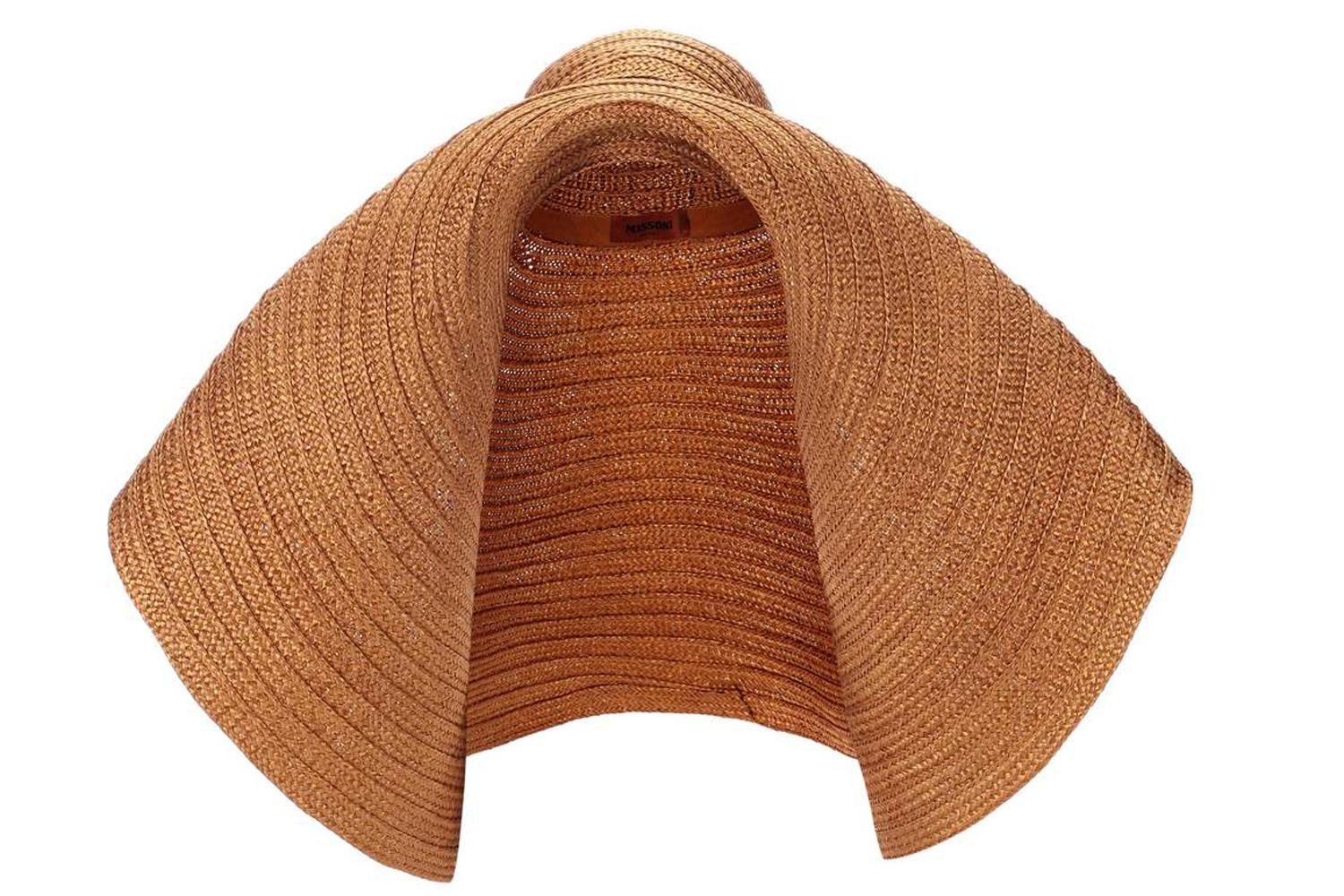
And once upon a time, hats were essential. In Enemy Women by Paulette Jiles, the first task of her heroine up on escaping is to find something to cover her head, recognising that without, she would otherwise be wholly noticeable. To cover the head was a token of respectability, even modesty.   In various places in Africa, it still is. The family is extended, you might meet an older relative and you must be ready – head covering is de rigueur. We used to say “If you want to get ahead, get a hat” but nowadays, unless you wear one for essential warmth or shade, they are the province of high fashion, idiosyncrasy, or expected formality.

I remember reading that the Queen’s hats have an arrangement in side them that make them stable, so that no matter the weather, Majesty is never seen to touch her hat.   I hope it isn’t too uncomfortable.   Men wore hats too, sometimes doffing them, then more recently touching them with a finger in salute.  When that happened to me, earlier this year and the first time for ages, tit for tat, I bobbed a delighted curtsey.

*titfer comes from rhyming slang, tit for tat = hat.


what it means

It’s always personal.   That line in the Godfather films about it “only being business” is the ultimate copout (no pun intended).   So I don’t know what Prince Harry said to Meghan as they waded through their nuptial ceremony. I can guess but that is interpretation. I don’t know.   What I do know is that you see things the way you want to see them, they mean what they mean – to you.

On Saturdays I go the market – there are two near me. I am convinced that pound for pound they are no more expensive than anywhere else – you get a bit of exchange and chat both with stallholders and other shoppers, two or three things are special – the chard and cooking apples from Chegworth Valley, the venison from South Downs Venison – and I love the trip.

On the way back this week a bus pulled in to the stop where I was waiting, driven by a man in his fifties, with long greying hair knotted off his face and shaded glasses. I smiled. (I do a lot of that.)   He mouthed “You all right ?”   I nodded, pointing at him with my index finger, and mouthed “You take care.”   This unrolled quite slowly as he considered me, so I thought perhaps he recognised me.   People do, years on, white hair, tinted specs and all. I don’t live for recognition, though it is often rewarding when it comes. But that morning, I wanted to believe he knew me.

What John Bunyan called “the slough of despond” – a bit of a low – has gripped me for the months it has taken to get back into walking again after a fall and that morning had found me whimpering , thinking of what to do and feeling lost.   Millions might be uplifted by the Royal Wedding but I was not one of them – my fixes are just as quick but different.   Too often a white wedding seems like an inverted equation between taste and money ie more money, less taste – though my friend Wal’s comment “they don’t know they don’t know” is much kinder.

Interestingly – and I hadn’t looked for it – I found it meaningful that Meghan walked the first part of her entry to the church on her own, that her mother stood alone. So many people are alone – we are born alone, we die alone and it takes some handling to be alone in between.   But in the midst of all that panoply, being alone was acknowledged. Alone knows no colour. I liked that.   The sense of being alone is not the same as being lonely. That sense of being alone is sometimes induced by circumstances like illness (not necessarily your own), accident, breakup, perhaps what psychiatrists call “low mood” but equally it may be innate.   And you have to learn to be the person you are, when to take care of yourself rather than anybody else, when that is necessary rather than indulgent and to acknowledge your limitations. I keep a piece I wrote about that sense of separation nearly 60 years ago, it’s one of the few bits of my early writing I can read without a blush.
Even scientists estimate that body language and behaviour are interpreted by human beings so fast we don’t know we’re doing it. People who don’t look at what’s there, or wilfully disregard it, not trusting so to speak the evidence of their own eyes and ears, are telling you something too.   Computers are kids’ play compared to the human brain which assesses simultaneously on different levels and interprets it goes. That’s why you can’t help but notice first impressions.   They may be unreasonable to rational thought. We call them impressions rather than judgements because you may fear the egg on your face from an incomplete judgement.   You may equally well file the information rather than define it or act on it. But I bet you refer to it if you are proved right.   That’s why the old remark about “keeping your eyes open” means more than just looking.   Our animal past says smell, hear, feel, assess – everything matters. Even if it means something different to me from what it means to you.        

take a break

Take a break , my “hands” are going on holiday…

You thought I did this all by myself ?   The chance would be a fine thing !   Not so.

I have a midwife and she is going to Spain so please,

look for me on 22 May when annalog will be back on track

And miss me. That would be nice ….

mind matters

The most expensive tv guide is the culture section of The Sunday Times.   And on a bad day, that’s almost all I have to show for the outlay of £2.70.   Picking through articles I don’t want to read, past pictures that give me the grump – on a bad day, the whole experience is wasteful and worse. Why do I buy it ? Because of the tv guide and then – slam bang wallop – you get a home run.

Apart from some occasionally agreeable writing, the paper offers me a round up of new exhibits, film, various kinds of music and books.   And every so often, there is something that makes me sit up, ears on top of my head with attentive excitement.   So it was this week when I found an article (The Sunday Times Magazine May 6 2018 Pages 10 and 13) about Michael Pollan, the author of four standout books on eating, diet and cooking which he summarises as “Eat food. Not too much. Mostly plants.” – and he is researching psychedelics, with regard to how they might alter mood.

What emerges from the article apart from all the interesting background and some discreet flag waving for the UK (right up there in research terms, work into treatment of depression) is that he has an integrated strong personality and, as a journalist, he will be able to describe what he experiences.

In the 1970s I knew a tv director, now a successful writer of whodunnits, who was commissioned to make a film on LSD, then legal.   He asked me if I would take it and let him film the result.   I am not well disposed to experimenting with other layers of consciousness. I have quite enough trouble with the ones I can access, having been brought up to believe that if there were five senses I knew about and a sixth I suspected, there were probably six more I knew nothing about at all. So I asked why ? TVD said “Because if I give the stuff to most of the people I am in contact with, they’ll sit there in rapt banality. You’ll talk. In sentences… “

Contact with a sympathetic psychiatrist yielded the dope and I took it for camera. I remember some of the journey to this day, going out into the garden and seeing plants breathe, the intensity of texture and colours, the sense of security and wellbeing.  I remember there was some problem ongoing at the time which had greatly distressed me which I was able to see quite differently, I would say from inside the predicament. And I remember crying briefly with relief, because it was wonderful to see whatever it was clearly and thus know it could no longer harm me. I remember that I talked for 12 hours. In sentences…

God knows, I don’t want psychedelics in the drinking water but I’m with Prof. Pollan “we don’t understand the mind very well” and rather than devoting our energies to tricking it and manipulating it, to the manufacture of artificial intelligence – I’d rather work with what we have.   You go to Mars if you want to. I want to save this world.   And the word psychedelic comes from the Greek and means soul manifesting – the spiritual experience – without which there is no life worth the name and little progress on life’s journey.

We have so often talked about progress as if it were a self-perpetuating ongoing tide, as if one step forward made another and another from that, and so on exponentially.   But increasingly we watch what rolled forward, taking down the trees of inconvenience like a psychological bulldozer, come unstuck under the weight of expectation and sheer numbers.   The concept of progress in many aspects of life is beginning to splinter, like glass on a rock.   And the eternal truth is that of personal progress, how you realise or make peace with or learn from, what your life is. Please note, not what it should be (how I dislike ‘should’), not measured against somebody you haven’t met and frankly don’t know about, but your own life – which is very rarely, for all sorts of reasons, what you thought it was going to be and may involve you in major reconciliation.   Thoughts worth £2.70 any day.  

clear

Apparently, the eleventh commandment is “thou shalt not get caught” though the former President Reagan (Republican) said that it meant you mustn’t criticise another Republican. Thou shalt not get caught is a less graceful edition of “thou shalt not be found out” – an update of “Curses, I am discovered” with the last syllable pronounced rather than swallowed. Whether we say found out, caught or discovered, the implication is clearly that we are doing something dubious and it will only be acceptable if we get away with it.

When you ask people to discuss truth and lies, you open the door to the difference between what you were taught and what you do, the difference between theory and practise. And then it is personal choice. What very often governs the perception of truth or lie is opinion.

For example, I read a newspaper item yesterday by a man who had never visited a podiatrist before and went to an outfit which he left feeling he had had a positive experience and wrote, highly recommending the place. As far as he is concerned, he’s told the truth.
I have had four experiences over the last four years with podiatrists (I am older and have more difficult feet) and the range of experience varied. This doesn’t mean all podiatrists are thieves and liars: it might mean I was unfortunate: it does mean that feet vary, the age of the person attached to the feet varies (and thus their health, needs, weight and so on): it does mean that podiatrists vary, one from another and at least one of my experiences was with someone who felt she was outstandingly capable to which I can only say “Not for me she wasn’t.”

If you buy four oranges and you get them home and one is already rotting, it is perfectly understandable to return it (if you can be bothered) and get another piece of fruit. To use that descriptive phrase, the fruit is ”not fit for purpose” .
But if your friend goes to a fashionable hairdresser and has a haircut which is everything she doesn’t want, the truth is not that the hairdresser is terrible but that the hairdresser is not for her. All she can say, if you thought you try it, is “Good luck with that, I’d never go there again.”

And what about big things ? There is no major religion or system of belief that endorses killing. But most political, religious and belief systems are supported by fighting for your own, whatever that “own” happens to be. And then it gets complicated. Is the truth “this is someone who believes like me and I must fight to the death if necessary to protect her or him ?” Or is the truth “this is someone who believes like me and he or she is in danger but what happens is out of my hands – the will of God, the will of law, the luck of the draw, however you describe it – not something in which I can participate because I know my responsibility is not to kill ? “ Those who don’t fight back and incidentally kill in a circumstance where it seems to be the only answer don’t get a good press. Those who tell the painful truth (“I’d never make a pacifist”) don’t either.
Believing there is only one answer, that truth is black and white, absolute or denied, is emotionally expensive. Truth and lies are bound up with identity and we like to think we are defined by the sum of what our lives have been. It is painful to discover that we need papers to define who we are and thus what our intentions were. More painful still to discover that if papers are destroyed, no matter what we have tried to do and be, we are denied. The truth about Windrush seems to be that, when a government is looking to control immigration, it looks for a soft target. How shaming. How predictable. Hang the eleventh commandment. Always make copies of official papers and keep them safe. Volunteer to be found out because the light that is shone on you will be shone on the other side of the question too. Sometimes, thank heaven, the truth is clear.

“But I thought you meant…”

How uncomfortable is the misunderstanding.Especially when you have made (or thought you had) every effort to be clear and the other person hears something else entirely. I love words and I believe in communication but it is rarely precise and, whether you look at international diplomacy or face up to the fact that with this particular relative or friend, you can’t say right for saying wrong, misunderstanding is chastening.

You can’t spend your life saying the same thing over and over again – as if through a Victorian ear trumpet, ever louder – in the hope that the recipient hears the words in the same way as you say them.   There is the matter of trust, and trust dented, if not broken.

Sometimes you read, see enacted or are party to the mending of fences, how someone covers the gap between you or how you in turn reach them. It is almost frightening if you care about the person, to have got it so wrong or that he or she has, and then suddenly, there is a bridge, to be sure a small bridge, single file, but there it is, swaying the breeze of breath – a bridge which enables you to reach him or her or the other way around. However, what is even worse (and throws you for a loop) is when somebody you have communicated well with for years suddenly doesn’t get it. Or mishears. Or misinterprets. Or just plain misses.

On such occasions, it is well to remember that humans can all make mistakes. If such mistakes have piled up over the years like discarded old socks, you have one set of expectations but if down the years, the channels of communication have been open (if not always comfortably), it is a shock to hear yourself (or the other person) admit “I didn’t think you meant that at all.”

Without the order of words and their emotional energy, I find life infinitely worrying. I am not confused, as much as I am anxious. I don’t understand when other people don’t understand that words for me are like gentling a horse. (I don’t know much about horses but when you read about or listen to people who do, there is an interdependence: Mary Renault writes of Alexander the Great and his mount Bucephalus “the mercy of invincible hands, the forbearance of immovable will”).   That bridge that I referred to in an earlier paragraph is my life’s work: reaching people so they can say what they need to say and move on, one step, from where they got gridlocked.

I have trusted and mistrusted the spoken word and writing since I was small. People talk about something “ringing true” – yes, that’s music I hear – and just as surely ringing false.   Of course taste comes into this, experience, personality, what you expect of yourself or the other, how you were brought up and going on from that, the track record, how long you have thought this or experienced that – of this situation, this writer, this person.   And all of that involves trust – yours of me, mine of me, yours of you, mine of you.

I suppose the bit that’s missing from all this is how you learn. And it is a fact that many of us learn the big things in life not through the gentle voice of the admired but through the harsher voice of the dreaded. You only learn because something you have taken for granted isn’t what you thought it was, indeed was spectacularly different, perhaps even to collapse at your feet like a punctured balloon.  How we admire people who pick themselves up, dust themselves down and start all over again though often, while easy to say or write, it is often a long march through desert to accomplish.   When you seek to explain to others the discomfort of your misunderstanding, what is offered is rarely big enough or warm enough to soothe you. In a major misunderstanding with one with whom you have always communicated well, the answer is patience. I wrote about that only a few weeks ago so I shall take my own medicine.

“A moment defined by a point and line by James Clar”

waiting

You can always find somebody in any one of the countries involved who will tell you they are frightened, that things have never been worse. You can always find another person who will talk with equal sincerity about not taking it any more, not giving in, bombs and raids and retaliation. Why is a line in the sky any better than a line in the sand ?

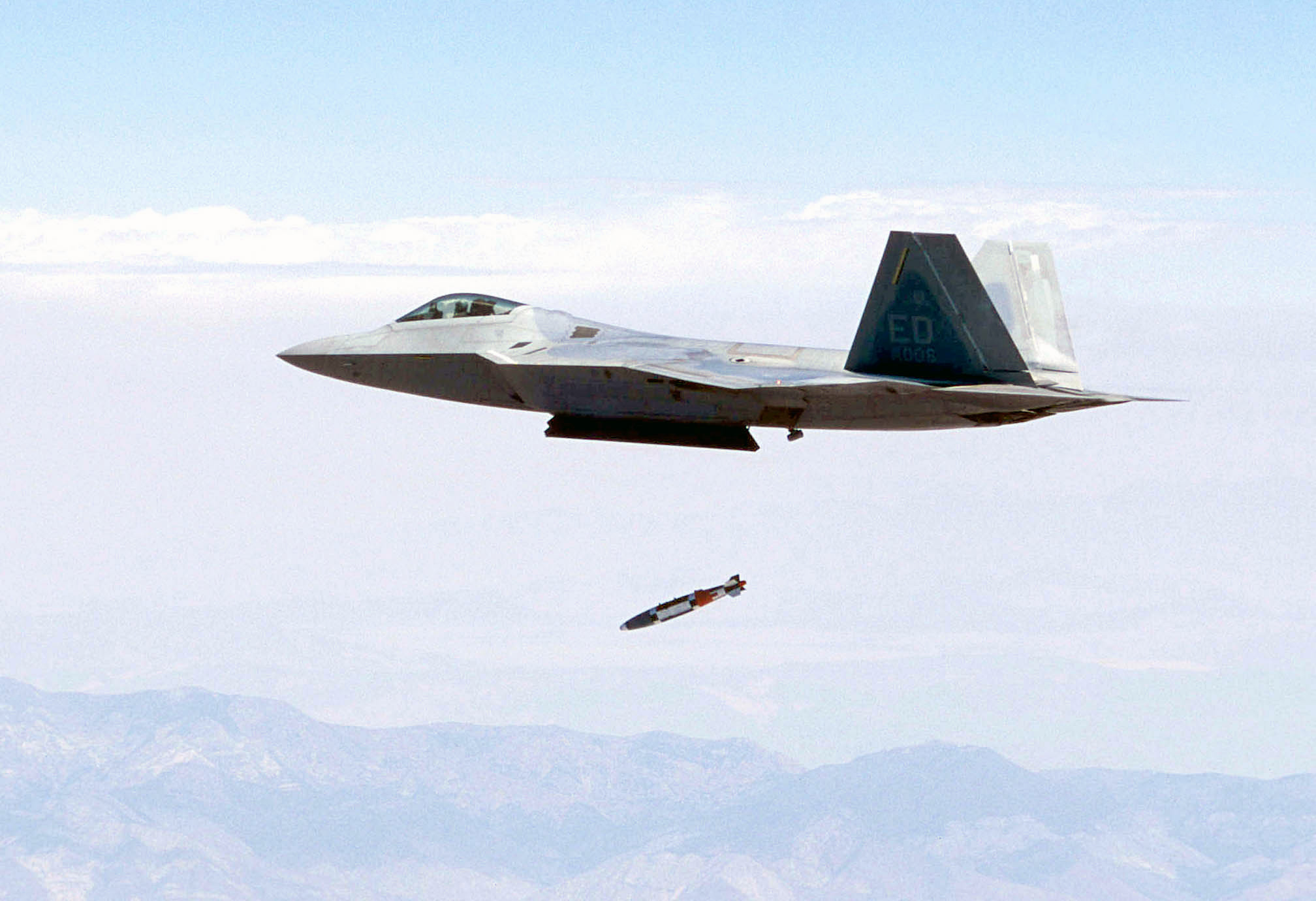
There are contexts in which you have to fight, but how and when – this has to be clearer to me before I can get my head round it. And what happens when the engagement is over is part of the battle plan. The French/US/British raids into Syria just flown were targeted on places where chemical weapons are under manufacture.   But from WWII onward it was admitted that “precision bombing” was wishful thinking. Obviously, machinery to direct and target has improved in accuracy – but how far?   And when a friend said “What is so different about chemical warfare?   It procures a horrible death: in war, is there a nice one?” I stopped and thought. Is the only way to stop the escalation of a war, escalating it in a different way ?

A veteran war reporter commented on the over crowded skies above Syria – officially Syrian national forces and Russians but unofficially all sorts of dissenters and who knows who else ? I don’t know what is sanctioned and what isn’t: and even if I knew, I would suspect that a lot is done quietly, without admitting to it or only admitting to it if it goes “wrong”. What we know and don’t know is always a two edged sword, more than ever now.   I heard a man’s voice say quietly on television the other night “This is not the new Cold War – it’s the same old one” while another added that “you will often find the military are the most considered: they know that war means death.”   The focus changes but the idea of your domination versus my domination has never gone away.

The Bay of Pigs (1961) when the threat of (then) Soviet nuclear weapons was in striking range of the US froze us with fear. I only understood the oppressive silences, the wary glances, the lowered voices when the children were around. And then I caught my mother in our tiny bathroom and said I didn’t understand, why was it so important and she turned on me, her blazing eyes full of tears, her voice shaking – “Because it will be the end , the horrible end of everything !   Why can’t they stop ?   Oh, I wish I’d never brought children into this world…”     Quite a lot of us feel like that at the moment.

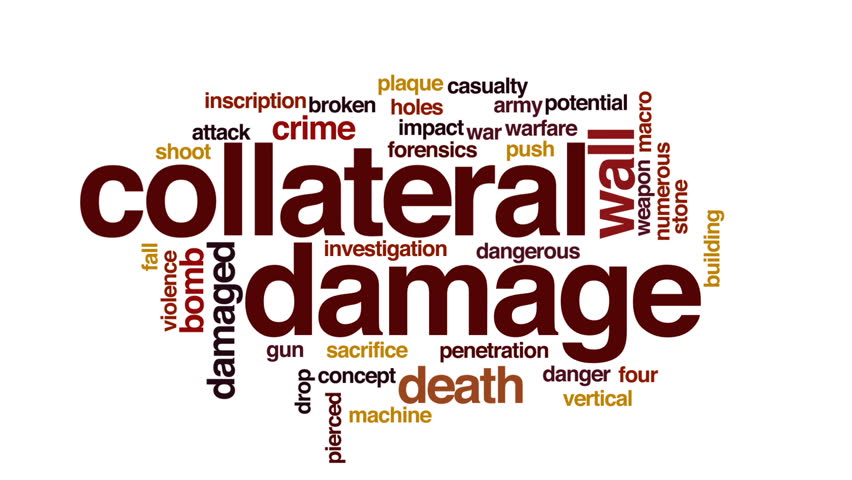
I first learned the phrase “collateral damage” in the context of the Vietnam War (see the documentary by Ken Burns and Lynn Novick, PBS on Wednesdays) I could have learned what it meant through the study of many wars, maybe all wars, certainly anything after the American Civil War (1860-5)   It’s the bit you don’t plan for.  You don’t plan for more men to kill themselves back home than died in the conflict, you don’t plan for the endless fallout of wounds that don’t heal, people who can’t sleep or work, substances that slumber in the ground or on the trees and poison the earth for years.   You don’t plan for millions of people being driven out of where they live with nothing, nothing, and no hope of anything. And sometimes collateral damage is part of peace too (see Command and Control by Eric Schlosser).

Syria is such a vexed case that I long for us to be honest, to admit to the Syrians (through the language barrier) and ourselves that seven years of war is Assad’s war against his own people but they are a sovereign state, it is their business. We drop food, medical supplies, toys, toiletries, everything that will help the embattled survive and we stick to diplomacy. Or we admit that we cannot stay out because Assad’s main backer is Russia and then we haven’t progressed from The Great Game of the 19th century. No wonder we don’t sleep.

many happy

A man I know in his later thirties is mentor to the children of his female friends. No I don’t mean he is a closet paedophile. I mean he is the purveyor of encouragement, technology and treats over the years to his six god children, the oldest of whom, a very bright girl, announced that she wanted to see him privately about her upcoming 16th birthday.   She had her mother’s permission. In due course, she told him that when she was 16, she wanted to take his name. He stared at her. “Well” she said “ I carry the name of a man I’ve met twice and you’ve been, like, my presence.” A very level headed person, he thought fast. “OK” he said. You can change your mind at any time, no harm done, but if this is what you want and your mother agrees, I’d be honoured.”   I don’t know how he got through the rest of the time they spent together but he told me that when he got into the car, he pulled his knees to his chest and cried. His own back story makes this even more important but isn’t that one of those “the offer is as good as the reality” things, adoption in reverse ?.   Many happy returns of that day.

As I was writing this – not for the first time – I hit some button and vanished the copy which made me pause: I wish we could do away the things that bother us as quickly and painlessly. We say time flies when you’re having fun but I think it flies anyway. If the years are good, you’re busy enjoying them. If they are difficult, you endure.   Sometimes you lose a passage of time which was different from the rest of your life. You were in hospital say, abroad, getting through a breakup or trying to help somebody you love through difficulty. And several months become one long day and pass in the blink of an eye.

When you were little, a birthday was important with candles on the cake and a party. Better still, in my home it was a day of indulgence which is why when I was about 10, my mother and I went in and out of shops looking for the silver shoes upon which I had sent my heart.   I didn’t know that my mother hated the whole idea, knew it was a whim and was determined not to spend very much on them (which we managed). But it was my birthday. I recall both her and my father saying they would or wouldn’t do this or that, supported by the other “it’s my birthday.”

Somewhere in my teens I came across the Russian idea of celebrating the day you were christened which offered a chance of changing something most of us see as set in stone. But by then my mother had indoctrinated me into my birthday . ”No child of mine was going to be born on April Fools’ Day!” she declared.   I didn’t think you could argue about such a thing and I asked what she did, probably expecting a spell or a charm. “I held on and thought about something else till the day was out” she said, her hands busy as they always were.” And then I drank castor oil, scrubbed the kitchen floor and you came.”

I thought with great affection the other day that I really was a mistake. My parents had been apart during the war and saw each other rarely. Ma had only a sketchy idea of menopause and after she and Pop had reunited (isn’t that a nice way to put it ?) she went to the doctor who told her she was five months pregnant. Pop was thrilled, Ma less so – she knew she’d have to do the lions’ share of bringing me up.   And I was a pain.

But nobody suggested ever to me that I was less than welcome which was probably why I so liked the old Family Planning slogan “every child a wanted child.”   That warmth is what I remember on my birthday. I love the cards and the books and the small private sense of celebration but what I wrap myself in is a sense of my beginnings. Not a bad news day my birthday.

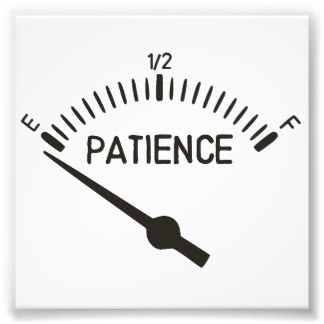
patience

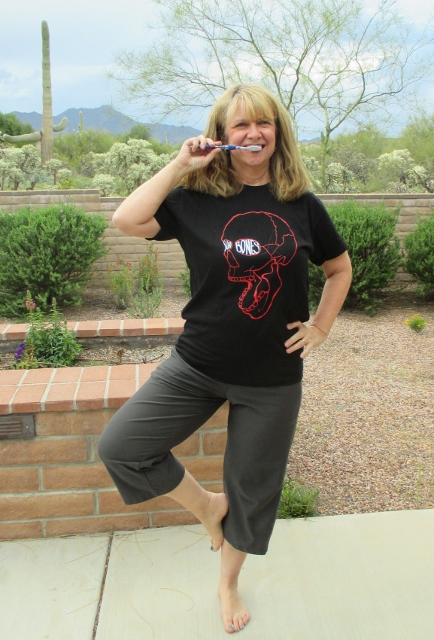
The woman was in her fifties, and her left knee was strapped up so that she had to use a crutch to manoeuvre herself awkwardly into the bus seat.   When I asked her what happened she said that she fell and broke a bone (that’s what she said) in her kneecap.   And I shuddered.   I fell four weeks before, not for the first time, not drunk or incapacitated, just clumsy and unlucky.   And pain lasted and lasted and lasted. But I didn’t break anything , how lucky was I. The helpful physio reassured me “Keep it warm and rest” and gave me an exercise to do – balancing on one leg while cleaning my teeth. Apparently the reverberations felt from the electric toothbrush are enhanced through the system if you stand on your left leg on Monday, your right leg on Tuesday and so on. It is shamingly hard to do and please don’t talk to me about yoga – the secret of yoga lies in the teacher. As in so many other things.

So I have had to be patient and, like lots of us, I am rather better at being patient with somebody else than with myself. What is patience with you feels like skiving in me.   But I didn’t want to go to the doctor: long wait, possibly irrelevant xray and painkillers. I waited three weeks (three weeks !) before I went to a reliably recommended physio. You can’t stop altogether if you live alone (which may be a good thing) so I went out and got the papers and then out to shop for food and then came back, tried to find somewhere comfortable to rest my leg and read. I found bits of tv, domestic things to do (only ever get a C for housekeeping) and I was reminded of the old saw “sometimes I sits and thinks, and sometimes, I just sits.”   Every time I felt my butt spreading under me, I limped through the house, swearing at the pain. (It was remarkable how much less it hurt when I knew what it was.)

Lying on the sofa, I can look out of the upper half of my front windows which recalled a programme we did at LBC about weather. It produced wonderful stories, including that of a bedridden woman whose bed lay under a big sky light, describing how she watched the weather modulate and change, the man who found his dog under the fog and the boy who fell in love in the rain. I like stories better than any other form of writing, stories are unending because they are about people and people are endlessly interesting. Though I have had to be patient with the book I am currently reading, a book which spoken would fascinate but written, requires a high order of concentration and just when I think “no more”, comes up with yet another story. So I persist.*

And when I falter and begin to wonder if – really – I am not trying hard enough – whether with the writing or moving – I go back to the poem entitled Patience by Edith Wharton which my son found and wrote out for me, which lives on the noticeboard.   Because it seems patience isn’t one thing but several.

There is a kind of patience to do with endurance. Previous experience or information suggests you may have to contemplate that the outcome won’t be good but you endure – like the scenic designer married to a successful actor who had already fought three rounds with booze and drugs. They shared a home, had children: he died of an overdose. She endured. She probably still is.  

While another kind of patience is quiet but not passive, where you wait but with attention. Gardening requires this kind of patience. So does growing your hair.   The difference between hearing and listening requires this kind of patience. You can hear all sorts of things but listening is about attention.

There is a patience where you say “I must wait – it is out of my hands”, perhaps in the outcome of a vote, tests or a medical intervention.    And there is an end to patience, where you demand “What is going on ?”   Patience is a matter of degree: some patience is admirable. Too much is for saints.   Not a chance.

*Farewell to the Horse by Ulrich Raulff (Penguin)

this and that

In New York in the sixties, the man who supplied drugs was the candy man. Now, he’s the sugar man: zucker is German for sugar. Was ever Mark Zuckerberg well named ? And who are these two billion people whose life he dominates, not to say controls ?   Two billion sheep, I fear, which is a lot of noise and a lot of sheepshit.
Hooray for Frances Mcdormand who stood up and said “I have a problem with conformity.”   Yes, she has a wonderful voice and the remark back referenced the part for which she won but even so, great to have somebody speak up for individuality. I prefer my society to be a cats’ cradle of well established basic principles admixed with a lot of generosity and some considerable thought.   “Everybody’s doing it” sounds like one short step from totalitarianism. If everybody’s doing it, I don’t want to: blame my parents.

I thought as I watched President Trump’s press secretary Sarah Huckaby Thing that surely somebody could have dressed her better for the image of the US President, which is what she represents. But then, if the deal is that you wear what you wear and force it on the eyeballs of the world, that sounds quite a lot like this President.

Last week could win a prize for sad bad news – the Rohinga, Syria, trade wars, Facebook, housing, the staggering NHS. The weather was the usual spring pick-and-mix, the weather forecasters’ brief now to do with selling hope rather than interpreting meteorology. I have been in the anteroom of a project for so long, I have spiders’ webs all over my feet and I don’t like spiders.   And though I wish them every kind of well, I am tired of hearing about the Windsors before the wedding gets here.   Easter is coming and the only gift we can rely on is endorsed confectionery and jammed traffic.

You know we are in a flat spin because we are writing about sex again, as if we had just discovered it. And on the usual swings and roundabout motif, it is either everything emanating from Hollywood rot and rewards and/or a re- evaluation of how man and women relate, to which let me add this little story. I know there are those who don’t believe in friendship across the genders but I disagree.   People are as they are and getting alongside is always interesting and often moving.

There is a man who lives one street over from me. We’ve seen each other in the street for years and said hello. He has a nice jokey way with him. Occasionally, I saw a woman, clearly not well, getting into or out of a car where he lives. From time to time, we met to walk together a little way, exchanging raillery about the headlines or the state of the streets. One day last summer I met him at the bus stop and, though he was perfectly pleasant, he had, as the Irish say, “drink taken.”   I was very gentle with him.   I could take a guess at some of what was wrong, but I didn’t know and you can’t live people’s lives for them.   And then I didn’t see him.   You can live very close to people and not see them for weeks.

The other day coming back from getting the papers, I met him, walking carefully, swaying, and I waited to say hello.   “I was just thinking about you” he said, the words slurring.   “And what have I done ?”   I asked, smiling.   He smiled back wisely.   “Not a thing,” he said.   “Not a thing.” Pause.   I asked imbuing my voice with every respect and kindness I could think of “And how are you ?” He considered me. “I’m all right” he said and repeated it. I looked him straight in the face. “You’d say that if you were dying” I said. “Ah” he said and crossed the gap between us. “Thank you for that, thank you” and he kissed with infinite care first one of my cheeks, then the other.   There was no smoke and no booze, just the smell of clean clothes and regret.

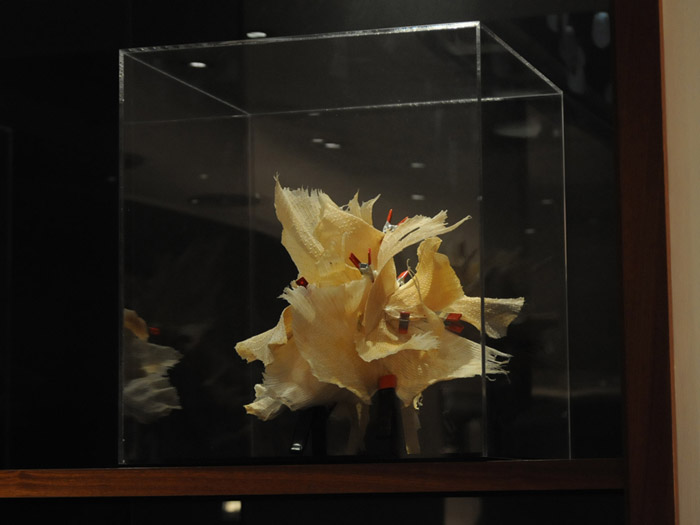
“Flower xrays by Nick Veasey”